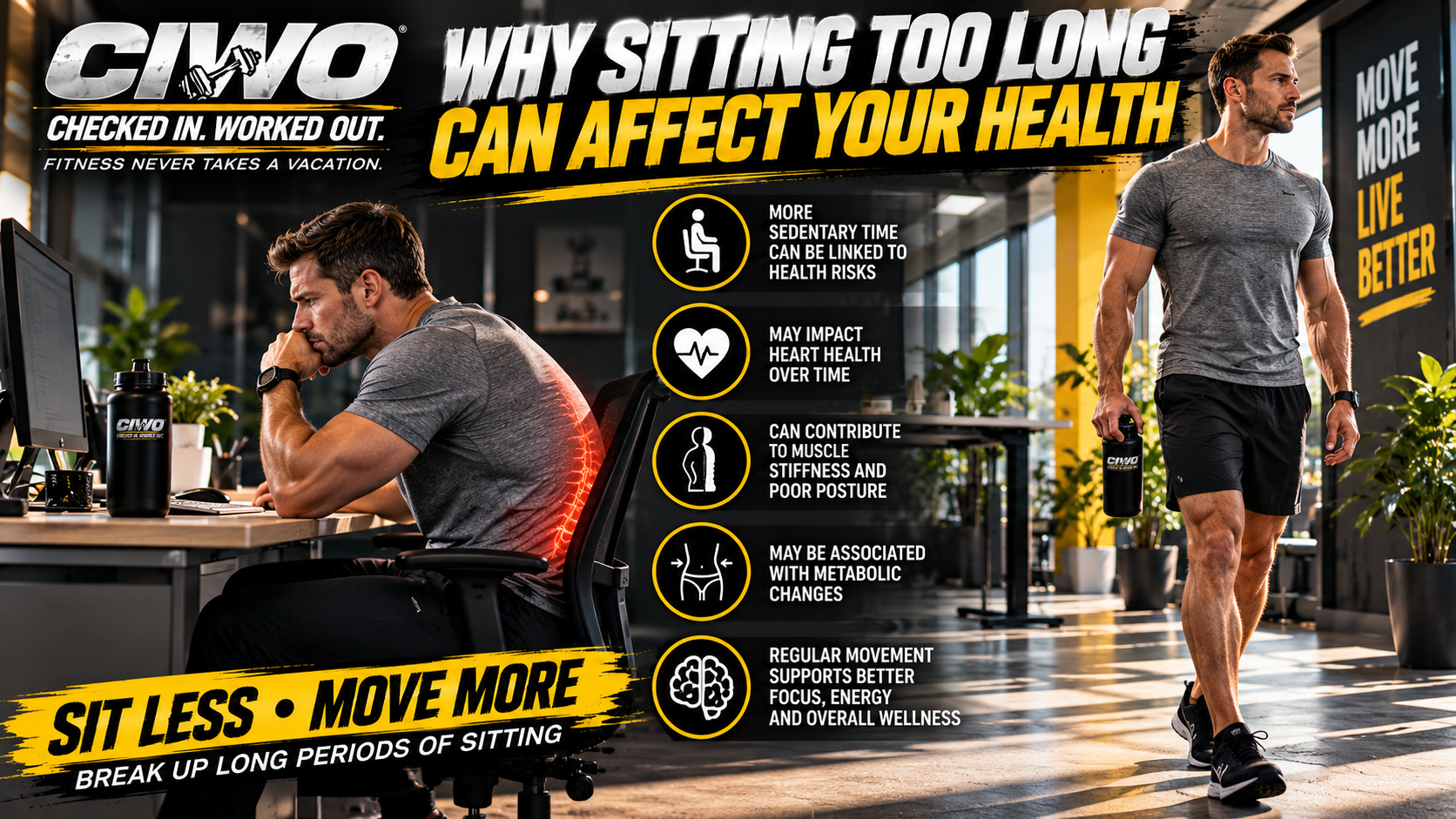

Long periods of sitting are common during work, commuting and leisure. Sitting itself is not a disease, but spending a large portion of the day sedentary—especially when overall physical activity is low—is associated with higher long-term health risks. The practical message is simple: move more and sit less.
What Counts as Sedentary Behavior?
Sedentary behavior generally means waking activities performed while sitting or reclining that require very little energy. Desk work, driving and extended screen time are common examples. A person can exercise regularly and still accumulate substantial sedentary time during the rest of the day.
Why Can Too Much Sitting Matter?
Research links greater sedentary time with higher risks of cardiovascular disease, type 2 diabetes and premature death. These are population-level associations, not proof that a particular number of seated hours directly causes disease in an individual. Risk also depends on overall activity and other health factors.
Muscle and Metabolic Effects
When you remain seated, large lower-body muscles perform much less work than during walking or other movement. Long sedentary periods are also associated with less favorable metabolic health. Regularly interrupting sitting creates opportunities for muscle activity and adds movement to the day without turning every break into a workout.
Cardiovascular Health
Higher sedentary time is associated with cardiovascular risk. Greater amounts of physical activity can reduce some of the risk associated with high sitting time, which is why health guidance emphasizes both regular exercise and spending less time sedentary.
Back Comfort and Posture
Remaining in one position for a long time can feel uncomfortable and may contribute to stiffness for some people. There is no single perfect posture that must be held all day. Changing position, arranging your workstation for comfort and periodically getting up can be more practical than trying to maintain one rigid posture for hours.
Does Exercise Cancel Out Sitting?
Exercise is highly beneficial, but a workout does not make the rest of the day irrelevant. A useful approach is to meet physical-activity recommendations while also finding realistic ways to reduce or interrupt prolonged sedentary time.
Adult Activity Targets
Current U.S. guidance recommends adults work toward at least 150 minutes of moderate-intensity aerobic activity per week, or 75 minutes of vigorous activity, or an equivalent combination, plus muscle-strengthening activity on at least two days per week. Activity can be accumulated in smaller chunks.
Practical Ways to Break Up Sitting
- Stand and move periodically during desk work.
- Walk during suitable phone calls or work breaks.
- Change positions throughout the day.
- Take movement breaks during long screen sessions.
- Use safe opportunities to move during long trips.
- If walking or standing is not accessible, use movement appropriate to your abilities.
Do You Need to Stand Every 30 Minutes?
A timer can be a useful reminder, but there is not one universal break interval that everyone must follow. Focus on reducing prolonged uninterrupted sitting and increasing total movement in a way that fits your health, abilities and routine.
What About Standing Desks?
A sit-stand desk can help vary your position, but standing still is not the same as physical activity. Walking and other movement engage more muscle and contribute more directly to activity goals. A standing desk is an option for changing position, not a substitute for exercise.
Frequently Asked Questions
Is sitting bad for you?
Sitting is a normal part of life. The concern is accumulating large amounts of sedentary time, particularly with low overall activity. The goal is not to eliminate sitting but to create a more active day.
Do short movement breaks count?
Yes. Physical activity does not need to occur only in long sessions. Small opportunities to move can contribute to a more active day.
What if I sit for work?
Use the opportunities you have: change positions, move during appropriate breaks and maintain regular physical activity outside work.
The CIWO Takeaway
You do not need to fear your chair or stay on your feet all day. A practical evidence-based message is to reduce excessive sedentary time, interrupt long periods of sitting when possible, and build regular aerobic and strength activity into your week.
General health and fitness education only. If a medical condition, disability, pain, balance problem or other limitation affects your ability to move safely, discuss appropriate activity with a qualified healthcare professional.
Checked In. Worked Out.
Fitness Never Takes a Vacation.