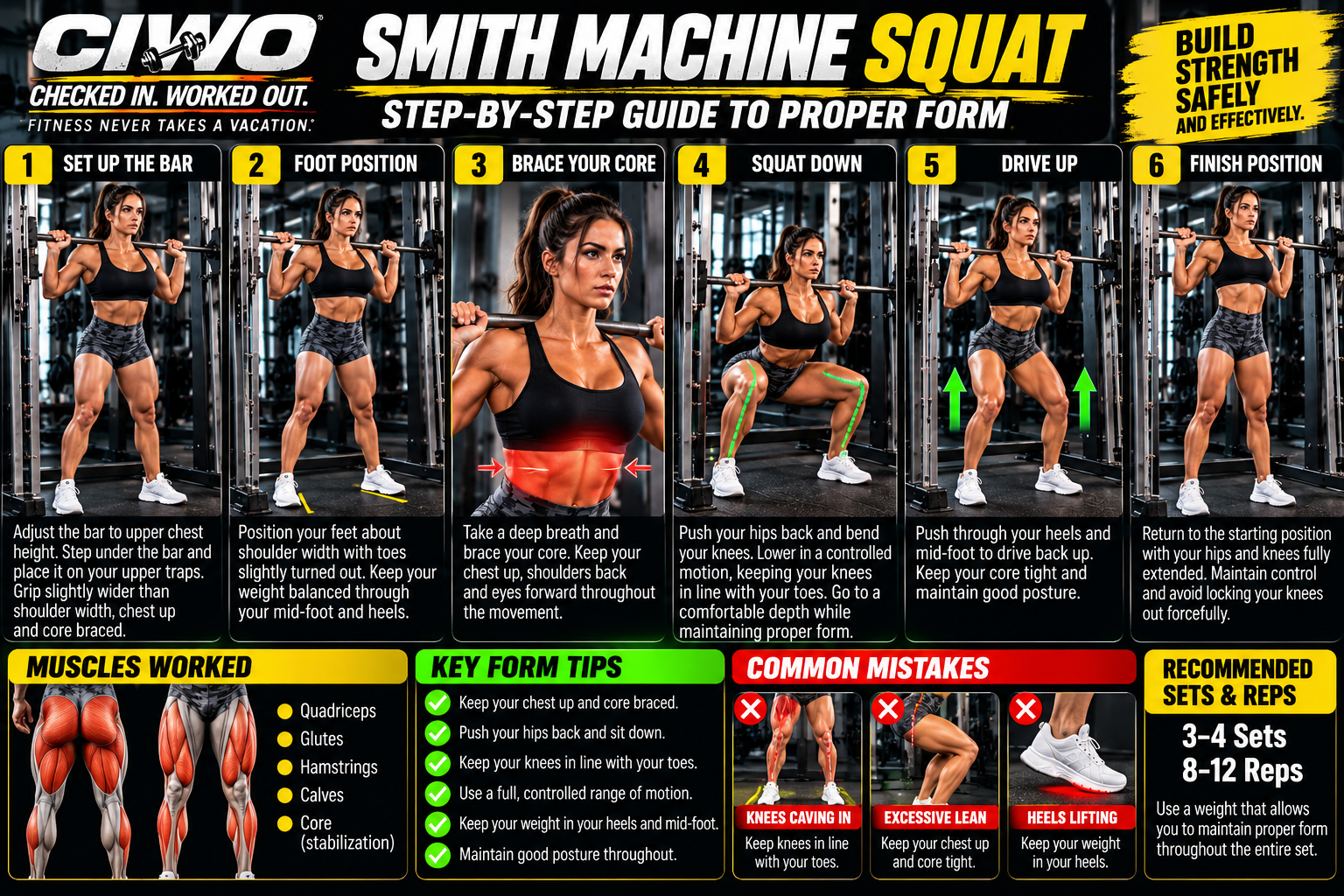

The Smith machine squat is a lower-body strength exercise performed with a bar that travels along fixed rails. The guided path can simplify bar control, but proper setup, a stable stance, controlled range of motion and appropriate resistance remain important.
Smith Machine Squat: Step-by-Step
Step 1: Set Up the Bar and Safeties
Set the bar around upper-chest to shoulder height so you can comfortably step underneath it. Position the machine’s safety stops at an appropriate level before loading the bar. Learn how the hooks and release mechanism work on the specific machine you are using.
Step 2: Establish Your Foot Position
Place the bar across the muscular upper-back area rather than directly on your neck. Start with your feet approximately shoulder-width apart and adjust them slightly forward or backward to match your anatomy and the machine’s rail angle. Keep the whole foot stable on the floor.
Step 3: Brace Before Moving
Grip the bar securely, stand tall to unrack it and establish your stance. Take a controlled breath and brace your trunk before beginning the repetition. Keep your head and neck in a comfortable position.
Step 4: Lower Under Control
Bend your knees and hips and descend smoothly. Keep your feet planted and allow your knees to track generally in the same direction as your toes. Use a comfortable depth that you can control without forcing your hips, knees or lower back into a painful position.
Step 5: Drive Up
Push through the whole foot and extend your knees and hips to raise the bar along its rails. Keep your trunk braced and avoid bouncing out of the bottom position.
Step 6: Finish and Repeat
Return to a tall, stable position without aggressively snapping the knees backward. Reset your brace as needed before beginning the next controlled repetition. When the set is complete, securely rotate or engage the bar hooks before stepping away.
Muscles Worked
The Smith machine squat primarily trains the quadriceps and glutes. The hamstrings, adductors, calves and trunk muscles also contribute. Stance, depth, individual anatomy and the design of the machine can influence how the exercise feels.
Key Form Tips
- Keep the whole foot stable rather than deliberately shifting all pressure to the heels.
- Keep your knees tracking naturally with your toes.
- Brace your trunk before descending.
- Use a controlled tempo in both directions.
- Select a stance and depth that fit your anatomy and machine.
- Keep the bar on the upper-back musculature rather than directly on the neck.
- Use the safety stops when available.
Common Mistakes
- Adding heavy resistance before learning the movement.
- Allowing the knees to collapse inward uncontrollably.
- Letting the feet lose stable contact with the floor.
- Descending faster than you can control.
- Forcing a squat depth that causes pain.
- Using excessive forward or backward lean to fight the machine’s fixed path.
- Failing to set or understand the safety catches.
Knee Position and Squat Depth
Your knees do not have to remain behind your toes. Forward knee travel can occur naturally depending on limb proportions, stance and depth. Likewise, there is no single mandatory squat depth for every athlete. Prioritize stable feet, controlled knee tracking and the deepest comfortable range you can perform with good control.
Sets and Reps
A practical general muscle-building range is approximately 2–4 working sets of 6–12 controlled repetitions. This is not a universal prescription. Beginners can start lighter and prioritize technique, while experienced lifters can adjust loading and volume according to their program and recovery.
Smith Machine vs. Free-Weight Squat
The Smith machine constrains the bar to its rails, while a free-weight squat requires you to control the bar in multiple directions. The variations create different stability demands. Neither needs to replace the other; choose exercises according to your goals, experience, available equipment and comfort.
Safety
Practice the hooks and safety system with an unloaded or lightly loaded bar before beginning challenging sets. Use manageable resistance and stop if you experience sharp or unusual pain. If an injury or medical condition affects your ability to squat safely, seek individualized guidance from an appropriate qualified professional.
The CIWO Takeaway
The Smith machine squat can be an effective lower-body exercise when you combine the machine’s guided bar path with deliberate technique. Set the machine correctly, establish your stance, brace, descend under control and drive back to standing without sacrificing position for additional weight.
Checked In. Worked Out.
Fitness Never Takes a Vacation.