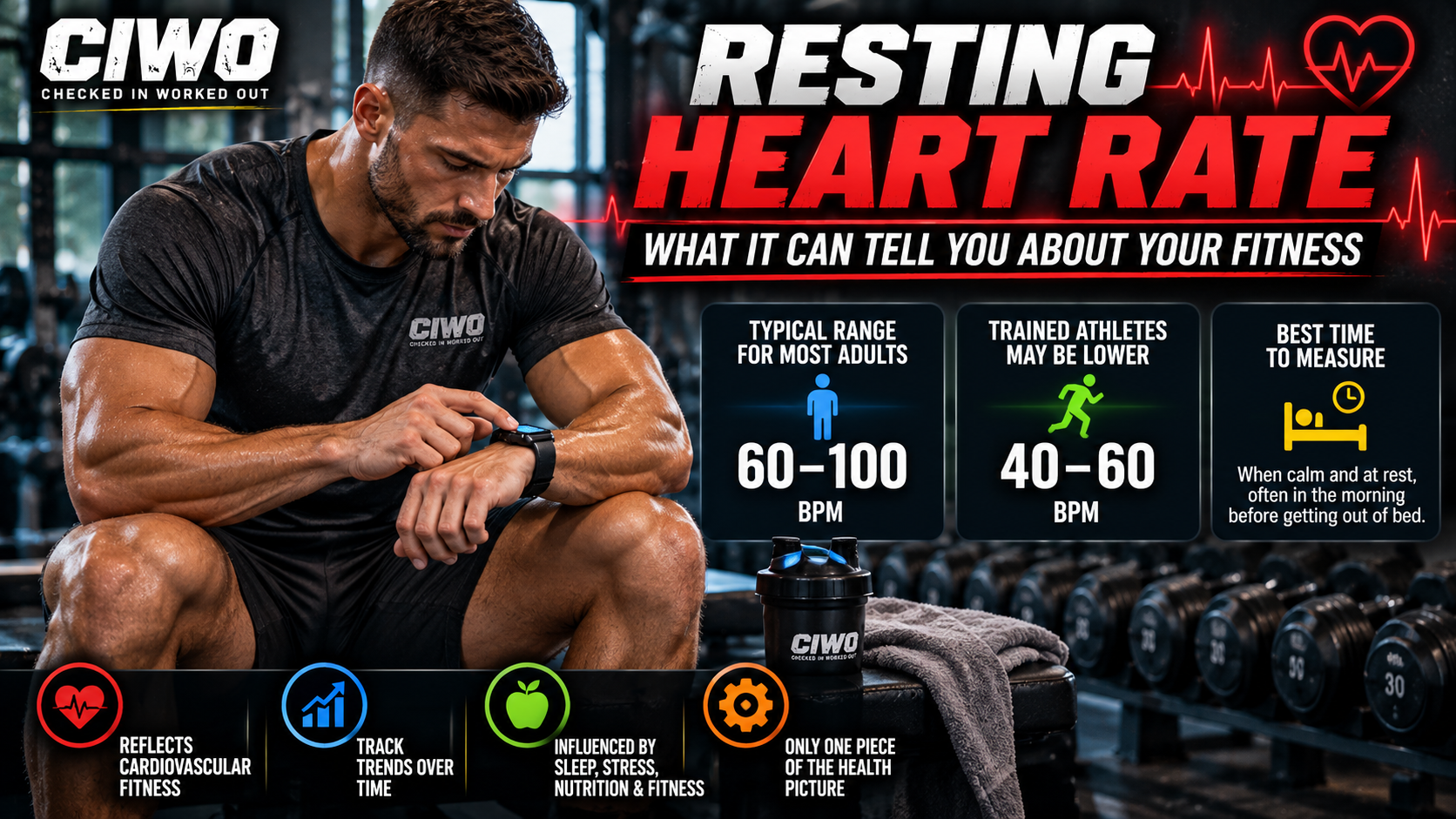

Your resting heart rate (RHR) is the number of times your heart beats per minute when you are awake, calm and not moving. It is a simple measurement that can provide useful context about cardiovascular fitness, recovery and changes in your normal baseline—but it is only one part of the overall health picture.
What Is a Typical Resting Heart Rate?
For most adults, a resting heart rate of 60–100 beats per minute (BPM) is considered typical. Physically active people and trained athletes can have lower resting rates; some very fit athletes may be near 40 BPM. A lower number by itself does not automatically mean someone is healthier, and a rate below 60 is not always abnormal.
What Can Resting Heart Rate Tell You About Fitness?
Regular aerobic training can make the heart more efficient at pumping blood. As cardiovascular fitness improves, some people notice their resting heart rate gradually decrease. For fitness tracking, your personal trend over time can be more useful than comparing one reading with someone else’s number.
- A gradually lower baseline: may accompany improving cardiovascular fitness, especially when training consistently.
- A temporary increase: can occur with stress, poor sleep, illness, heat, dehydration, stimulants or hard training.
- An unexpected persistent change: is worth paying attention to, particularly when it is accompanied by symptoms.
How to Measure Resting Heart Rate
For consistency, measure under similar conditions. A common time is first thing in the morning after a good night’s sleep and before getting out of bed or drinking coffee.
- Relax and remain still.
- Place your index and middle fingers over the pulse on the thumb side of your wrist.
- Count beats for 30 seconds and multiply by two, or count for a full 60 seconds.
- Record the result and look for your usual pattern across multiple days.
A smartwatch or fitness tracker can make trend tracking convenient, but consumer wearables are not perfect. If a reading seems unusual, repeat it when calm and consider checking your pulse manually.
Why Your Number Changes
Resting heart rate is influenced by more than fitness. Age, sleep, stress and emotions, temperature, body position, illness, smoking and medications can affect the number. Certain medicines can intentionally slow heart rate, so your appropriate range may differ from general fitness guidance.
Use Trends, Not a Single Reading
One higher or lower reading does not define your fitness. Instead, establish your normal baseline and watch how it changes over weeks and months. Consider your resting heart rate alongside workout performance, recovery, sleep, energy level and other health measures.
When Should You Talk With a Healthcare Professional?
Talk with a healthcare professional if your resting heart rate is regularly above 100 BPM. If you are not a trained athlete and it is often below 60 BPM, it is also reasonable to discuss it with a healthcare professional—especially if you have fainting, dizziness, unusual weakness, shortness of breath or other concerning symptoms. Seek urgent medical care for severe or sudden symptoms such as chest pain, fainting or significant difficulty breathing.
Bottom Line
Resting heart rate can be a useful fitness and recovery metric, but the goal is not to chase the lowest possible number. Measure consistently, learn your normal range and focus on long-term trends. Combine the number with how you feel and perform rather than treating it as a standalone fitness score.
Explore CIWO
Find more fitness, recovery and wellness education at Checked In Worked Out.
This article is for general educational purposes and is not a diagnosis or individualized medical advice.