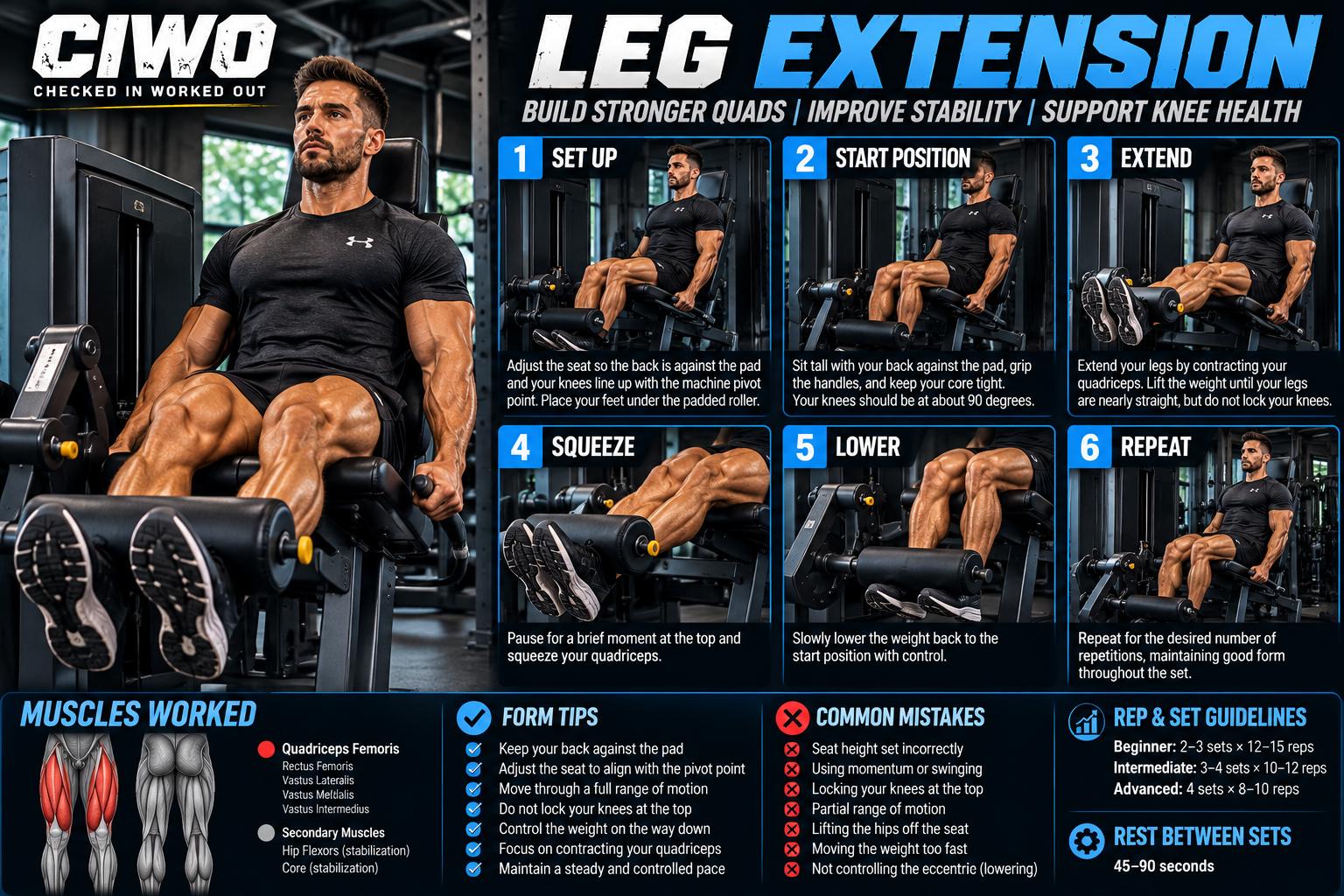

The leg extension is a machine-based isolation exercise that targets the quadriceps on the front of the thighs. It can be useful for building quad strength and muscle when performed with a controlled range of motion and a properly adjusted machine.
Equipment and Muscles Worked
Equipment: Seated leg extension machine. Primary muscles: Quadriceps femoris — rectus femoris, vastus lateralis, vastus medialis, and vastus intermedius. Your trunk and hip muscles also help maintain a stable seated position.
How to Perform the Leg Extension
- Adjust the machine: Position the seat so your back is supported and your knees line up closely with the machine’s pivot point. Place the lower-leg pad just above the ankles.
- Set your starting position: Sit tall with your back against the pad. Grip the handles if provided and keep your hips firmly on the seat.
- Extend your knees: Contract your quadriceps and smoothly raise the lower-leg pad until your legs are nearly straight. Do not forcefully snap or lock the knees.
- Squeeze: Pause briefly near the top and focus on contracting the quadriceps while keeping the rest of your body stable.
- Lower with control: Bend your knees slowly and return the weight toward the starting position. Do not let the weight stack slam down.
- Repeat: Continue for the desired repetitions while maintaining the same controlled technique.
Leg Extension Form Tips
- Use a load you can control through the entire repetition.
- Keep your back and hips against the pads instead of lifting your hips to move the weight.
- Align your knees as closely as practical with the machine’s rotational axis.
- Keep your knees tracking naturally rather than forcing them inward or outward.
- Use a comfortable range of motion and avoid aggressively locking the knees at the top.
- Lower the weight deliberately; the eccentric portion of the repetition is part of the exercise.
Common Mistakes
- Using too much weight: Heavy loads that require swinging or jerking reduce control.
- Incorrect machine setup: Poor seat or roller-pad positioning can make the movement uncomfortable and alter mechanics.
- Lifting the hips: Keep your pelvis and back supported instead of shifting your body to finish the repetition.
- Moving too fast: Avoid kicking the weight upward or allowing it to drop quickly.
- Forcefully locking the knees: Finish under muscular control rather than snapping into the top position.
- Partial repetitions without a reason: Use a comfortable, controlled range appropriate for your mobility and training plan.
Sets and Repetitions
A practical starting point is 2–3 sets of 10–15 controlled repetitions. More experienced lifters may use approximately 3–4 sets of 8–15 repetitions depending on their program and goals. Rest roughly 60–90 seconds between moderate hypertrophy-focused sets, or longer when needed to maintain good technique.
Where Leg Extensions Fit in a Workout
Leg extensions are commonly used after compound lower-body movements such as squats, leg presses, or lunges to add direct quadriceps work. They can also be used earlier in a session when quad isolation is the priority. Exercise order should reflect your goals, training experience, and comfort.
Frequently Asked Questions
Do leg extensions replace squats? They serve a different purpose. Leg extensions isolate knee extension and the quadriceps, while squats train multiple joints and muscle groups. Should I use heavy weight? Use enough resistance to challenge the quadriceps without sacrificing control or position. What if my knees hurt? Stop if you experience sharp or worsening pain. Adjust the machine, load, and range of motion, and seek qualified medical or exercise guidance when appropriate.
Fitness never takes a vacation. Train with control, progress gradually, and choose resistance appropriate for your experience.