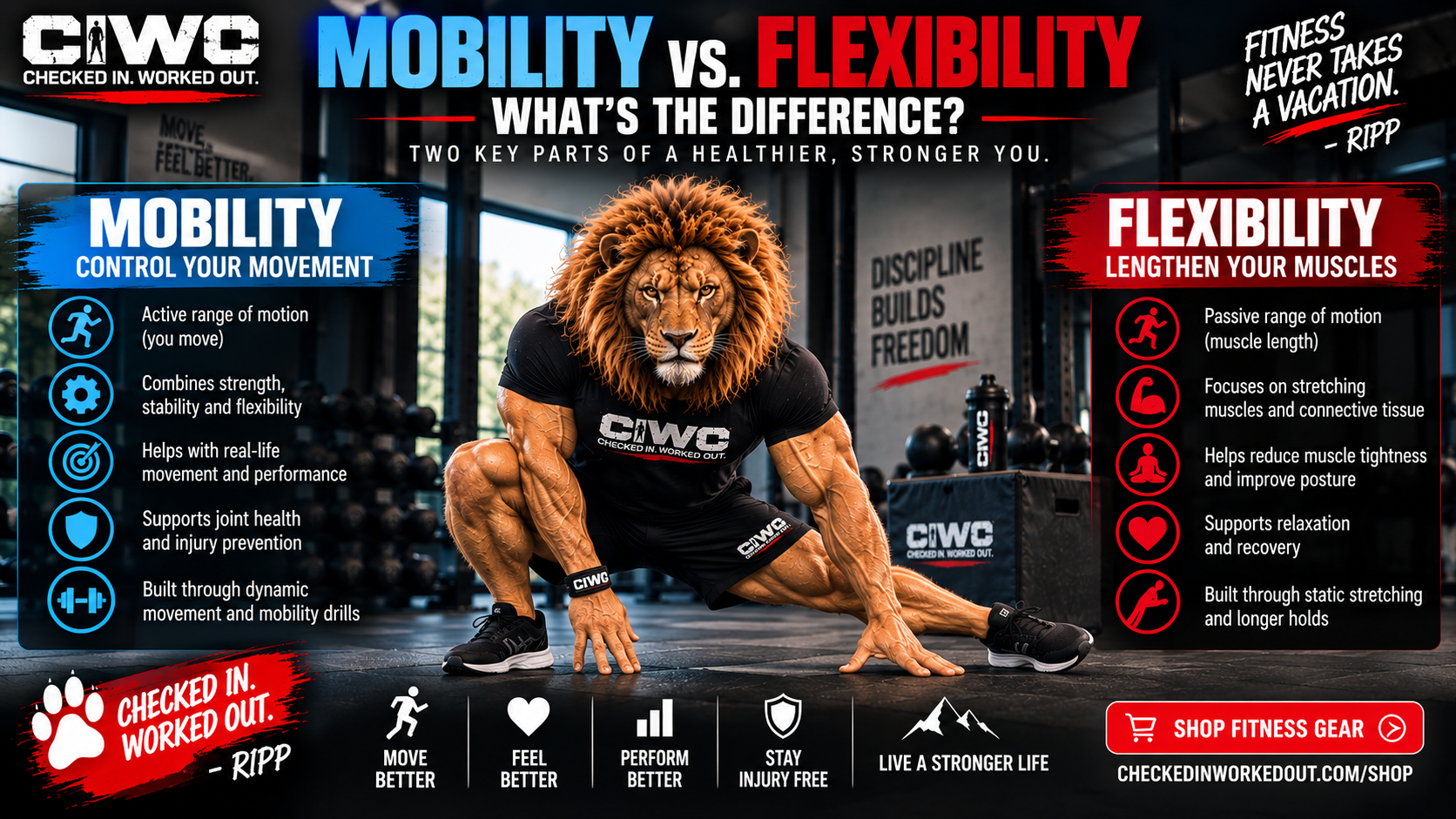

Mobility and flexibility are related, but they are not interchangeable. Flexibility describes how much range of motion is available; mobility describes how well you can actively move and control that range. Both can support everyday movement and exercise, but the best approach depends on the movement you want to improve.
What Is Flexibility?
Flexibility refers to the range of motion available around a joint, often discussed in relation to the extensibility of muscles and other soft tissues. A supported hamstring stretch, in which you use a strap to move your leg toward you, is one way to explore available range. Your anatomy, comfort and other tissues also affect how far a joint can move; flexibility is not simply a measure of one muscle’s length.
What Is Mobility?
Mobility is your ability to move a joint through a usable range with active control. It draws on available range of motion, strength, coordination and motor control. For example, a controlled squat requires your ankles, hips and knees to move together while you maintain balance and manage your position.
Mobility vs. Flexibility: A Practical Comparison
| Flexibility | Mobility |
|---|---|
| Emphasizes available range of motion | Emphasizes active, controlled movement through range |
| Example: supported calf stretch | Example: controlled ankle movement during a squat |
| Often trained with comfortable sustained stretches | Often trained with controlled joint movement and strength exercises |
Why Can You Be Flexible but Still Struggle With Mobility?
You may be able to move into a position with external help yet find it difficult to reach or hold the same position under your own control. That difference can reflect strength, coordination, balance, comfort or task-specific skill. Conversely, someone can move well through the range needed for their activities without being able to perform an extreme stretch.
How to Train Flexibility
- Choose a stretch that targets the movement you want to improve.
- Move into a mild, comfortable stretching sensation rather than pain.
- Hold a comfortable position for about 15–30 seconds and repeat as tolerated.
- Breathe normally; avoid bouncing or forcing a joint into an extreme position.
- Use gentle dynamic movements before activity if they help you feel prepared.
Stretching can increase range of motion over time, but you do not need to achieve extreme flexibility to be healthy or fit.
How to Train Mobility
- Controlled ankle rocks: With your foot planted, guide your knee forward over your toes within a comfortable range, then return.
- Hip circles: Move one hip slowly through a comfortable circle while holding a stable support if needed.
- Thoracic rotations: In a comfortable seated or hands-and-knees position, rotate your upper back slowly without forcing the movement.
- Bodyweight squats: Practice a depth you can control while keeping your feet planted and your movement steady.
- Strength through range: Use appropriately loaded exercises, such as split squats or controlled step-ups, to develop strength in positions relevant to your goals.
Start with a small range and progress gradually. You do not need to move every joint through its maximum possible range during every workout.
Simple 5-Minute Movement Routine
- One minute of easy walking or marching in place.
- 30 seconds per side of gentle ankle rocks.
- 30 seconds per side of controlled hip circles.
- One minute of comfortable upper-back rotations.
- One minute of slow, controlled bodyweight squats or sit-to-stands.
Adjust the movements, repetitions and range to your ability. If a movement causes pain, stop and choose a more comfortable option.
Should You Stretch Before or After a Workout?
Before exercise, a gradual warm-up and movements similar to your planned activity can help you prepare for the session. Sustained stretching may fit after exercise or in a separate session if improving range of motion is one of your goals. There is no single stretching schedule that everyone needs, and stretching does not guarantee injury prevention.
Frequently Asked Questions
Is mobility more important than flexibility?
Neither is universally more important. The useful range and control you need depend on your daily activities, sport, exercise selection and individual goals.
Can strength training improve mobility?
Strength training performed with good control through an appropriate range can help develop strength in that range. Some people may also see improvements in range of motion, depending on their starting point and exercise program.
Do I need to stretch every day?
Not necessarily. Consistency matters, but the amount and frequency depend on your goals, current range of motion and how your body responds.
What if I have pain or a joint injury?
Do not force painful movement. If you have persistent pain, instability, a recent injury or a medical condition that affects movement, seek individualized guidance from a qualified healthcare professional.
The CIWO Takeaway
Flexibility gives you access to range; mobility helps you use that range with control. Combine comfortable stretching, deliberate movement practice and appropriately progressed strength training to support the movements that matter to you.