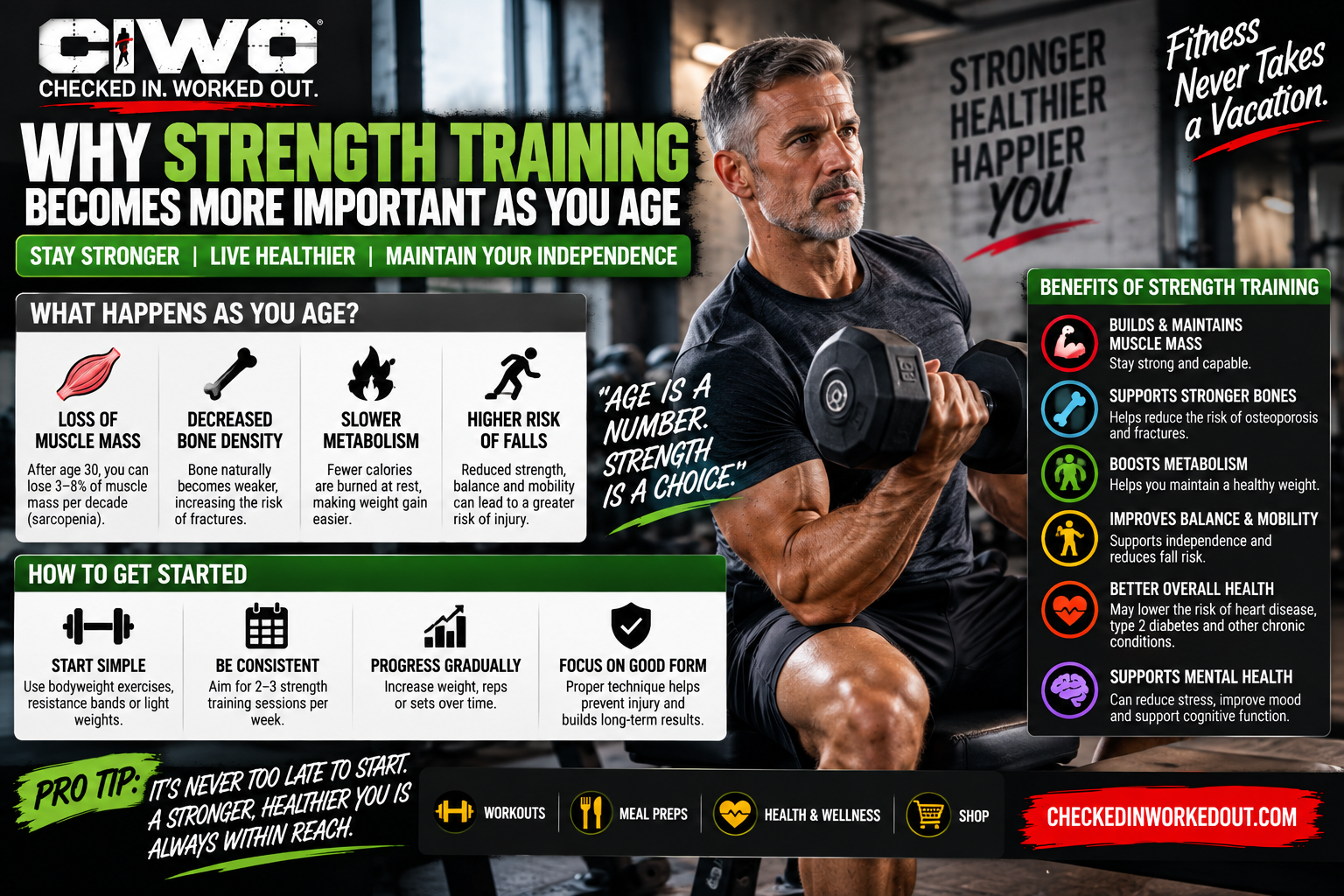

Strength training is useful throughout adulthood, but it takes on particular importance as we age. Maintaining strength can help with everyday tasks such as getting out of a chair, carrying groceries, climbing stairs and staying active. Aging does not mean you must stop building strength: people can benefit from appropriately designed resistance training at many ages and starting fitness levels.
What changes as we age?
Muscle mass and strength often decline with age, especially when activity levels fall. Changes in balance, mobility and bone health may also make daily activities more challenging. The rate of change varies greatly by person, and staying active can help preserve function. Strength training is one practical way to challenge muscles and maintain the ability to do the things that matter to you.
Six reasons to keep strength training
- Maintain muscle and strength: Resistance exercises challenge your muscles and can help preserve or improve strength over time.
- Support everyday independence: Stronger legs, hips, back and arms can make standing up, lifting and carrying easier.
- Support bone health: Weight-bearing and resistance activities can help maintain bone strength; individual needs vary, especially with osteoporosis.
- Improve physical function: Well-designed programs can improve the strength needed for walking, stairs and other activities.
- Help manage metabolic health: Resistance training can support glucose regulation and overall health as part of a broader activity routine.
- Build confidence in movement: Practicing controlled movements can make daily physical tasks feel more manageable. Balance training remains important alongside strength work.
How to start: a simple full-body routine
Begin with two nonconsecutive days each week. Start with one set of 8–12 comfortable repetitions per exercise, using a weight or resistance that allows controlled form. Gradually build toward two or more sets as tolerated. Examples:
- Chair sit-to-stand: Sit on a sturdy chair and stand up under control; use your hands if needed.
- Wall or countertop push-up: Choose a stable surface and keep your body aligned.
- Resistance-band row: Pull the band toward your torso while keeping shoulders relaxed.
- Supported step-up: Step onto a low, stable platform with a handrail nearby.
- Light dumbbell carry: Walk a short distance with manageable weights and upright posture.
Include walking or other aerobic activity and dedicated balance exercises as appropriate. A qualified fitness professional or physical therapist can help adapt movements to your abilities, especially if you have mobility limitations, a history of falls or a chronic condition.
How hard should it feel?
Start with a manageable effort: the last few repetitions should feel challenging but should not require holding your breath or sacrificing form. Rest between sessions, and increase resistance gradually once the current workload feels comfortable. Stop if you experience chest pain, dizziness or unusual shortness of breath and seek medical advice. Sharp joint pain is a reason to stop and reassess the movement.
Common questions
Is it too late to start lifting weights?
No. Many older adults can improve strength with a program tailored to their abilities, including beginners. Starting with bodyweight movements or resistance bands is a valid option.
Do I need a gym?
No. A sturdy chair, resistance bands and a pair of light dumbbells can provide a useful starting point. Choose safe, stable equipment and movements you can control.
Will strength training alone prevent falls?
No single exercise guarantees fall prevention. Strength work can support physical function, while balance practice and addressing vision, medications and home hazards may also matter.
The bottom line
Strength training is not about chasing a particular number on a dumbbell. It is about preserving the capacity to move, work and enjoy daily life. Start at your current level, practice consistently and progress at a pace that works for you.
General fitness education only; it is not individualized medical advice. If you have osteoporosis, recent surgery, heart symptoms or other significant health concerns, discuss an appropriate exercise plan with your clinician.