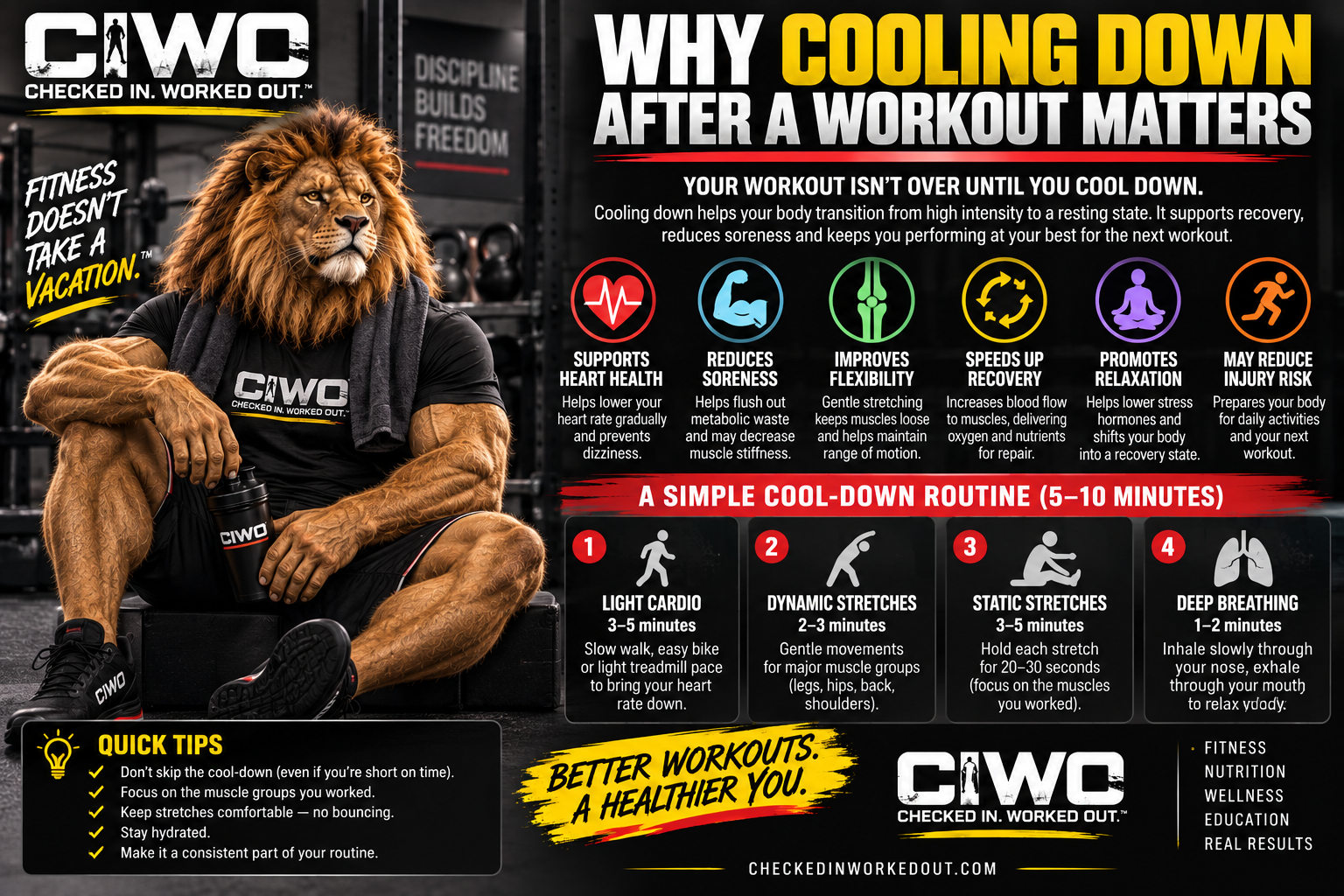

Finishing the final set or cardio interval may feel like the end of a workout, but giving your body a few minutes to transition toward rest can be a useful part of the session. A post-workout cool-down usually means gradually reducing exercise intensity and, when appropriate, adding comfortable mobility or stretching.
What Happens When You Stop Exercising?
During exercise, heart rate and breathing increase to support working muscles. Stopping demanding activity abruptly can leave some people feeling lightheaded as the cardiovascular system adjusts. Continuing with easy movement for several minutes provides a more gradual transition toward resting levels.
Why a Gradual Cool-Down Matters
After running, cycling, stepping, circuit training or another demanding session, lowering the pace progressively is often more comfortable than immediately becoming still. Walking slowly, pedaling easily or performing a low-intensity version of the activity can form the first part of the cool-down.
Stretching and Flexibility
When flexibility is one of your goals, the end of a workout can be a convenient time for gentle static stretching because the muscles are already warm. Stretch only to mild tension rather than pain, avoid bouncing, and focus on areas you actually trained. Stretching may improve flexibility over time, but it should not be presented as a guaranteed way to prevent post-workout soreness.
Cooling Down and Recovery
Slower movement and controlled breathing create a clear transition from training intensity to recovery. The routine can also provide a mental finish to the session: lower the pace, check how your body feels, hydrate as appropriate and prepare for the rest of your day.
A Simple 5–10 Minute Cool-Down
- Reduce the pace for 3–5 minutes. Walk slowly, pedal easily or use another comfortable low-intensity movement.
- Let breathing settle. Use slow, controlled breathing while your effort level decreases.
- Add gentle mobility. Move the hips, shoulders, ankles or other areas involved in your workout through comfortable ranges.
- Stretch when appropriate. If flexibility is a goal, hold comfortable static stretches for roughly 15–30 seconds without bouncing or forcing the position.
- Hydrate as needed. Fluid needs depend on workout duration, intensity, environment and the individual.
Match the Cool-Down to Your Workout
After a treadmill run, gradually decrease your speed into an easy walk. After cycling, use several minutes of easy pedaling. After resistance training, light walking followed by gentle mobility for the muscles you trained may be enough. The cool-down does not need to become another workout—the goal is to progressively lower the demand.
What a Cool-Down Cannot Do
Cooling down is useful, but its effects should not be exaggerated. It cannot guarantee that you will avoid soreness or injury, and it does not replace sleep, appropriate training progression, hydration or adequate nutrition. Think of it as one part of a larger recovery strategy.
When to Stop Instead of Pushing Through
A normal cool-down is intended for the transition after ordinary exercise. Chest pain, fainting, severe shortness of breath, sudden weakness or another concerning symptom calls for stopping exercise and seeking appropriate medical attention rather than trying to push through it. People with medical conditions should follow their healthcare professional’s guidance for exercise and recovery.
Frequently Asked Questions
How long should a cool-down last?
For many workouts, about 5–10 minutes is practical. Longer or more intense sessions may justify a more gradual transition.
Do I have to stretch after every workout?
No. Stretching can be useful when flexibility or mobility is a goal, while gradually reducing intensity is often the more relevant cool-down step after demanding aerobic exercise.
Does cooling down prevent muscle soreness?
Not reliably. Soreness is influenced by exercise novelty, volume and intensity. Recovery also depends on factors such as sleep, nutrition and sensible programming.
Make the Last Few Minutes Count
A cool-down does not need to be complicated. Reduce your pace, allow your breathing to settle, add comfortable mobility or stretching when useful, and then move into the rest of your recovery routine.
Keep building your fitness routine with CIWO. Explore more workouts, fitness education and wellness content from Checked In. Worked Out.