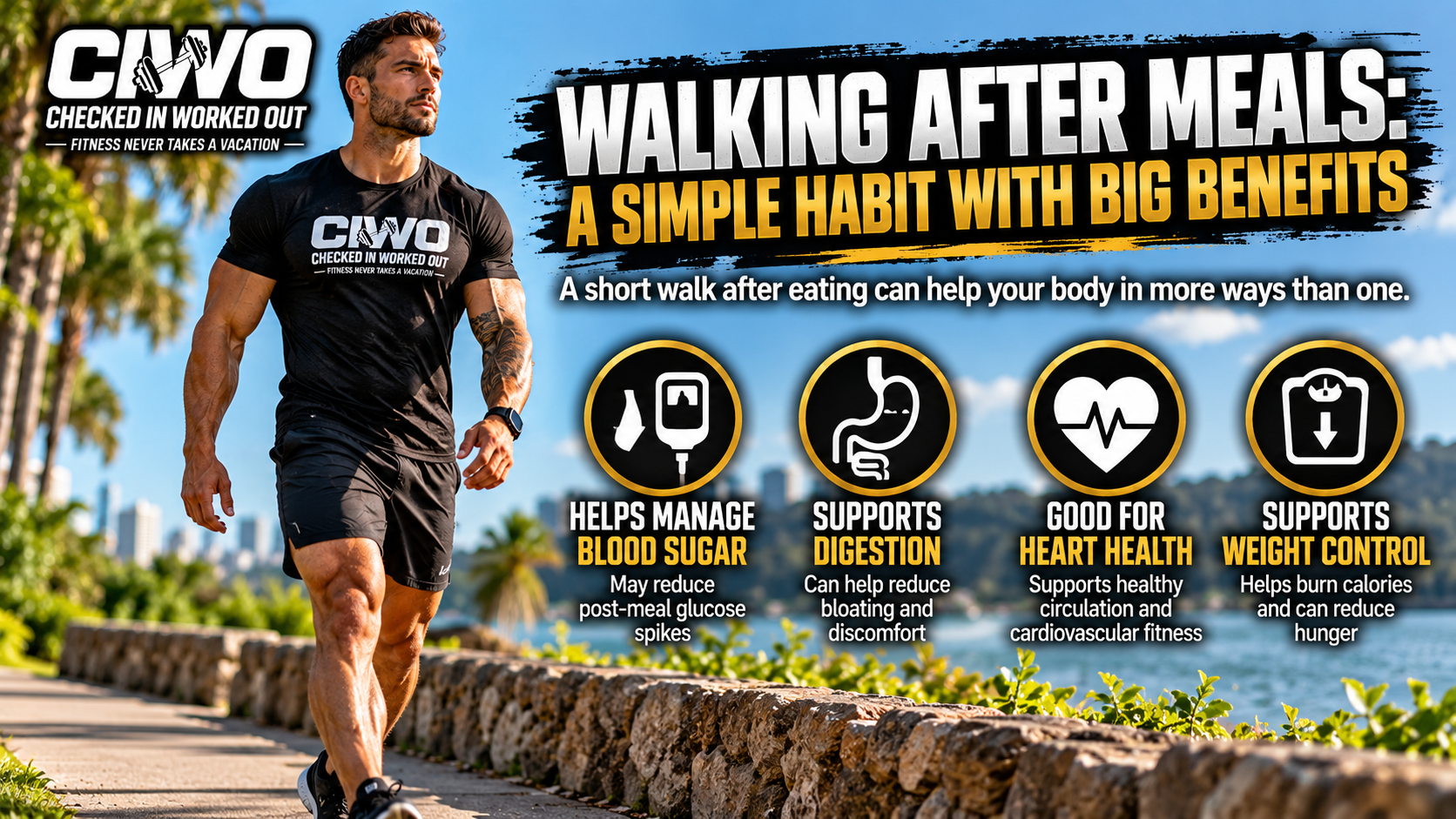

A short walk after eating is one of the simplest ways to add more movement to your day. You do not need special equipment, a complicated workout plan or a long block of free time. For many people, walking for even a few minutes after a meal can be an approachable way to break up sitting and build a more active daily routine.
Research also suggests that the timing of activity matters for the body’s immediate response to a meal. A 2023 systematic review and meta-analysis found that exercise performed after eating reduced post-meal glucose excursions more than exercise performed before eating or remaining inactive. The included trials were small, however, so this is best viewed as a useful habit supported by emerging evidence—not a treatment or guarantee of a particular health outcome.
Why Walk After a Meal?
After a meal, carbohydrates are digested and glucose enters the bloodstream. Working muscles can use glucose for energy. Light-to-moderate movement soon after eating gives those muscles an immediate job to do and may help reduce the size of the temporary post-meal rise in blood glucose.
Walking also provides a practical way to replace some sedentary time with activity. That matters beyond any single meal. Regular physical activity supports cardiovascular health, metabolic health, sleep, mood, bone health and other aspects of overall wellness.
How Long Should You Walk?
You do not have to turn a post-meal walk into a full workout. A practical starting point is 5 to 15 minutes at a comfortable pace after one meal each day. If that feels good, you can gradually extend the walk or add short walks after other meals.
One randomized crossover study in adults with type 2 diabetes compared a single 30-minute daily walk with three 10-minute walks performed after the main meals. Post-meal glucose exposure was lower during the post-meal walking approach. That study involved a specific population and should not be assumed to produce the same result for everyone, but it illustrates why short bouts of movement can still be meaningful.
When Should You Start Walking?
If you are comfortable walking after eating, you can begin soon after finishing the meal rather than waiting for a long period. A systematic review found that post-meal exercise performed closer to the meal was associated with a greater acute reduction in post-meal glucose excursions than waiting longer. Comfort still matters: after a particularly large meal, start gently and adjust the timing if immediate movement causes discomfort.
Keep the Intensity Comfortable
A post-meal walk does not need to be fast. Think purposeful but comfortable movement. You should generally be able to talk while walking. The goal is to create a repeatable habit, not to turn every meal into a demanding cardio session.
An Easy Way to Build More Daily Activity
Current U.S. physical-activity guidance recommends that adults work toward at least 150 minutes of moderate-intensity aerobic activity each week plus muscle-strengthening activity on at least two days. Activity can be accumulated in smaller chunks, so short walks can contribute to a more active week even when your schedule does not allow one long workout.
Simple Ways to Make the Habit Stick
- Start with the meal after which you normally have the most free time.
- Set a simple goal such as walking around the block for 10 minutes after dinner.
- Walk with a family member, friend or dog.
- Use an indoor hallway, treadmill or shopping area when weather makes outdoor walking impractical.
- Keep comfortable walking shoes accessible.
- Pair the walk with an existing cue: finish eating, clear the table, put on your shoes and go.
- Focus on consistency before increasing speed or duration.
Does Walking After Meals Replace Exercise?
No. Post-meal walking is best viewed as one piece of an active lifestyle. Short walks can add movement and reduce sitting, but a balanced fitness routine can also include longer aerobic sessions, resistance training, mobility work and recovery appropriate for your abilities and goals.
Safety and Individual Considerations
Most people can begin with easy walking, but individual circumstances matter. Stop if you experience chest pain, faintness, unusual shortness of breath or another concerning symptom. People with diabetes who use insulin or medications that can cause low blood sugar may need individualized guidance about activity timing, glucose monitoring, meals and medication. Anyone with a chronic condition, disability, recent procedure or exercise restriction should follow guidance from their healthcare professional about appropriate activity.
Frequently Asked Questions
Is five minutes worth doing? Yes. A five-minute walk is still movement and can be a realistic starting point. Consistency can make it easier to gradually build more activity into your day.
Do I have to walk after every meal? No. Start with one meal if that is what fits your routine. A habit you can maintain is more useful than an ambitious plan you rarely follow.
Should I walk fast? Not necessarily. A comfortable, purposeful pace is appropriate for a simple post-meal walk. Increase intensity only when it suits your fitness level and goals.
Can I walk indoors? Absolutely. A treadmill, indoor track, hallway or other safe walking space can work.
Will walking after meals prevent diabetes? No single habit can guarantee prevention. Regular physical activity is associated with important health benefits and lower risk of type 2 diabetes, while post-meal walking research suggests potential benefits for the immediate glucose response to meals. Risk is influenced by many factors.
The CIWO Takeaway
Walking after meals works because it is simple enough to repeat. You do not need to chase an extreme target. Try a comfortable 5-to-15-minute walk after one meal, pay attention to how you feel, and build from there. Small blocks of movement can become a meaningful part of a consistently active lifestyle.
Sources and Further Reading
- Engeroff T, Groneberg DA, Wilke J. Sports Medicine (2023): systematic review and meta-analysis of exercise timing and acute post-meal glucose response.
- Reynolds AN et al. Diabetologia (2016): randomized crossover study comparing post-meal walking with a single daily walk in adults with type 2 diabetes.
- Centers for Disease Control and Prevention: Adult Activity and Physical Activity Benefits guidance.
This article is for general educational purposes and is not a substitute for individualized medical advice, diagnosis or treatment.