
Sodium is essential—but more is not always better. Your body uses sodium to help regulate fluid balance and support normal nerve and muscle function. The concern is routinely consuming more than your body needs, especially because much of the sodium in American diets comes from packaged, prepared and restaurant foods.
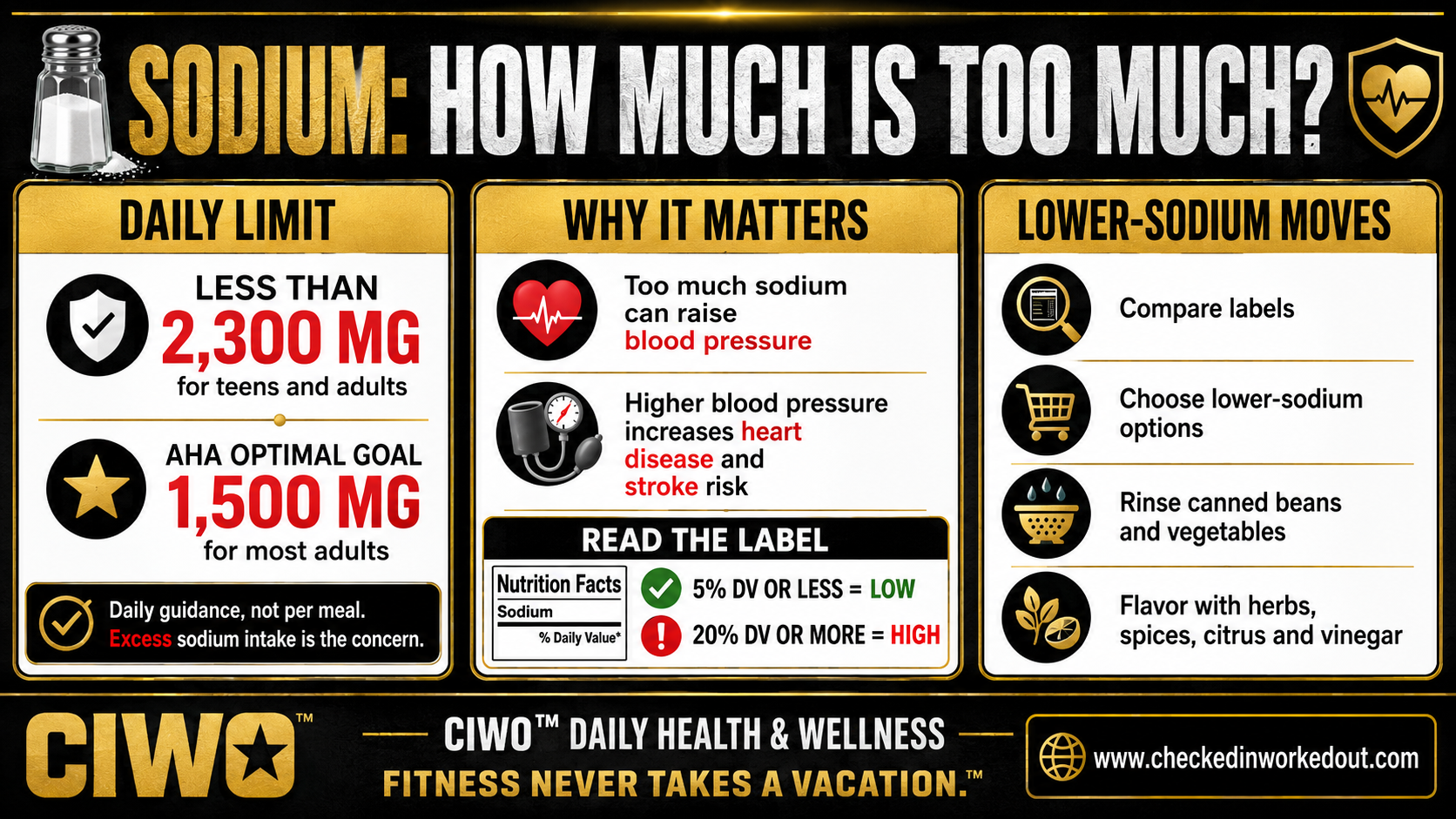
For teens and adults, current federal guidance recommends consuming less than 2,300 milligrams of sodium per day as part of a healthy eating pattern. The American Heart Association recommends no more than 2,300 mg and identifies 1,500 mg per day as an optimal goal for most adults. These are daily totals—not per-meal limits.
What Does Sodium Do?
- Helps maintain fluid and blood-volume balance
- Supports nerve signaling
- Contributes to normal muscle contraction
- Works with potassium and other electrolytes
The body needs some sodium, but most people obtain enough through food without intentionally adding large amounts. Sodium needs can vary with health, climate, activity, sweat losses and medical treatment.
How Much Sodium Is Too Much?
- Federal guidance for teens and adults: less than 2,300 mg per day
- American Heart Association optimal goal: no more than 1,500 mg per day for most adults
- Nutrition Facts Daily Value: 2,300 mg on a 2,000-calorie reference diet
A teaspoon of table salt contains roughly 2,300 mg of sodium, but the sodium you eat is not limited to the salt shaker. Different salts and spoon measurements can vary, and sodium is present in many ingredients and prepared foods.
The 1,500 mg AHA goal may not fit everyone, including some people who lose large amounts of sodium through prolonged activity or work in hot conditions. Individual targets should be discussed with a qualified healthcare professional when health conditions, medications or unusual sweat losses are involved.
Why Excess Sodium Matters
Consuming too much sodium can increase blood pressure. High blood pressure increases the risk of heart disease and stroke and can affect the heart, brain, kidneys and eyes. Some people respond more strongly to sodium than others, so a normal-feeling day does not reveal whether intake is affecting blood pressure.
- Blood pressure: excess sodium can contribute to higher pressure in the arteries.
- Fluid retention: a salty meal may temporarily increase thirst, puffiness or scale weight because of retained water.
- Heart and kidney workload: sodium management can be especially important when heart or kidney function is impaired.
- Long-term risk: persistent high blood pressure is a major risk factor for cardiovascular disease and stroke.
A sudden increase on the scale after a high-sodium meal is usually water—not instant body-fat gain. However, unexplained or severe swelling, shortness of breath, chest discomfort or rapid weight changes require medical attention.
Where Most Sodium Comes From
Many people focus on table salt, but sodium often accumulates from foods prepared before they reach the plate. A food does not need to taste extremely salty to contribute substantially when it is eaten frequently or in multiple servings.
- Pizza, sandwiches, burgers and restaurant meals
- Deli meat, bacon, sausage and cured meats
- Canned soups, chili, beans and vegetables
- Frozen meals and packaged noodle dishes
- Bread, rolls, tortillas, crackers and snack foods
- Cheese and processed cheese products
- Soy sauce, bottled dressings, marinades and condiments
- Seasoning packets and flavored convenience foods
Salt and Sodium Are Not the Same
Table salt is sodium chloride, so sodium is only part of its weight. The Nutrition Facts label reports sodium in milligrams, not grams of salt. Sea salt, kosher salt and pink salt are not automatically low-sodium choices. Compare labels and measure what you use.
How to Read Sodium on a Food Label
1. Start with the serving size
The sodium number applies to one listed serving. If you eat two servings, you consume twice the sodium shown.
2. Find sodium in milligrams
Use the milligram amount to estimate your running daily total. Compare similar products using the same serving size.
3. Check the percent Daily Value
As a general FDA label guide, 5% Daily Value or less is low and 20% Daily Value or more is high. Several moderate-sodium foods can still add up quickly.
4. Watch the whole package
A soup, frozen entrée or snack package may contain more than one serving. Calculate the amount you actually plan to eat.
What Sodium Claims Mean
- Sodium-free: contains a very small amount per serving under the regulatory definition.
- Low sodium: meets the FDA limit for a low-sodium claim per serving.
- Reduced or less sodium: contains at least 25% less sodium than the reference food—but it can still be high.
- No salt added or unsalted: no salt was added during processing, but the food may naturally contain sodium.
Do not judge a product by the front label alone. Confirm the serving size, milligrams and percent Daily Value on the Nutrition Facts panel.
Eight Practical Ways to Reduce Sodium
- Compare labels for bread, sauces, soup, deli meat, frozen meals and snacks.
- Choose lower-sodium or no-salt-added versions when they fit your needs.
- Rinse canned beans and vegetables under running water before using them.
- Cook more meals from basic ingredients so you control the seasoning.
- Flavor food with garlic, onion, herbs, pepper, citrus, vinegar and salt-free spices.
- Use soy sauce, dressings, marinades and seasoning packets in measured amounts.
- Ask restaurants for sauces and dressings on the side and choose simpler preparations.
- Reduce sodium gradually so your taste preferences have time to adjust.
Sodium, Exercise and Sweating
Most routine workouts do not automatically require a high-sodium sports drink or electrolyte supplement. Water and normal meals are often sufficient for shorter sessions. Sodium replacement becomes more relevant during prolonged exercise, repeated hard sessions, heavy sweating, hot or humid conditions or when a clinician has identified a specific need.
Sweat rate and sweat sodium concentration vary widely. Do not copy an athlete’s intake or take salt tablets without a reason. Too much plain water combined with inadequate sodium during prolonged activity can also be dangerous. Endurance athletes should use an individualized hydration strategy developed with a qualified sports dietitian or medical professional.
Who Should Get Personalized Guidance?
- People with high blood pressure
- People with heart failure, kidney disease or liver disease
- People taking diuretics or medicines that affect fluid and electrolytes
- People with significant swelling or medically prescribed fluid limits
- Endurance athletes and workers with prolonged heavy sweat losses
- Older adults, pregnant people and anyone following a therapeutic diet
Never stop a prescription medication or make a drastic sodium change because of a general article. Follow the plan provided by your healthcare team.
A Note About Salt Substitutes
Some salt substitutes replace sodium with potassium chloride. They may help some people reduce sodium, but they are not appropriate for everyone. Kidney disease and certain medicines can increase the risk of dangerously high potassium. Ask a clinician or pharmacist before using a potassium-based salt substitute if you have a medical condition or take prescription medicine.
Frequently Asked Questions
Is 2,300 mg a target I need to reach?
No. It is a recommended upper limit for teens and adults, not a minimum target. Individual needs and prescribed limits can differ.
Is sea salt healthier than table salt?
Sea salt may differ in texture and trace minerals, but it still provides sodium. Measure it and compare labels rather than assuming it is a low-sodium alternative.
Can one salty meal cause fat gain?
A short-term scale increase after a salty meal is commonly related to retained water, not immediate body-fat gain. The effect generally settles as normal eating and hydration resume, but persistent swelling or rapid unexplained changes deserve medical attention.
Do I need electrolytes every time I exercise?
Usually not. Need depends on duration, intensity, climate, sweat loss, diet and health. Longer or hotter sessions may require a more deliberate plan.
How quickly should I lower sodium?
Many people find gradual changes more sustainable. Begin with the largest sources in your diet, compare labels and make repeatable swaps. Follow medical guidance if you have a prescribed restriction.
The Bottom Line
Sodium supports essential body functions, but consistently high intake can raise blood pressure and cardiovascular risk. For teens and adults, keep the general daily total below 2,300 mg unless your healthcare team gives you a different target. Read serving sizes, compare similar foods and focus on the packaged, prepared and restaurant items that contribute most to your intake.
Sources
- U.S. Food and Drug Administration: Sodium Reduction in the Food Supply
- U.S. Food and Drug Administration: How to Understand and Use the Nutrition Facts Label
- Centers for Disease Control and Prevention: About Sodium and Health
- Centers for Disease Control and Prevention: Effects of Sodium and Potassium
- Centers for Disease Control and Prevention: Tips for Reducing Sodium Intake
- American Heart Association: How Much Sodium Should I Eat Per Day?
Shop CIWO Fitness Picks
Looking for meal-prep tools, kitchen essentials, hydration products and fitness equipment? Visit the Checked In. Worked Out. Shop and explore products selected to support an active lifestyle.
Affiliate disclosure: Some shop links may be affiliate links. CIWO may earn a commission from qualifying purchases at no additional cost to you.
Medical Disclaimer
This article provides general education and is not medical advice, diagnosis or treatment. Sodium and fluid needs vary with age, health, medications, pregnancy, activity, climate and sweat losses. Consult a physician or registered dietitian for individualized guidance, especially if you have high blood pressure, kidney disease, heart failure or a prescribed sodium or fluid limit.
Fitness Never Takes a Vacation.™