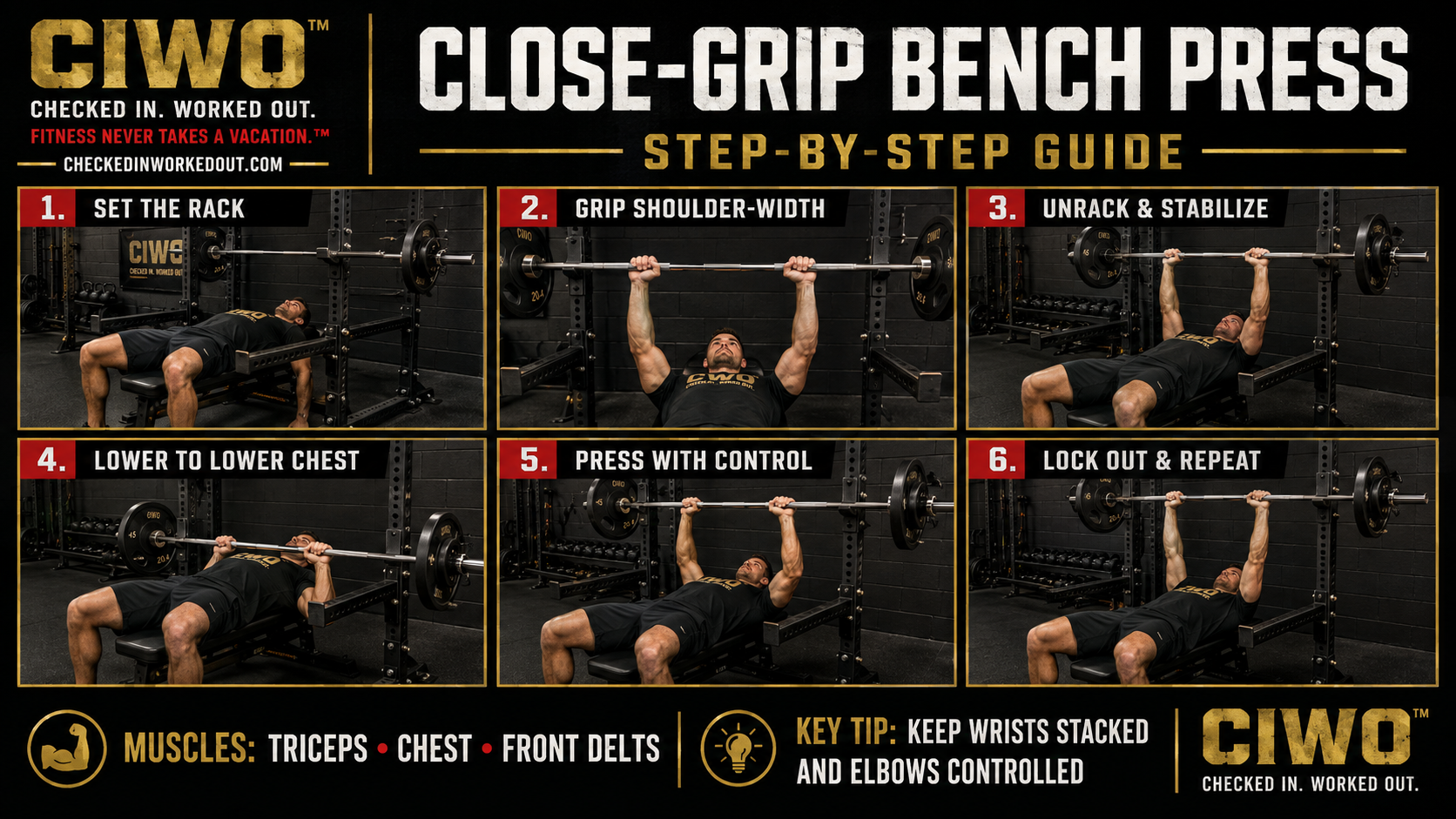

The Close-Grip Bench Press is a compound upper-body press that emphasizes the triceps while also training the chest and front deltoids. Unlike an extremely narrow, hands-together grip, an effective close grip is generally around shoulder width so the wrists can remain stacked over the forearms.
Use a stable rack, collars, correctly positioned safety arms and a capable spotter when appropriate. Control the bar toward the lower chest, keep the elbows closer to the torso without forcing them against your sides and press smoothly back above the shoulders.
Exercise Overview
- Primary muscle: Triceps brachii
- Secondary muscles: Pectoralis major and anterior deltoids
- Movement: Horizontal pressing with elbow extension
- Equipment: Flat bench, power rack or bench station, barbell, plates, collars and safety arms
- Level: Intermediate
Muscles Worked
- Primary: All three heads of the triceps brachii
- Secondary: Pectoralis major and anterior deltoids
- Stabilizing: Upper back, rotator cuff, forearms, wrists and core
Benefits
- Builds triceps strength with a compound pressing movement.
- Trains the chest and shoulders alongside the triceps.
- Can support stronger bench-press lockout performance.
- Allows progressive loading when technique remains consistent.
- Fits upper-body, push-day and dedicated arm-training programs.
Equipment and Setup
- Center a flat bench securely inside a rack or use a stable bench-press station.
- Set the hooks so you can unrack the bar with only a slight elbow bend. Position the safety arms just below your controlled bottom position.
- Load both sides evenly and secure the plates with collars.
- Lie with your eyes approximately under the bar. Keep your head, upper back and glutes supported and plant both feet firmly.
- Retract and gently depress the shoulder blades to create a stable upper-back position.
- Take a closed overhand grip around shoulder width, with thumbs wrapped and wrists stacked above the forearms.
How to Perform the Close-Grip Bench Press
- Set the rack: Confirm the bench, hooks, safety arms, plates and collars are secure. Arrange a spotter when needed.
- Grip shoulder-width: Wrap your thumbs around the bar. Keep the wrists straight and hands approximately in line with the shoulders.
- Unrack and stabilize: Brace your core, straighten the arms and guide the bar above the shoulder joints without losing upper-back tension.
- Lower to the lower chest: Inhale and bring the bar down under control. Track the elbows closer to the torso while keeping the forearms approximately vertical from the front.
- Press with control: Lightly touch the lower chest or stop just above it, then drive through the planted feet and extend the elbows. Guide the bar slightly back toward the shoulders.
- Lock out and repeat: Finish with controlled elbow extension rather than snapping the joints. Stabilize above the shoulders before the next repetition and rack only when the bar is secure.
Key Form Checklist
- Use a full, thumbs-around grip approximately shoulder width.
- Keep the knuckles toward the ceiling and wrists stacked over the forearms.
- Maintain head, upper-back and glute contact with the bench.
- Plant both feet and keep the shoulder blades set.
- Let the elbows track naturally closer to the torso; do not force them against your ribs.
- Lower toward the lower chest with control and avoid bouncing.
- Keep the bar balanced over both hands and repeat the same path.
Tempo and Breathing
- Inhale and brace before lowering the bar.
- Use approximately 2–3 seconds for the lowering phase.
- Pause lightly at the bottom without relaxing or bouncing.
- Exhale through the press while maintaining trunk tension.
- Reset your breath and position before the next repetition.
Suggested Sets and Repetitions
- Technique beginner: 2–3 sets of 8–12 repetitions with a light load
- Muscle building: 3–4 sets of 6–12 controlled repetitions
- Strength emphasis: 3–5 sets of 4–6 repetitions for experienced lifters with appropriate spotting
- Muscular endurance: 2–3 sets of 12–15 repetitions
- Rest: About 60–120 seconds, using longer recovery for heavier sets
Choose a load that leaves you in full control of the unrack, descent, touchpoint and rerack. Increase resistance gradually only after the target repetitions remain consistent.
Common Mistakes and Fixes
- Hands too close: Widen to approximately shoulder width so the wrists and elbows can align comfortably.
- Wrists bent backward: Place the bar low in the palm and stack the knuckles over the forearms.
- Elbows flaring excessively: Lower the load and guide the elbows closer to the torso.
- Elbows pinned too tightly: Allow a natural angle rather than forcing the arms against the ribs.
- Touching too high: Aim toward the lower chest so the forearms remain better aligned.
- Bouncing the bar: Reduce the load and pause softly at the bottom.
- Hips lifting: Keep the glutes on the bench and use stable foot pressure.
- Losing shoulder position: Reset the shoulder blades and avoid reaching the shoulders forward.
- Unsafe rerack: Fully control the bar over the shoulders before guiding it into both hooks.
Variations and Alternatives
- Smith-machine close-grip bench press
- Neutral-grip dumbbell bench press
- Close-grip floor press
- Close-grip incline bench press
- Close-hand push-up
- Rope triceps pushdown
- Cable overhead triceps extension
Safety Notes
Inspect the rack, bench, bar and plates before training. Use collars, a full grip, correctly positioned safety arms and a capable spotter for challenging sets. Never use a load you cannot control or bench alone without a safe escape system. Stop if you feel sharp pain, numbness, dizziness or unusual discomfort in the chest, shoulders, elbows, wrists, neck or back. Seek guidance from a qualified healthcare or fitness professional when appropriate.
Frequently Asked Questions
How close should my hands be?
Start around shoulder width. NASM describes the grip as slightly narrower than shoulder width, while ACE places the hands in line with the shoulders. Adjust modestly for comfort while keeping the wrists stacked and forearms controlled.
Where should the bar touch?
For many lifters, the bar approaches the lower chest or sternum. The exact touchpoint should allow stable wrists, a repeatable path and approximately vertical forearms when viewed from the front.
Should my elbows stay against my sides?
No. Keep them closer to the torso than in a wide-grip bench press, but allow a comfortable natural angle. Excessive flare and forced over-tucking can both disrupt alignment.
Is this only a triceps exercise?
No. It emphasizes the triceps, but the chest and anterior deltoids also contribute. It is a compound press rather than a triceps-isolation movement.
Bottom Line
The Close-Grip Bench Press is a productive triceps-focused compound exercise when the grip remains practical, the wrists stay stacked, the bar travels under control and the rack is configured for safety.
Sources and Further Reading
- National Academy of Sports Medicine: Close-Grip Bench Press
- American Council on Exercise: Close-Grip Bench Press
- American College of Sports Medicine: Updated Resistance Training Guidelines
Shop CIWO Fitness Gear
Looking for weight-training accessories, benches and home-gym equipment? Visit the Checked In. Worked Out. Shop to explore fitness gear for training at home, in the gym and on the go.
Affiliate disclosure: Some shop links may be affiliate links. CIWO may earn a commission from qualifying purchases at no additional cost to you.
Exercise disclaimer: This content is for general educational purposes and is not medical advice. Exercise carries risk. Use appropriate equipment and technique, work within your abilities and consult a qualified professional when needed.
Fitness Never Takes a Vacation.™