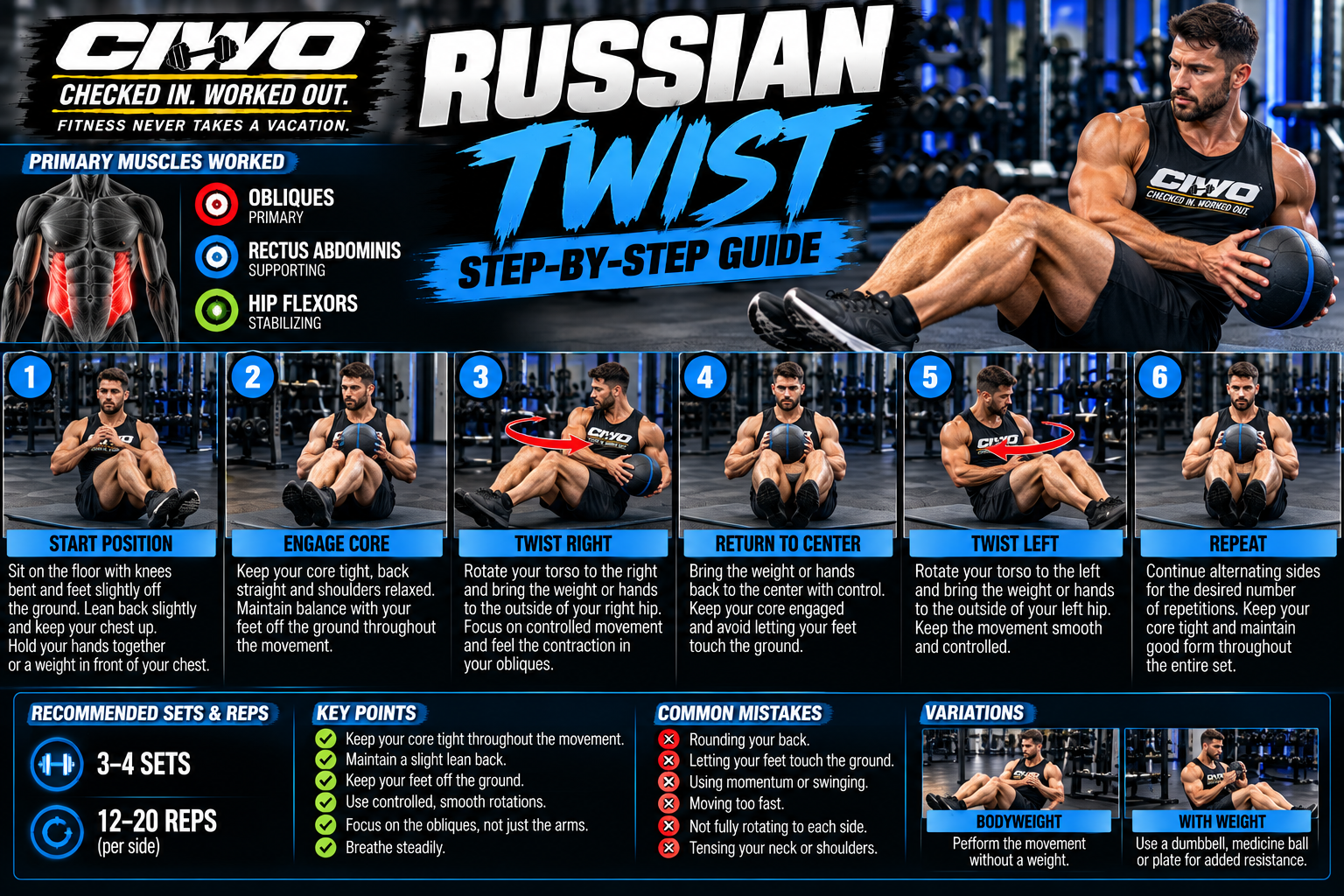

Learn the Russian Twist with a practical, step-by-step CIWO guide covering form, muscles worked, beginner modifications, common mistakes, and safety tips.
What Is the Russian Twist?
The Russian Twist is a seated core exercise that challenges the obliques and other trunk muscles to control rotation. It can be performed without equipment or with a light medicine ball. The aim is quality movement rather than speed or extreme range of motion.
Muscles Worked
The internal and external obliques help rotate and stabilize the trunk. The rectus abdominis and deeper abdominal muscles contribute to control, while the hip flexors assist with maintaining the seated position.
Step-by-Step Russian Twist Guide
1. Sit on a mat with knees bent and feet planted. Lean back slightly from the hips while maintaining a comfortable spine position.
2. Hold your hands together in front of your chest, or hold a light medicine ball close to your body. Brace gently and breathe.
3. Rotate your chest and shoulders a small, comfortable distance toward your right side, keeping your movement controlled.
4. Return to center without jerking or bouncing.
5. Rotate toward the left side, then return to center. Each movement to one side counts as one repetition.
6. Continue alternating at a deliberate pace. If you can maintain stable control, you may experiment with lifting your heels slightly; this is optional.
Sets, Reps and Progressions
Begin with 2 sets of 6–10 controlled rotations per side, resting as needed. Increase repetitions or add a light weight only when technique stays consistent. Start with feet on the floor. For a gentler alternative, try a seated torso rotation without leaning back, or choose a dead bug or bird dog exercise.
Common Mistakes
Avoid whipping your arms or weight side to side, rotating beyond a comfortable range, holding your breath, and excessively rounding or arching your back. Keep the movement driven by the torso rather than swinging the shoulders. There is no need to touch the floor with a weight.
Safety and Suitability
Rotational exercise may not suit everyone, especially those with current back pain, recent spinal injury, or clinician-advised movement restrictions. Skip or modify the exercise if it causes pain, and consult an appropriate qualified professional for individualized guidance. A Russian Twist is not essential for core strength; anti-rotation and other stability exercises are alternatives.
Frequently Asked Questions
Do I need a medicine ball? No. Start with your hands together.
Should my feet be off the ground? No. Planted feet are often easier to control.
Does this exercise burn belly fat? No exercise selectively removes fat from one body area.
How fast should I go? Slow enough to maintain balance, breathing and spinal control.
Explore CIWO