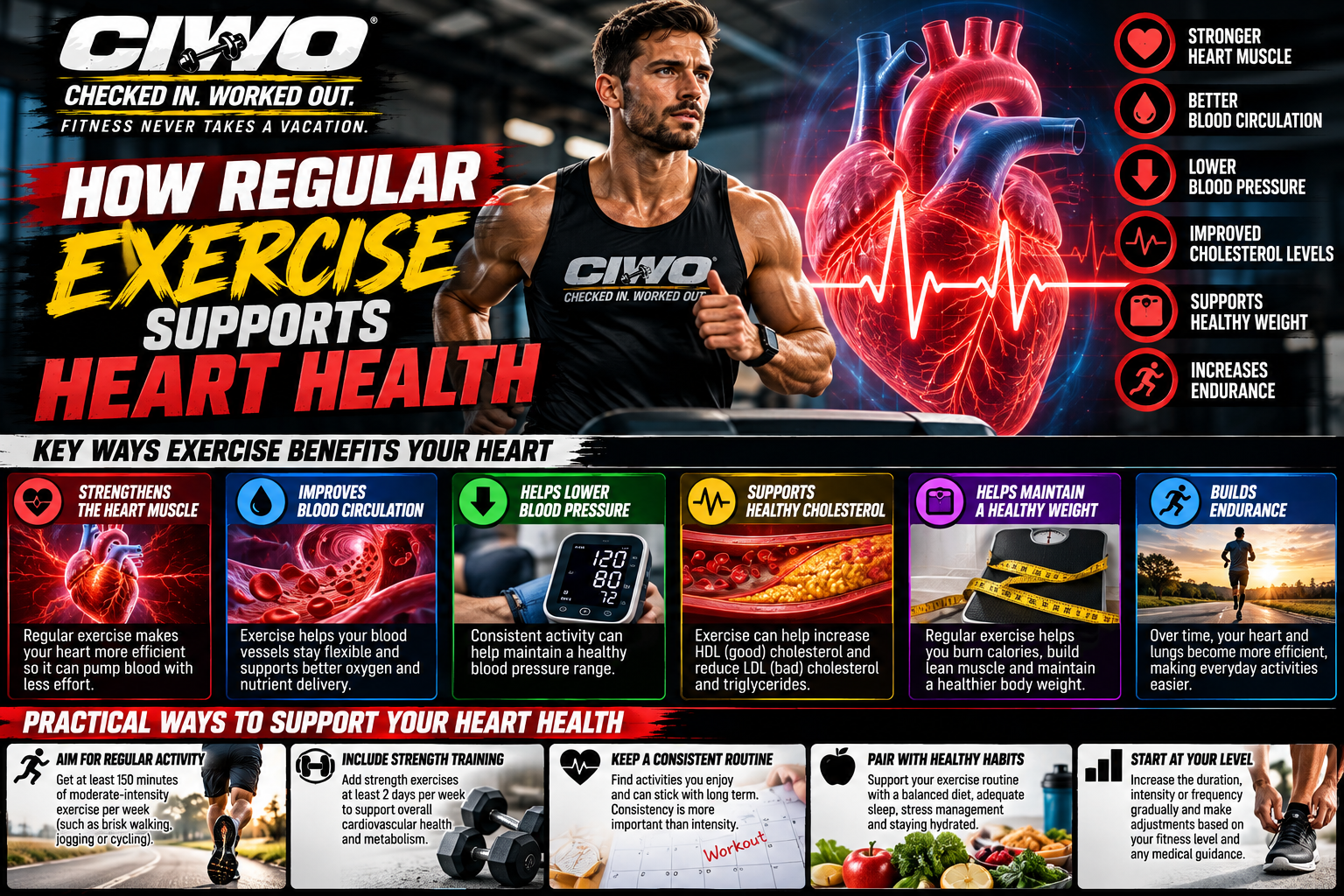

Regular physical activity is one of the lifestyle habits associated with better cardiovascular health. Exercise can improve cardiorespiratory fitness, help manage blood pressure, influence blood lipids, improve insulin sensitivity and support weight management. The benefits develop through consistent activity over time rather than from a single workout.
How Exercise Supports the Heart
During exercise, working muscles need more oxygen, so heart rate and cardiac output increase. With regular aerobic training, the cardiovascular system adapts and everyday activity can require less relative effort.
1. Improves Cardiorespiratory Fitness
Brisk walking, cycling, jogging, swimming and other aerobic activities train the heart, lungs and blood vessels to work together. Regular training can improve cardiorespiratory fitness, an important marker associated with cardiovascular and overall health.
2. Can Help Manage Blood Pressure
Regular aerobic activity and resistance training can contribute to healthier blood-pressure management for many adults. Exercise does not replace prescribed treatment, and responses vary between individuals.
3. Supports Circulation and Vascular Function
Physical activity supports the ability of blood vessels to respond to changing demands and helps the cardiovascular system deliver oxygen during activity efficiently.
4. Can Support Healthier Blood Lipids
Regular activity can favorably affect triglycerides and HDL cholesterol and may contribute to improvements in other lipid measures. Exercise is one part of cardiovascular risk management alongside nutrition, tobacco avoidance, sleep and medical care.
5. Supports Blood-Sugar Regulation
Contracting muscles use glucose for energy, and regular activity can improve insulin sensitivity. Metabolic health and cardiovascular health are closely connected.
6. Supports Weight Management
Exercise increases energy expenditure and resistance training can help preserve or build lean tissue. Exercise is not a guarantee of weight loss, and its cardiovascular benefits extend beyond changes on the scale.
Strength Training Matters Too
Heart-health exercise is not limited to cardio. Resistance training improves muscular strength and function while contributing to cardiometabolic health. A balanced routine can include both aerobic and muscle-strengthening activity.
How Much Exercise?
For substantial health benefits, U.S. physical-activity guidance for adults recommends at least 150–300 minutes of moderate-intensity aerobic activity per week, or 75–150 minutes of vigorous-intensity activity, or an equivalent combination. Adults are also advised to perform muscle-strengthening activities involving all major muscle groups on 2 or more days per week. People who are inactive can begin with smaller amounts and build gradually.
What Counts as Moderate Intensity?
A practical guide is the talk test: at moderate intensity, you are breathing harder than at rest but can generally still speak in sentences. Vigorous activity makes conversation more difficult. Heart-rate zones and wearable estimates vary between individuals and devices.
Simple Ways to Add Movement
- Take a brisk walk.
- Use a treadmill, bike or elliptical.
- Cycle outdoors where conditions are safe.
- Swim or perform water-based exercise.
- Add resistance training two or more days per week.
- Break up long periods of sitting with movement.
- Choose activities you enjoy enough to repeat consistently.
Start at Your Current Level
You do not need to begin with intense workouts. Start with manageable sessions and gradually increase duration, frequency or intensity. Consistency is more useful than repeatedly choosing workouts that are too demanding to sustain.
Exercise Is One Part of Heart Health
Physical activity works alongside a nutritious eating pattern, adequate sleep, avoiding tobacco, managing health conditions and taking prescribed medications as directed. Exercise should not be treated as a substitute for medical evaluation or treatment.
When to Get Medical Guidance
People with known cardiovascular disease, significant symptoms, major medical conditions or specific exercise restrictions should follow individualized clinical advice. Stop exercising and seek urgent medical attention for warning signs such as chest pain or pressure, fainting, or severe or unusual shortness of breath.
The CIWO Takeaway
Regular exercise supports heart health through multiple pathways: improving cardiorespiratory fitness, supporting blood-pressure and blood-sugar management, contributing to vascular and metabolic health, and improving overall physical capacity. Start at an appropriate level, combine aerobic and strength training when practical, and build a routine you can maintain.