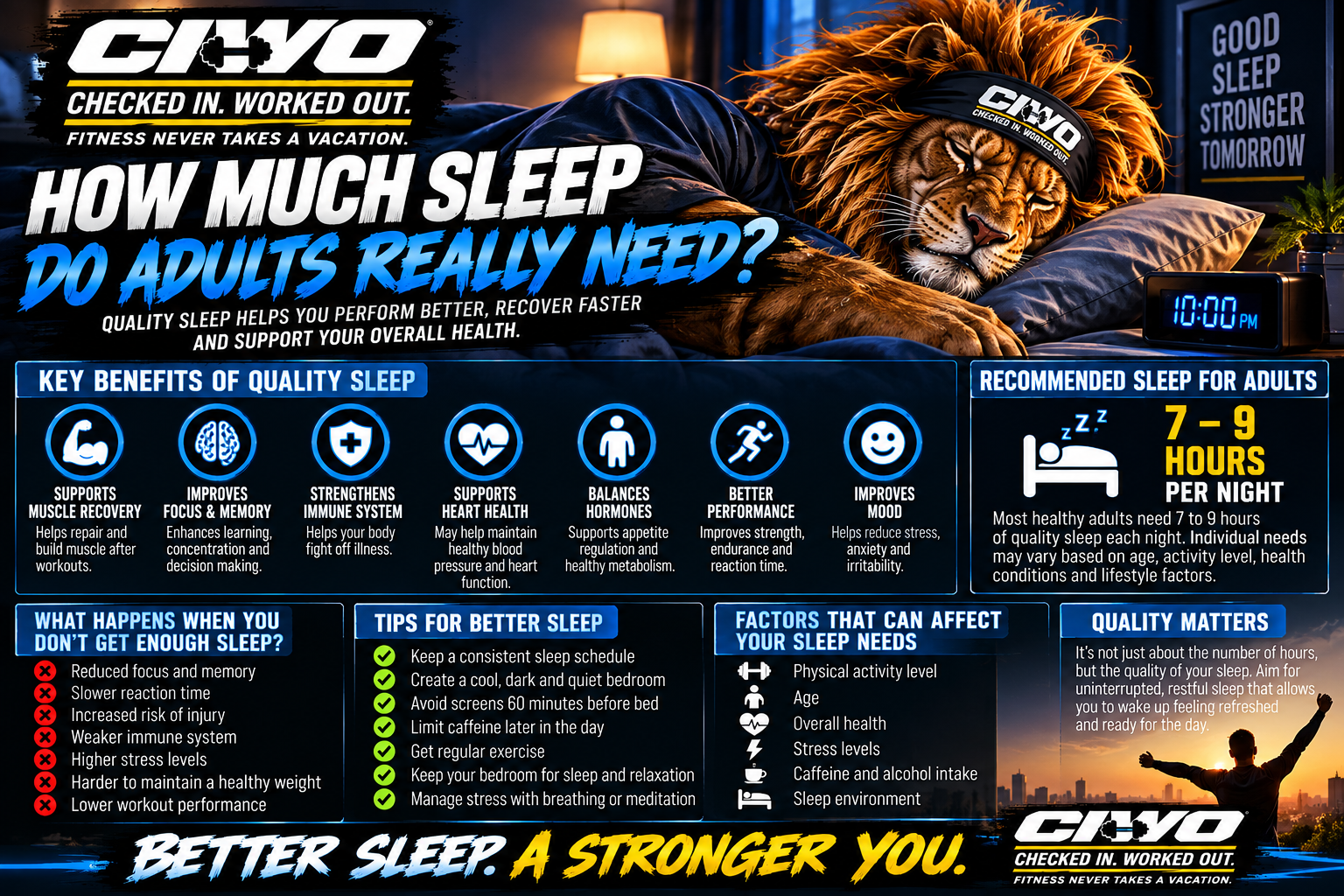

Sleep is a foundational part of health and recovery. Here is what the adult sleep recommendations actually mean—and how to use them in everyday life.
How much sleep do adults need?
For most adults ages 18–64, a practical target is 7–9 hours of sleep per night. Adults 65 and older are often advised to aim for 7–8 hours. The American Academy of Sleep Medicine and Sleep Research Society recommend adults regularly sleep at least 7 hours; individual needs vary. More is not always better, and time in bed is not the same as time asleep.
Why sleep matters
Adequate, consistent sleep supports attention, learning, mood, immune function and cardiovascular and metabolic health. Sleep also contributes to normal exercise recovery. Sleeping less than you need over time can affect alertness, reaction time and day-to-day performance.
Signs you may not be getting enough
Common clues include frequent daytime sleepiness, difficulty concentrating, irritability, needing multiple alarms or regularly falling asleep unintentionally. Feeling tired despite adequate time in bed may indicate disrupted sleep or another health concern.
Seven practical habits for better sleep
Keep a reasonably consistent bedtime and wake time, including weekends. Get daylight exposure during the day. Be physically active most days. Make the bedroom dark, quiet and comfortably cool. Limit caffeine later in the day, based on your sensitivity. Avoid heavy meals and excess alcohol near bedtime. Wind down with a relaxing routine and reduce bright light or stimulating screen use when it interferes with sleep.
Does exercise change how much sleep you need?
Hard training can increase your need for recovery, but there is no single extra-hour rule for every active adult. Monitor daytime alertness, mood, and recovery, and adjust your schedule to allow sufficient sleep.
What about naps and catching up?
A short nap may temporarily improve alertness, but it does not consistently replace regular nighttime sleep. Sleeping longer on days off may help with some sleep debt, but a steady sleep schedule is usually more useful than repeated cycles of deprivation.
When to talk to a healthcare professional
Seek medical advice if you regularly have trouble falling or staying asleep, feel excessively sleepy during the day, snore loudly with witnessed breathing pauses, or have sleep problems that affect daily life. Avoid driving while drowsy.
Quick sleep checklist
• Plan for 7–9 hours if you are 18–64; many adults 65+ aim for 7–8 hours.
• Prioritize consistent timing and adequate sleep quality.
• Track daytime alertness rather than obsessing over a single nightly number.
• Get help for persistent insomnia, heavy snoring, breathing pauses or excessive daytime sleepiness.
Frequently asked questions
Is six hours enough for most adults?
Usually not. Most adults need at least seven hours on a regular basis, though needs vary.
Is eight hours a strict requirement?
No. Eight hours is a useful midpoint, not a universal rule. Sleep duration and quality both matter.
Can I improve sleep with exercise?
Regular physical activity can support sleep, although the timing and intensity that work best differ by person.
Should I take melatonin every night?
Do not assume a supplement is necessary. Melatonin can be useful for some timing-related sleep issues but is not a universal treatment for insomnia; discuss persistent problems or medication interactions with a clinician.
Sources and further reading
Centers for Disease Control and Prevention (CDC): About Sleep — https://www.cdc.gov/sleep/about/index.html
American Academy of Sleep Medicine and Sleep Research Society adult sleep duration consensus: https://doi.org/10.5664/jcsm.4758
National Institute on Aging: A Good Night’s Sleep — https://www.nia.nih.gov/health/sleep/good-nights-sleep
Explore CIWO
Learn more about practical health, wellness, nutrition and training at Checked In. Worked Out.
Educational information only; not individualized medical advice.