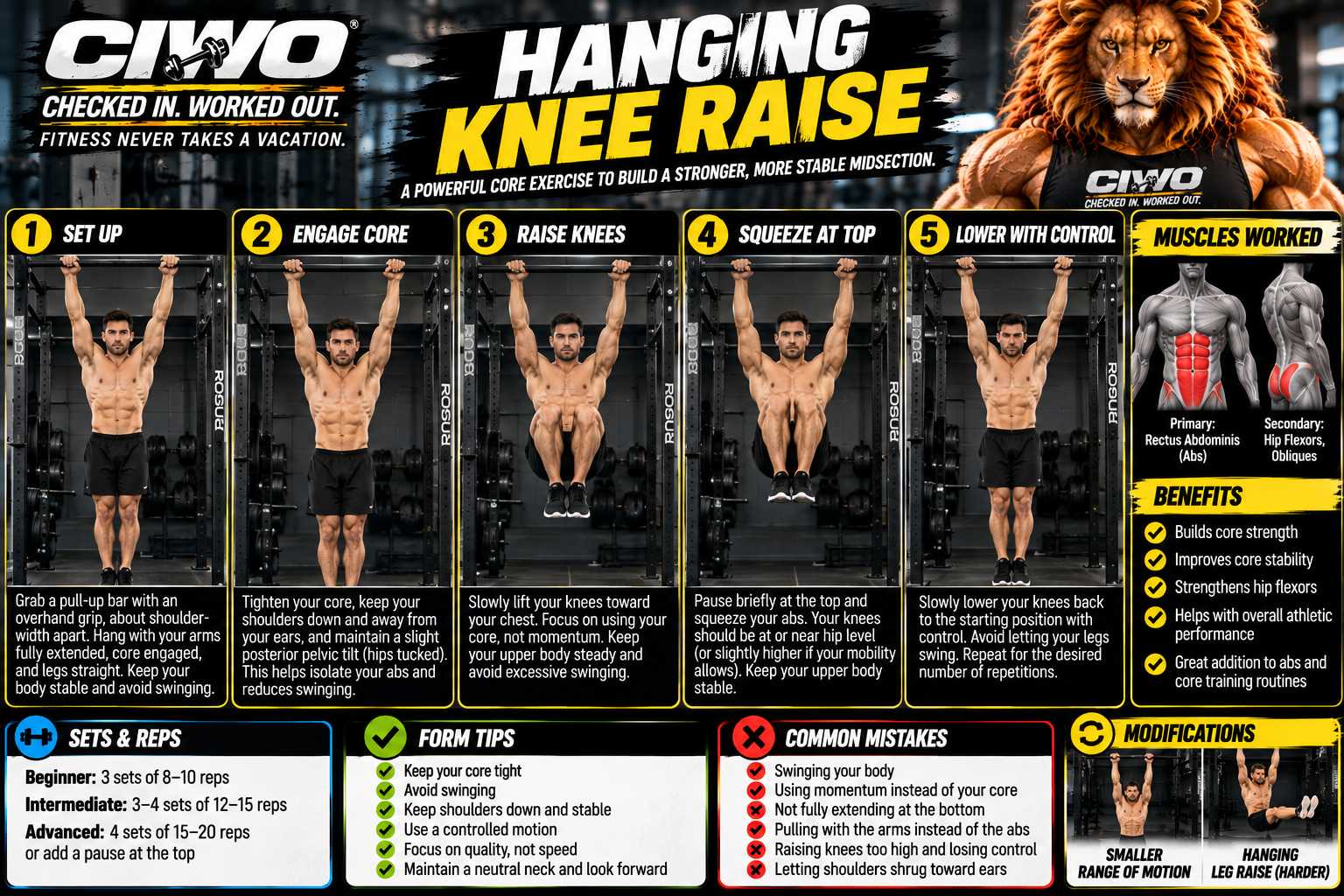

The hanging knee raise is a bodyweight core exercise performed from a pull-up bar. The abdominal muscles help control the pelvis and trunk while the hip flexors contribute to lifting the thighs. Controlled repetitions with minimal swinging are the priority.
Hanging Knee Raise: Step-by-Step
Step 1: Set Up
Grip a secure pull-up bar with both hands using a comfortable grip around shoulder width. Hang with your arms extended and establish a stable shoulder position.
Step 2: Brace and Control the Hang
Brace your trunk before lifting your knees. Keep your rib cage and pelvis controlled and minimize forward-and-backward swinging.
Step 3: Raise the Knees
Bend your hips and knees and bring your thighs upward under control. Continue through the range you can perform without relying on momentum.
Step 4: Control the Top
Briefly control the top position. Think about gently bringing the pelvis toward the rib cage rather than simply throwing the knees higher.
Step 5: Lower Slowly
Lower your legs deliberately to the starting position. Avoid letting the legs drop and swing behind you. Stabilize before the next repetition.
Muscles Worked
The rectus abdominis and other trunk muscles help stabilize and control the pelvis and torso. The hip flexors contribute substantially to raising the thighs. The forearms, hands, shoulders and upper back also contribute to maintaining a controlled hang.
Form Tips
- Begin each repetition from a controlled hang.
- Raise and lower the knees deliberately.
- Minimize swinging and momentum.
- Keep your grip secure and shoulders controlled.
- Use a range you can perform consistently.
- Prioritize quality over speed.
Common Mistakes
- Swinging between repetitions.
- Dropping the legs during the lowering phase.
- Jerking the torso to raise the knees higher.
- Using more range than you can control.
- Continuing after grip security deteriorates.
- Rushing repetitions.
How High Should You Raise Your Knees?
There is no universal height every person must reach. Bringing the thighs toward roughly hip level can be a useful reference, but anatomy, mobility and strength differ. Controlled range is more important than forcing the knees toward the chest while swinging.
Sets and Reps
A practical starting point is 2–4 sets of approximately 6–15 controlled repetitions. Beginners can use fewer repetitions or a smaller range. Progress when you can complete clean repetitions without significant swinging.
Progressions and Modifications
If the full movement is difficult, practice controlled hanging, shorter-range knee raises or supported knee-raise variations. As control improves, gradually increase range. More advanced trainees may progress toward straighter-leg variations.
Grip and Safety
Use a stable pull-up station with adequate clearance. Stop the set if you can no longer maintain a secure grip. Avoid uncontrolled swinging. Stop for sharp or unusual pain, dizziness or loss of grip security. If an existing shoulder, elbow, wrist, back or hip condition affects hanging exercise, seek individualized guidance from an appropriate qualified professional.
The CIWO Takeaway
Establish a secure hang, brace your trunk, raise the knees smoothly, control the top and lower deliberately. Once you can consistently perform clean repetitions, gradually progress your range, repetitions or exercise variation.