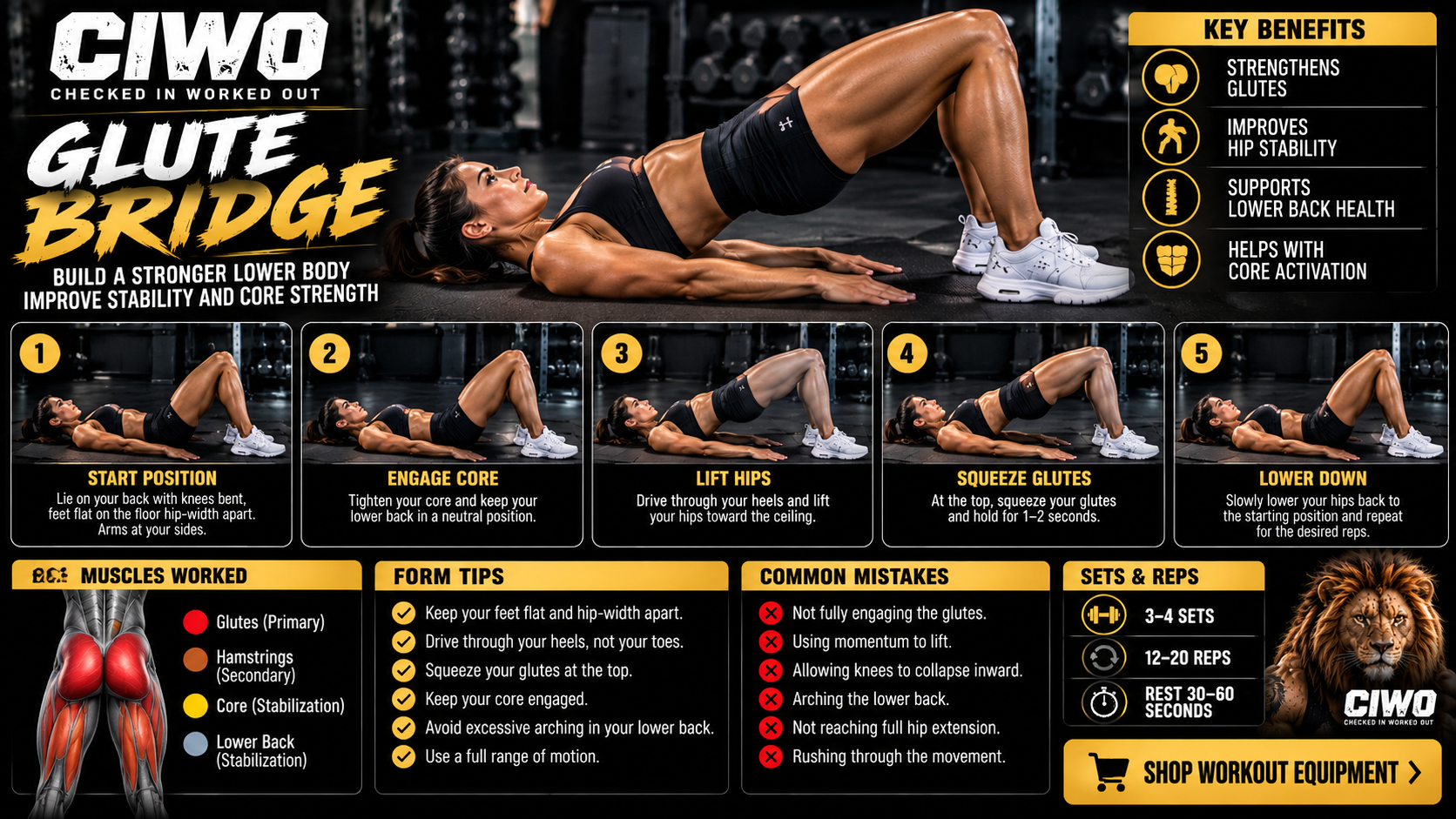

The glute bridge is a floor-based hip-extension exercise that primarily trains the gluteus maximus. This step-by-step guide uses a real human athlete to show how to lift and lower your hips with control. No bench or barbell is needed for the basic variation.
Equipment and Muscles Worked
Equipment: Exercise mat or comfortable floor surface; optional mini resistance band for progression. Primary muscle: Gluteus maximus. Hamstrings and adductor magnus assist with hip extension; abdominal muscles help stabilize the trunk.
Glute Bridge: Five Steps
- Set up: Lie on your back with your knees bent and feet flat, roughly hip-width apart. Place your arms alongside your body. Adjust your feet until your shins are near vertical at the top of the movement.
- Brace: Gently tighten your abdominal muscles, keep your ribs from flaring, and maintain a comfortable head and neck position on the floor.
- Lift: Press through your whole feet and extend your hips, lifting your pelvis until your shoulders, hips, and knees are approximately in line. Keep both knees tracking over your feet.
- Pause: Briefly contract your glutes at the top. Avoid lifting higher by arching your lower back or pushing your ribs upward.
- Lower: Slowly lower your hips to the floor, reset your position, and repeat without bouncing.
Form Tips
- Keep both feet flat; experiment with foot distance until you feel the glutes working without hamstring cramping.
- Move through your hips while keeping your ribs and pelvis controlled.
- Maintain a comfortable, neutral neck position; do not push your head into the floor.
- If you feel sharp pain, stop and adjust the exercise or seek individualized guidance.
Common Mistakes
- Overarching the lower back: Stop at hip extension rather than forcing extra height.
- Knees collapsing inward: Keep knees aligned with your feet.
- Pushing only through the toes: Maintain whole-foot contact.
- Rushing repetitions: Lift and lower deliberately instead of bouncing.
- Placing feet too far away: Adjust foot position if your hamstrings cramp or your hips cannot rise comfortably.
Sets, Repetitions, and Progression
Begin with 2–3 sets of 10–15 controlled repetitions, resting about 45–90 seconds as needed. Start with bodyweight and a comfortable range of motion. When the movement feels easy and controlled, progress by adding a pause at the top, a mini-band above the knees, or appropriately secured resistance. Stop if your form deteriorates.
Glute Bridge vs. Hip Thrust
A basic glute bridge is performed with the upper back on the floor and usually begins with bodyweight. A hip thrust supports the upper back on a bench and commonly uses a barbell or other external load. Both train hip extension, but their setup and available range of motion differ.
Frequently Asked Questions
Should I feel this in my lower back? You may feel the trunk muscles stabilizing, but sharp or dominant lower-back discomfort is a reason to stop and review your setup. How high should I lift? Lift until your hips are extended and your torso and thighs roughly align, without arching your back. Can beginners do glute bridges? Yes; begin with bodyweight and controlled repetitions.
Fitness never takes a vacation. Explore more CIWO workout guides and choose a training load appropriate for your experience.