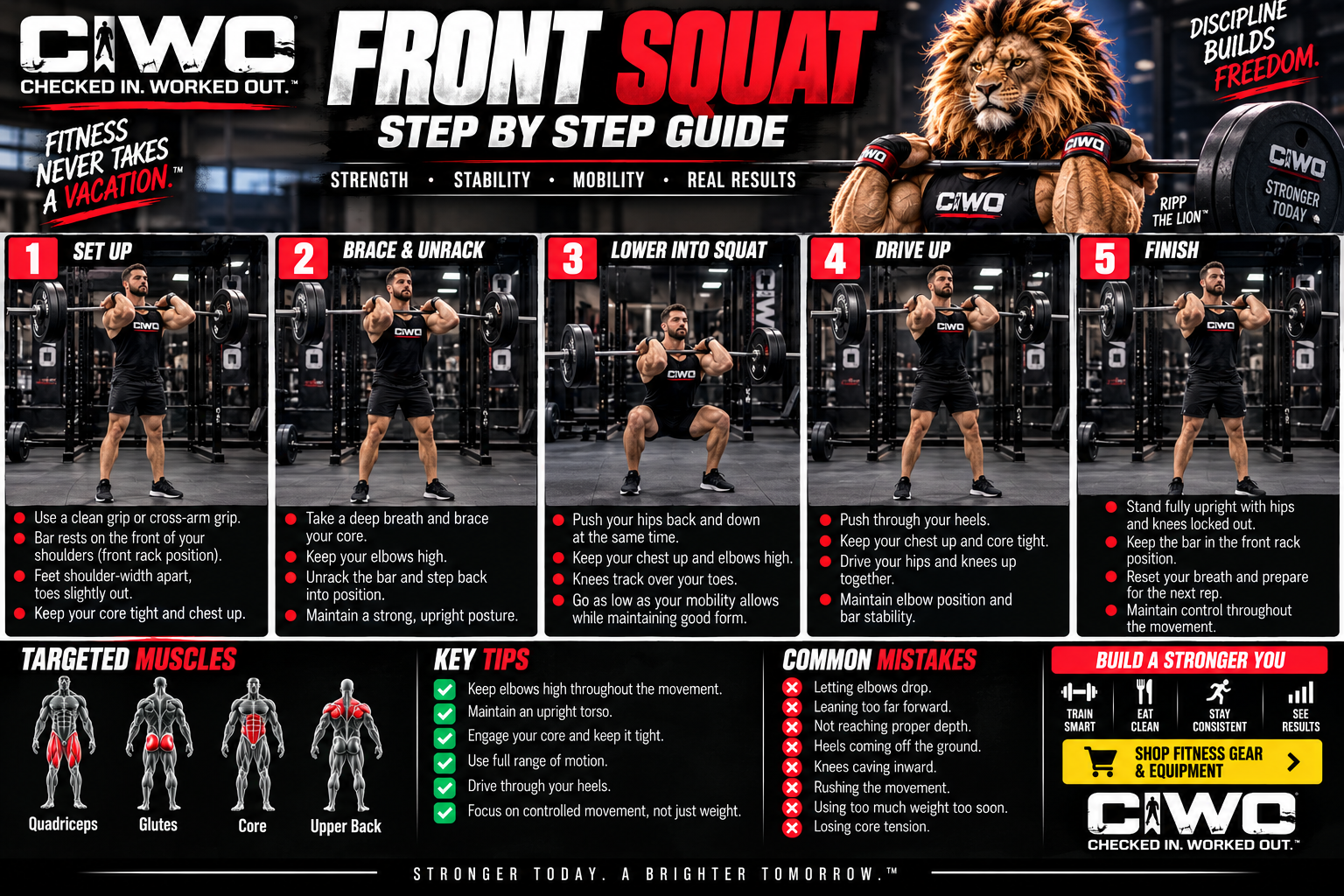

The front squat is a compound lower-body exercise that places the barbell across the front of the shoulders rather than the upper back. The front-loaded position challenges the quadriceps, glutes and core while requiring strong upper-back tension and an upright, controlled torso.
Muscles Worked During the Front Squat
- Quadriceps: major contributors to extending the knees as you stand.
- Glutes: contribute to hip extension during the ascent.
- Core: braces the torso against the front-loaded barbell.
- Upper back: works isometrically to help maintain the front-rack position and torso posture.
- Adductors and other lower-body stabilizers: assist with hip and leg control throughout the squat.
Front Squat: Step-by-Step
1. Set Up the Front Rack
Position the bar in a squat rack around upper-chest height. Step close to the bar and place it across the front of your shoulders, not directly on your throat. Use a clean-style grip if comfortable, or another front-rack variation appropriate for your mobility and experience. Keep the elbows lifted so the upper arms help create a stable shelf for the bar.
2. Brace and Unrack
Take a controlled breath, brace your trunk and stand to clear the hooks. Step back carefully and establish a stable stance around shoulder width, adjusting foot angle to a comfortable position. Keep the bar balanced over the mid-foot.
3. Lower Into the Squat
Bend at the knees and hips together while keeping the whole foot in contact with the floor. Maintain upper-back tension and keep the elbows from collapsing downward. Allow the knees to track naturally in the same general direction as the toes. Descend only as far as you can control without pain or losing your front-rack position.
4. Drive Up
Push through the whole foot and extend the knees and hips together. Continue bracing your trunk and keep the chest and elbows controlled so the bar remains securely positioned over your base of support.
5. Finish and Reset
Return to a tall standing position without excessively leaning backward. Reset your breath and brace before the next repetition. When the set is complete, walk the bar forward carefully until it contacts the rack and lower it onto the hooks.
Front Squat Form Cues
- Keep the bar supported by the shoulders rather than trying to hold all of its weight in the hands.
- Maintain strong upper-back tension and a controlled front-rack position.
- Brace before each repetition.
- Keep the entire foot planted and pressure balanced across your base.
- Let the knees track naturally with the toes rather than forcing an artificial position.
- Use a controlled, pain-free depth that you can maintain with good technique.
Common Front Squat Mistakes
- Elbows dropping: this can make it harder to maintain the front rack.
- Bar drifting forward: often accompanies loss of torso or upper-back control.
- Heels lifting: reduce the load or adjust stance and mobility demands if you cannot keep the foot stable.
- Knees collapsing inward: maintain controlled knee tracking throughout the repetition.
- Rushing the descent: use enough control to maintain balance and positioning.
- Loading too aggressively: establish consistent technique before progressing the weight.
Front Squat vs. Back Squat
Both movements train the lower body, but the bar position changes the demands of the exercise. Front squats typically encourage a more upright torso and place substantial demand on the quadriceps and upper-back musculature. Back squats place the bar behind the body and can allow different torso angles and loading strategies. Neither variation is automatically better for everyone; exercise selection should reflect your goals, mobility, experience and comfort.
Sets, Reps and Progression
For general strength and technique work, 2–4 sets of approximately 5–10 controlled repetitions can be a practical starting range. New lifters should begin with an empty bar or manageable resistance and prioritize consistent positioning before adding weight. More experienced lifters can adjust loading, repetitions and volume according to their program.
Front-Rack Mobility
The front rack can be limited by wrist, shoulder, upper-back or lat mobility. Do not force a painful grip. A qualified coach can help you find an appropriate front-rack variation and determine whether mobility work or a different squat variation is more suitable.
Safety and Modifications
Use a properly positioned squat rack with safety arms or pins when available. Learn how to rack and unrack the bar before using challenging loads. Stop if you experience sharp or unusual pain. If the front-rack position cannot be maintained comfortably, consider a goblet squat or another squat variation while developing the mobility and technique needed for the barbell front squat.
Front Squat FAQ
Do my knees have to stay behind my toes?
No. Some forward knee travel is normal during squatting and varies with anatomy, stance and depth. Focus on stable feet, controlled knee tracking and a pain-free movement pattern.
How deep should I front squat?
Use the deepest range you can control comfortably while maintaining balance, front-rack stability and appropriate technique. There is no need to force a specific depth that causes pain or loss of position.
Why do my wrists hurt during front squats?
The clean-style front rack can challenge wrist, shoulder and upper-body mobility. The bar should primarily be supported by the shoulders rather than the hands. Do not force a painful position; adjust the grip or seek coaching if needed.
Build the position first, then build the load. Consistent front-squat technique creates a stronger foundation for progressive lower-body training.