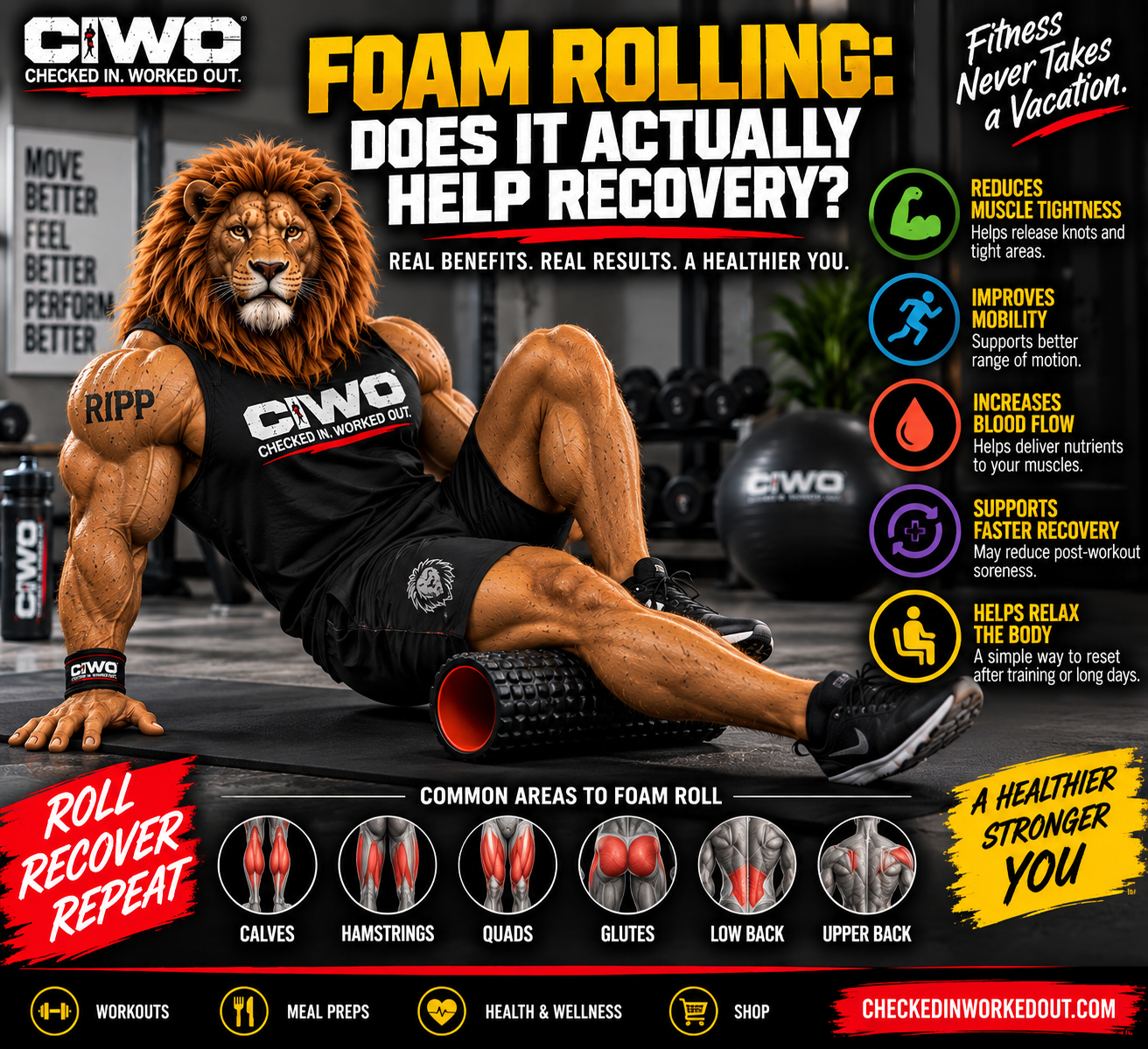
Foam rolling can feel good after a hard workout, but does it actually speed recovery? Research suggests it may modestly reduce perceived muscle soreness and temporarily improve range of motion. That is different from proving that it repairs muscle tissue faster, removes toxins, or prevents injuries.
What foam rolling does—and does not—do
Foam rolling is a form of self-massage in which you use your body weight on a cylindrical roller to apply pressure to muscle. It can change how tight or sore a muscle feels, and some people find it relaxing. The precise mechanisms are not settled; avoid assuming that a roller physically breaks up muscle knots or flushes lactic acid from your body.
Does it reduce post-workout soreness?
Some controlled studies and reviews report small-to-moderate improvements in perceived soreness after foam rolling, but findings vary by protocol and study. Feeling less sore does not necessarily mean damaged muscle has recovered more quickly or that you are ready for another maximal workout.
Can it improve flexibility or performance?
Rolling can temporarily increase joint range of motion without the immediate performance reductions sometimes associated with prolonged static stretching. The effect may be short-lived. Evidence that foam rolling meaningfully improves strength, endurance, or long-term mobility is less consistent. It works best as an optional addition to a warm-up or cooldown, not a replacement for progressive strength training and regular movement.
A simple 5–8 minute routine
- Choose a comfortable roller. Begin with a smooth, moderately soft roller rather than an aggressive textured model.
- Start with the calves. Support yourself with your hands and slowly roll the fleshy portion of each calf for about 30–60 seconds. Avoid direct pressure on the knee and ankle.
- Move to the quadriceps. Face down with the roller beneath the front of one thigh. Use your arms to regulate pressure and roll slowly for 30–60 seconds per side.
- Roll the glutes. Sit on the roller, lean slightly to one side, and use small controlled movements for 30–60 seconds per side.
- Optional upper-back roll. Support your head and move gently over the muscular upper back, not your neck or lower back. Stop if you feel sharp pain, numbness, or tingling.
- Check how you feel. Follow with easy walking or comfortable mobility exercises. You should feel tolerable pressure, not bruising or escalating pain.
When should you use it?
Before training, a short bout may help you feel more comfortable moving, followed by activity-specific warm-up sets. After training, rolling may be useful if it helps you relax or manage soreness. Neither timing is mandatory: consistent sleep, adequate food and fluids, appropriate training load, and recovery time matter more than any one tool.
Safety: where not to roll
Do not roll directly over joints, bones, your neck, or the lumbar spine. Avoid injured, bruised, inflamed, or swollen areas, open wounds, and suspected blood clots. If you have a bleeding disorder, take blood thinners, have impaired sensation, a recent fracture or surgery, or unexplained pain, seek individualized guidance from a qualified clinician before rolling. More pressure is not automatically better.
Frequently asked questions
Does foam rolling remove lactic acid?
No good evidence supports the popular claim that foam rolling “flushes out” lactic acid. Lactate is processed by the body through normal metabolism, and delayed-onset muscle soreness is not caused by trapped lactate.
Should rolling hurt?
Mild, tolerable pressure can be normal. Sharp pain, tingling, numbness, or worsening symptoms are reasons to stop. Choose a softer roller or reduce the weight you place on it.
Is foam rolling necessary for recovery?
No. If you enjoy it and it helps you feel more comfortable, it can be part of your routine. If not, you can recover well without it.
The bottom line
Foam rolling may help you feel less sore and move a little more freely in the short term, but it is not a shortcut to faster tissue repair. Use it gently as an optional recovery tool alongside sound training, sleep, and nutrition.
Editorial note: The accompanying promotional graphic uses simplified benefit callouts. Claims about increased blood flow, “releasing knots,” or faster recovery should not be interpreted as established clinical outcomes; the evidence-based distinctions are explained in this article.