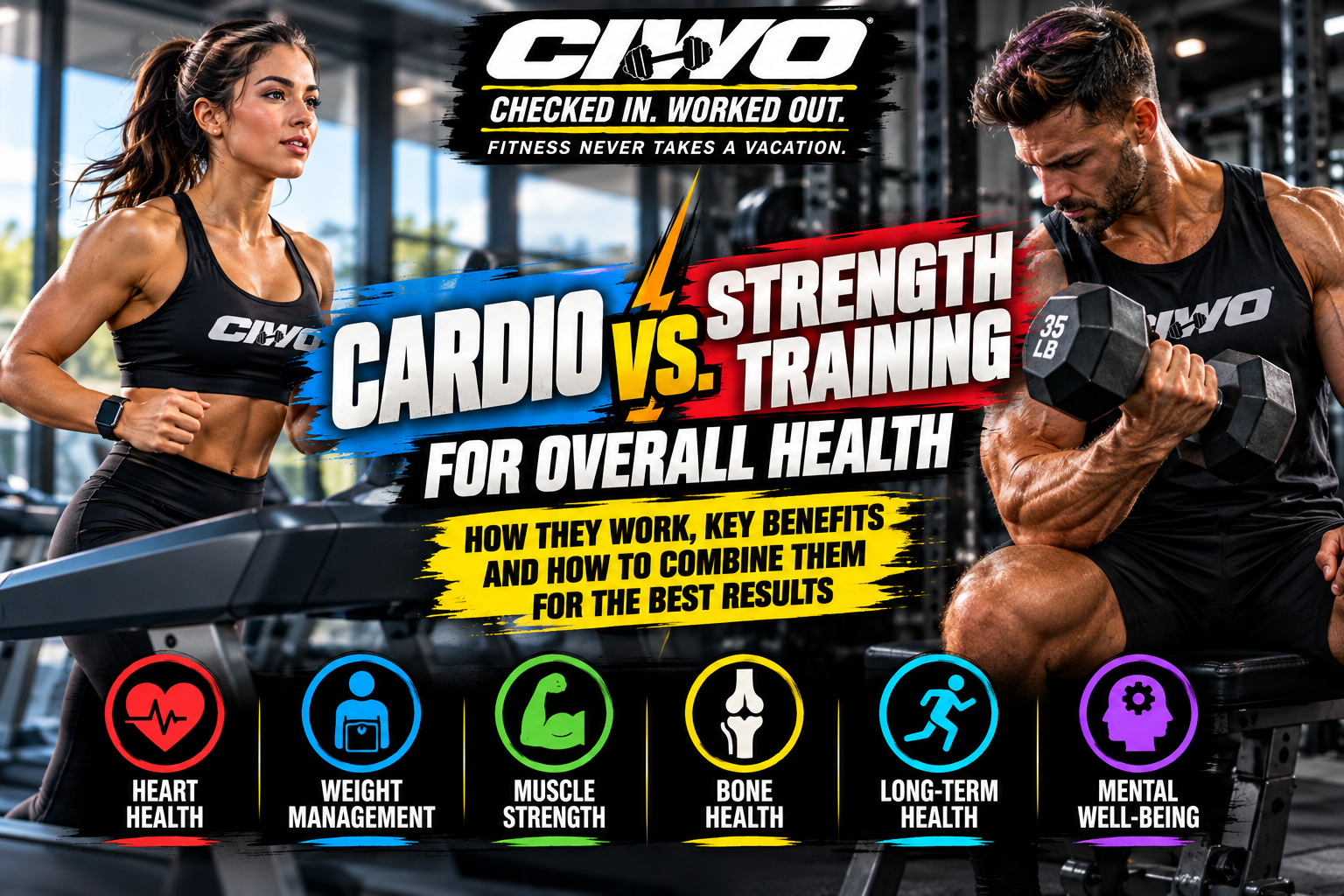

Cardio vs. Strength Training: What Is the Difference?
Cardiovascular exercise raises your heart and breathing rates for a sustained period. Examples include brisk walking, cycling, swimming, and jogging. Strength training challenges muscles against resistance, such as weights, bands, machines, or bodyweight.
How Cardio Supports Your Health
- Improves cardiorespiratory fitness and helps support healthy blood pressure.
- Supports blood sugar regulation and can improve mood and sleep.
- Adds physical activity that can contribute to weight management and long-term health.
How Strength Training Supports Your Health
- Builds or maintains muscle strength and physical function.
- Helps preserve muscle with age and can support bone health.
- Improves the ability to perform everyday tasks and supports metabolic health.
Which Is Better?
Neither replaces the other. Both types of exercise have overlapping benefits, and a balanced routine includes aerobic activity and muscle-strengthening work. The best starting point is the type of activity you can do consistently and safely.
How Much Exercise Do Adults Need?
General U.S. guidelines recommend at least 150 minutes of moderate-intensity aerobic activity weekly (or 75 minutes vigorous, or an equivalent combination), plus muscle-strengthening activities involving major muscle groups on at least two days per week. More activity may offer additional benefits, but some activity is better than none.
Sample Balanced Week
- Monday: 30-minute brisk walk plus a short full-body strength workout.
- Tuesday: 30-minute cycling or brisk walking.
- Wednesday: Full-body strength session and optional easy walk.
- Thursday: 30-minute brisk walk.
- Friday: 30-minute brisk walk or swim.
- Saturday: 30-minute walk, hike, or other enjoyable aerobic activity.
- Sunday: Recovery or light movement as needed.
This is an example, not a requirement. Adjust duration, resistance, and rest to your fitness level. If combining workouts in one session, prioritize whichever type supports your main goal and preserve good technique.
Getting Started Safely
- Begin with manageable sessions and progress gradually.
- Choose resistance that allows controlled repetitions and comfortable breathing.
- Include recovery between demanding strength sessions.
- Stop activity and seek medical advice for chest pain, faintness, or unusual breathlessness.
- If you have an injury or medical restriction, follow individualized healthcare guidance.
Frequently Asked Questions
Does strength training count as cardio? Some resistance workouts raise heart rate, but they do not necessarily replace dedicated aerobic activity.
Can I do both on the same day? Yes, provided you manage intensity and recovery.
Do I need a gym? No. Brisk walking and bodyweight or resistance-band exercises are accessible options.
Explore CIWO