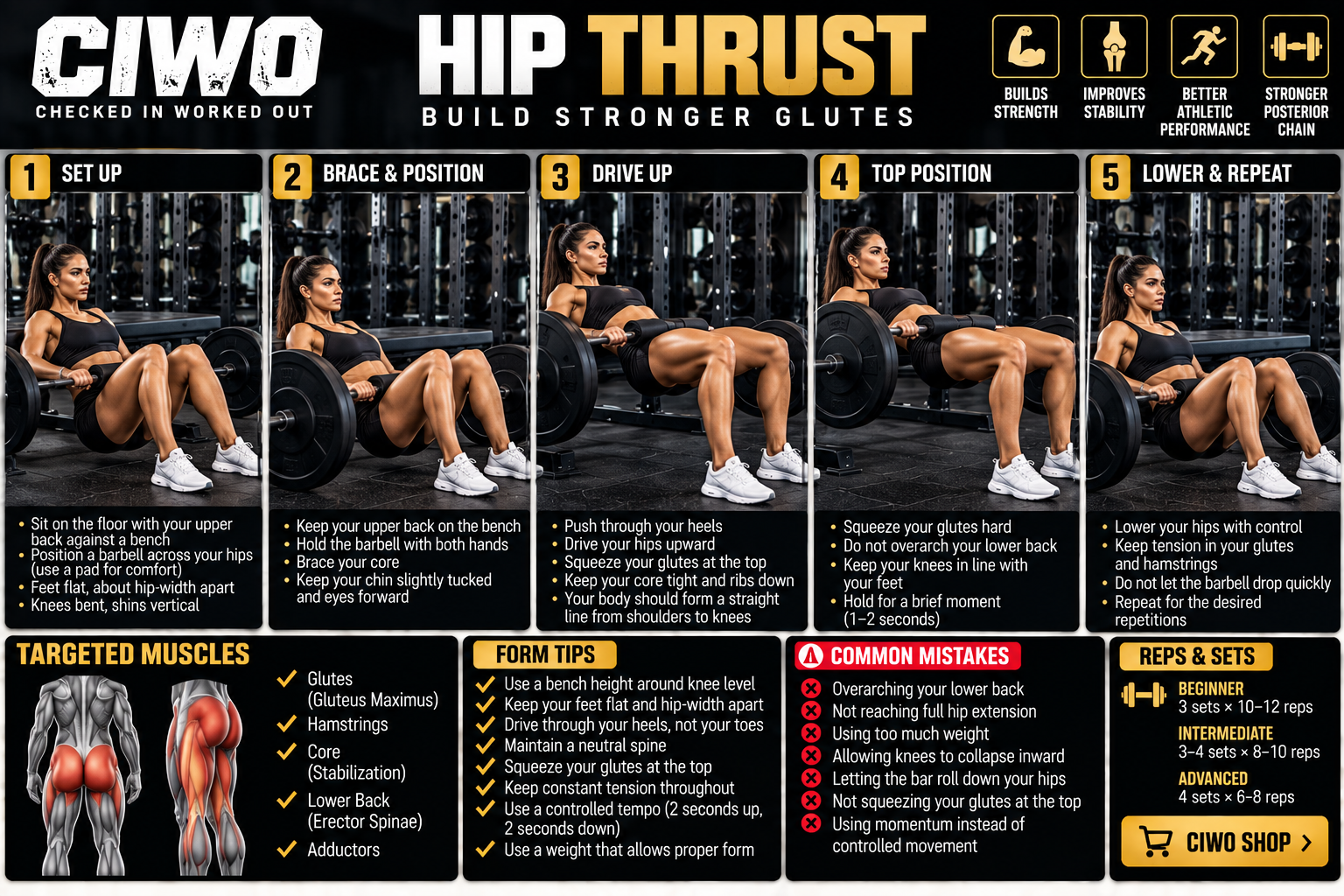

The barbell hip thrust is a hip-extension exercise emphasizing the gluteus maximus. This step-by-step guide features a female athlete demonstrating a controlled hip thrust using a stable bench, padded barbell and planted feet.
Equipment and Muscles Worked
Equipment: stable flat bench, barbell, plates and a thick bar pad. Main muscle: gluteus maximus. Hamstrings, adductors and core assist or stabilize. Start with bodyweight or a light load to learn the setup.
Barbell Hip Thrust: Five Steps
- Set up: Sit on the floor with your upper back resting against the edge of a sturdy bench. Roll a padded barbell into the crease of your hips. Bend your knees and plant your feet about hip-width apart.
- Brace and position: Hold the bar securely with both hands. Keep your ribs down and your head and neck aligned with your torso. Adjust your feet so that at the top your shins are approximately vertical.
- Drive up: Press through your whole feet and extend your hips, lifting the padded barbell. Keep your upper back supported by the bench and avoid pushing your lower back into an arch.
- Finish at the top: Stop when your hips are fully extended and your torso is roughly in line with your thighs. Briefly contract your glutes without flaring your ribs or leaning your head back.
- Lower and repeat: Lower your hips slowly while controlling the barbell. Maintain foot contact and knee alignment, then repeat without bouncing.
Form Tips
Use a stable bench that will not slide. Place a pad between the bar and your hips. Keep feet planted and knees tracking in line with toes. If you mostly feel your lower back, reduce the load, keep your ribs stacked over your pelvis and shorten the range to what you can control. The top position should come from hip extension rather than spinal arching.
Common Mistakes
- Using an unstable bench or an unpadded bar.
- Placing feet too far forward or too close, making the movement awkward.
- Allowing knees to collapse inward or heels to lift.
- Overarching the lower back at the top.
- Bouncing at the bottom or lowering too quickly.
- Adding weight before mastering the movement.
Sets, Reps and Progression
Begin with 2–3 sets of 8–12 controlled repetitions, resting about 60–120 seconds between sets. Practice bodyweight hip thrusts first if needed. Increase resistance gradually only when you can maintain stable bench contact, foot placement and controlled hip extension throughout the set.
Safety
Warm up before lifting and make sure the bench and bar are secure. Stop if you experience sharp pain, numbness or unusual symptoms. If you have an injury or condition affecting your hips, back or knees, seek individualized guidance from a qualified clinician or exercise professional.
Frequently Asked Questions
Should I feel hip thrusts in my lower back?
Your trunk muscles stabilize the movement, but sharp or increasing back pain is not the goal. Reduce the load and avoid excessive spinal arching.
How high should I lift?
Lift until your hips are extended and your torso aligns approximately with your thighs, without forcing extra height from your lower back.
Can beginners do this exercise?
Yes. Start with bodyweight and a stable bench, then progress to a padded barbell after learning the movement.