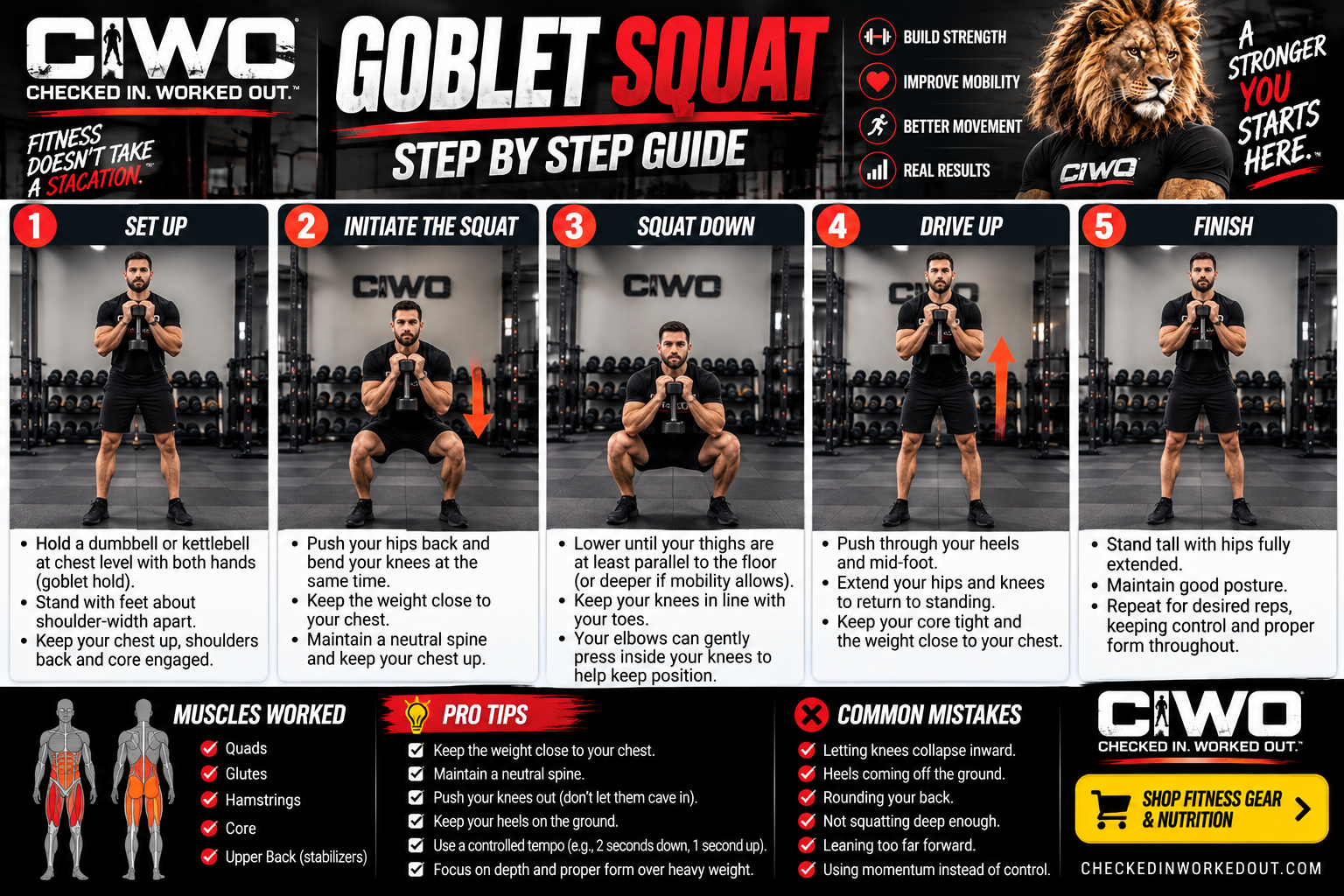

The goblet squat is a front-loaded squat variation that develops the quadriceps and glutes while challenging the core and upper back to keep the torso controlled. Holding a dumbbell or kettlebell close to the chest can also make this variation approachable for people learning squat mechanics.
Goblet Squat: Muscles Worked
The primary working muscles are the quadriceps and glutes. The hamstrings contribute to lower-body control, while the abdominal muscles, spinal stabilizers and upper back help maintain posture and keep the load securely positioned.
Equipment and Setup
Use one dumbbell or kettlebell that you can control throughout the entire repetition. Hold it at chest level with both hands. Stand with your feet roughly shoulder-width apart and adjust your toe angle slightly outward if that allows your knees and hips to move comfortably.
How to Perform the Goblet Squat
- Set up. Hold the weight close to your chest, brace your midsection and establish a stable stance.
- Initiate the squat. Bend at the hips and knees together.
- Descend under control. Let your knees track in the same general direction as your toes while keeping your whole foot planted.
- Reach a comfortable depth. Descend as far as you can while maintaining balance, foot contact and trunk control. Parallel is not mandatory for every person.
- Drive upward. Push through the whole foot and extend your knees and hips to return to standing without momentum.
Form Cues That Matter
- Keep the weight close to your chest.
- Brace before descending and maintain a controlled torso.
- Keep your feet planted rather than allowing the heels to lift.
- Let the knees track naturally over the toes instead of collapsing inward.
- Prioritize repeatable technique over heavier weight.
Common Goblet Squat Mistakes
Common problems include choosing a weight that is too heavy, rounding excessively through the back, allowing the knees to collapse inward, lifting the heels, losing control near the bottom and rushing repetitions. Avoid forcing a predetermined squat depth when mobility or body proportions make it uncomfortable. Use the deepest range you can control without pain.
Goblet Squat vs. Bodyweight Squat
Both movements teach similar lower-body patterns, but the goblet squat adds external resistance in front of the body. That position increases demand on the legs and trunk while providing a useful counterbalance for some lifters. Beginners can learn the movement without weight before progressing to a light goblet load.
Sets, Reps and Progression
For general strength and technique work, 2–4 sets of approximately 6–12 controlled repetitions is a practical starting range for many exercisers. Beginners can use fewer repetitions while learning. Improve technique first, then gradually add repetitions or resistance when every rep remains controlled.
Where the Goblet Squat Fits in a Workout
The goblet squat can serve as a primary lower-body exercise for beginner or home workouts, a warm-up before heavier squatting, or an accessory exercise later in a leg session. Because it requires only one dumbbell or kettlebell, it also works well in hotel gyms and limited-equipment workouts.
Safety and Modification
Exercise should not cause sharp or worsening pain. If balance is difficult, practice a bodyweight squat to a stable bench or box before adding resistance. People managing an injury or medical condition should use appropriate modifications and seek qualified professional guidance when necessary.
Frequently Asked Questions
How heavy should I go?
Start with a load that allows good posture, balance and control for every repetition. Increase resistance gradually.
Should my knees go past my toes?
Some forward knee travel is normal during many squat variations and differs with anatomy and stance. More useful priorities are stable feet, comfortable knee tracking and pain-free movement.
How low should I squat?
Use a depth you can control while maintaining balance and a comfortable position. Individual mobility, proportions and training experience affect appropriate depth.
Build the Movement Before the Weight
The goblet squat rewards control. Establish your stance, brace, descend smoothly and stand with intent. Once the movement is consistent, progressive resistance can make it a valuable part of a long-term lower-body strength program.