
The EZ-Bar Skull Crusher, also called the lying EZ-bar triceps extension, is an isolation exercise that trains the triceps by bending and straightening the elbows while lying on a bench. The angled grips of an EZ-bar may feel more comfortable for some lifters than a straight bar.
The exercise rewards control—not maximum weight. Keep the upper arms stable, lower the bar through a comfortable path toward the forehead or slightly behind the head and extend the elbows without bouncing or aggressively locking out.
Exercise Overview
- Primary muscle: Triceps brachii
- Emphasis: Long head of the triceps
- Movement: Elbow extension
- Equipment: Flat bench, EZ-curl bar, matching plates and collars
- Level: Intermediate
Muscles Worked
- Primary: Long, lateral and medial heads of the triceps brachii
- Assisting: Anconeus during elbow extension
- Stabilizing: Forearms, wrists, shoulders, upper back and core
Benefits
- Directly trains all three heads of the triceps.
- Places the triceps under meaningful tension through a controlled range.
- Can support stronger pressing performance when programmed appropriately.
- The EZ-bar permits an angled grip that some lifters find easier on the wrists.
- Load and repetition ranges can be adjusted for muscle-building or endurance goals.
Equipment and Setup
- Place a flat bench on level flooring with clear space around the head end.
- Load the EZ-bar evenly with a light, manageable weight and secure both sides with collars.
- Sit at the end of the bench with the bar resting across your thighs.
- Use a comfortable shoulder-width grip on the inner angled sections of the bar.
- Keep your wrists neutral, feet planted and shoulder blades gently set against the bench.
- If needed, ask a qualified spotter to help hand off and receive the bar.
How to Perform the EZ-Bar Skull Crusher
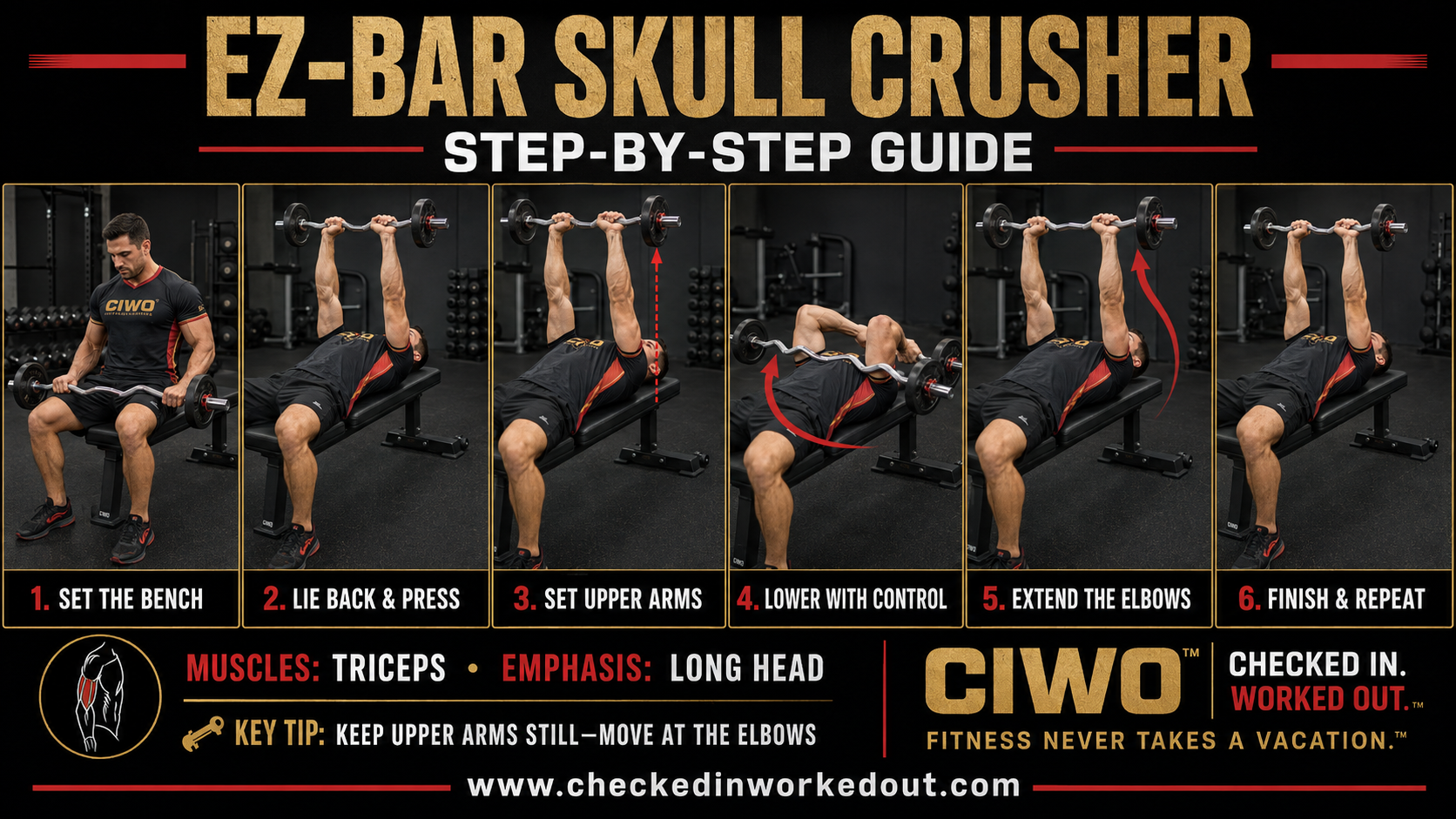
- Set the bench: Sit with the secured EZ-bar on your thighs and both feet firmly planted.
- Lie back and press: Carefully lie on the bench and bring the bar above your chest, then position it above the shoulders.
- Set the upper arms: Hold the upper arms approximately vertical or angled slightly toward the head. Keep the elbows around shoulder width.
- Lower with control: Inhale and bend only at the elbows. Lower the bar toward your forehead or slightly behind your head over 2–3 seconds.
- Extend the elbows: Exhale and contract the triceps to straighten the arms. Keep the upper arms mostly still and follow the same bar path upward.
- Finish and repeat: Stop just short of snapping the elbows, stabilize the bar above the shoulders and begin the next controlled repetition.
Key Form Checklist
- Use an even grip and keep the wrists stacked rather than bent backward.
- Keep the elbows generally shoulder-width instead of allowing them to flare excessively.
- Move primarily at the elbows while keeping the upper arms stable.
- Keep your ribs down, upper back supported and feet planted.
- Lower only as far as you can control without elbow or shoulder discomfort.
- Use a smooth tempo and maintain control during both phases.
- Keep the bar path clear of the face and never bounce the bar.
Tempo and Breathing
- Inhale while lowering the bar for approximately 2–3 seconds.
- Pause briefly in the bottom position without relaxing the arms.
- Exhale while extending the elbows for approximately 1–2 seconds.
- Stabilize briefly at the top before beginning the next repetition.
Suggested Sets and Repetitions
- Technique beginner: 2–3 sets of 10–15 repetitions with a light load
- Muscle building: 3–4 sets of 8–12 controlled repetitions
- Muscular endurance: 2–3 sets of 15–20 repetitions
- Rest: 60–90 seconds between sets
Select a load that allows every repetition to follow the same controlled path. Add weight gradually only after you can complete the target range without elbow flare, wrist collapse or loss of control.
Common Mistakes and Fixes
- Using too much weight: Reduce the load and prioritize a slow, repeatable bar path.
- Flaring the elbows: Keep them around shoulder width without forcing an uncomfortable position.
- Moving the upper arms: Stabilize the shoulders and make elbow extension the primary movement.
- Bending the wrists: Keep the knuckles stacked over the forearms and use the angled grip that feels natural.
- Dropping the bar too low: Stop at a comfortable depth you can reverse without bouncing.
- Turning it into a pullover: Avoid driving the bar with large shoulder movement.
- Snapping the lockout: Finish smoothly without aggressively forcing the elbows straight.
- Unsafe setup or finish: Use collars and a spotter when appropriate, especially as loads increase.
Variations and Alternatives
- Dumbbell skull crusher with a neutral grip
- Incline EZ-bar skull crusher
- Decline EZ-bar skull crusher
- Rolling dumbbell triceps extension
- Cable lying triceps extension
- Overhead dumbbell triceps extension
- Rope triceps pushdown
Safety Notes
The exercise’s name is a reminder to respect the load and bar path. Secure plates with collars, inspect the bar and bench, maintain a firm grip and never lower an uncontrolled bar toward your face. Begin light and use a spotter or controlled handoff when appropriate. Stop if you feel sharp pain, numbness or unusual discomfort in the elbows, wrists, shoulders, neck or back. Choose a pain-free alternative and consult a qualified healthcare or fitness professional when needed.
Frequently Asked Questions
Should the bar touch my forehead?
No. Lower the bar under control toward the forehead or slightly behind the head without making contact. Your exact path should remain comfortable and clear of your face.
Should my upper arms be perfectly vertical?
They can be vertical or angled slightly toward the head if that position feels stable. The important cue is to prevent them from swinging during each repetition.
Is an EZ-bar better than a straight bar?
Neither is universally better. The angled EZ-bar grip may feel more comfortable for some wrists, while individual anatomy and preferences determine the best option.
Why do I feel discomfort in my elbows?
The load, grip, depth, training volume or exercise choice may not suit you. Reduce the weight and range, review your technique and try a cable or dumbbell variation. Stop if pain persists.
Bottom Line
The EZ-Bar Skull Crusher can be an effective triceps-building exercise when you use a manageable load, secure the plates, keep the upper arms steady and control the bar throughout every repetition.
Sources and Further Reading
- National Academy of Sports Medicine: Arm and Triceps Exercise Guidance
- American Council on Exercise: Triceps Exercise Research
- American College of Sports Medicine: Resistance Training Guidelines Update
Shop CIWO Fitness Gear
Looking for weight-training accessories, benches and home-gym equipment? Visit the Checked In. Worked Out. Shop to explore fitness gear for training at home, in the gym and on the go.
Affiliate disclosure: Some shop links may be affiliate links. CIWO may earn a commission from qualifying purchases at no additional cost to you.
Exercise disclaimer: This content is for general educational purposes and is not medical advice. Exercise carries risk. Use appropriate equipment and technique, work within your abilities and consult a qualified professional when needed.
Fitness Never Takes a Vacation.™