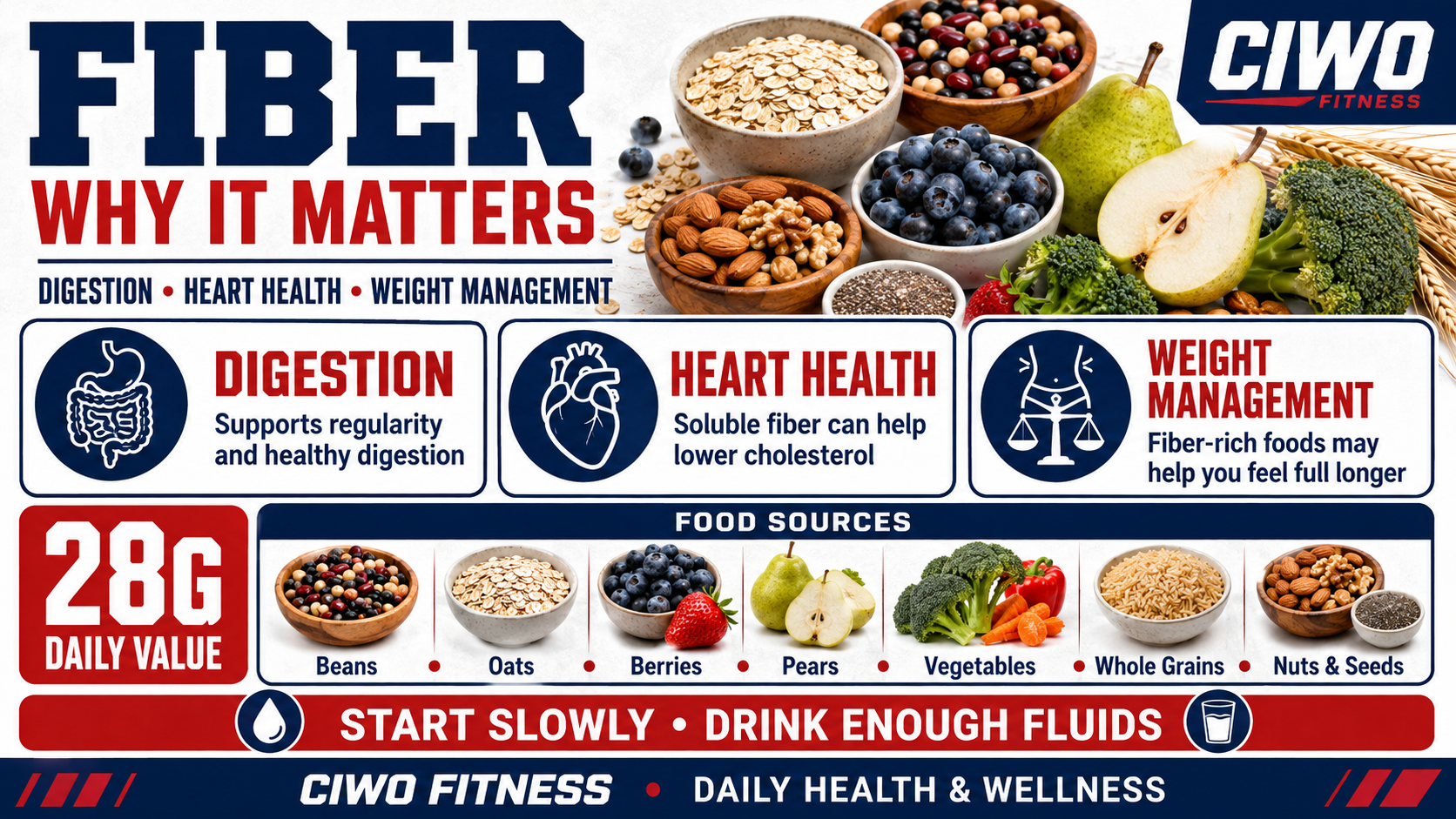

Dietary fiber is a type of carbohydrate found primarily in plant foods that the body cannot fully digest. Instead of being broken down like most carbohydrates, fiber moves through the digestive system and performs several important jobs. It can support bowel regularity, contribute to heart-healthy eating and help meals feel more satisfying.
Fiber is helpful, but it is not a cure for digestive disease, high cholesterol or excess weight. Its benefits are strongest when fiber-rich foods are part of an overall balanced eating pattern.
What Is Dietary Fiber?
Fiber occurs naturally in fruits, vegetables, beans, peas, lentils, whole grains, nuts and seeds. Food labels may list dietary fiber as a single total even though fiber has different properties in the digestive system.
Soluble Fiber
Soluble fiber attracts water and forms a gel-like material during digestion. It can slow digestion and certain soluble fibers can help lower cholesterol. Sources include oats, barley, beans, lentils, peas, apples, citrus fruit, carrots, nuts and seeds.
Insoluble Fiber
Insoluble fiber adds bulk to stool and helps food move through the digestive tract. Sources include wheat bran, whole grains, many vegetables, nuts, seeds and the edible skins of fruits and vegetables.
How Fiber Supports Digestion
- Supports regularity: Fiber adds bulk and, with enough fluid, can make stool easier to pass.
- Helps prevent occasional constipation: Gradually increasing fiber-rich foods may improve bowel regularity for many people.
- Supports the gut environment: Some fermentable fibers serve as food for beneficial intestinal bacteria.
- Improves meal quality: Fiber-rich foods often provide vitamins, minerals and other beneficial plant compounds.
More fiber is not always better for every digestive condition. People with persistent abdominal pain, bowel narrowing, swallowing problems, inflammatory bowel disease, recent gastrointestinal surgery or unexplained changes in bowel habits should seek individualized medical guidance.
Fiber and Heart Health
Soluble fiber can reduce cholesterol absorption and help lower LDL cholesterol as part of a heart-healthy eating pattern. Fiber-rich foods such as beans, oats, fruits, vegetables, nuts and whole grains can also replace foods higher in saturated fat, refined carbohydrates or added sugar.
Fiber should complement—not replace—medical care, prescribed medication, physical activity and other recommendations for managing cholesterol or cardiovascular risk.
Fiber and Weight Management
- Fiber-rich foods can increase meal volume and help you feel full sooner.
- Some fibers slow digestion, which may help fullness last longer.
- Whole fruits, vegetables, beans and whole grains often provide fiber with valuable nutrients.
- Greater fullness may make it easier to manage portions, but fiber does not guarantee weight loss.
Body-weight changes still depend on overall calorie intake, physical activity, sleep, health conditions, medications and long-term consistency.
How Much Fiber Should You Get?
The U.S. Food and Drug Administration lists a Daily Value of 28 grams of dietary fiber for a 2,000-calorie diet. Individual needs vary with age, sex, calorie intake, pregnancy, health history and medical guidance.
- 5% Daily Value or less per serving is considered low.
- 20% Daily Value or more per serving is considered high.
- Check both the fiber amount and serving size when comparing foods.
Fiber-Rich Foods
- Beans and legumes: Black beans, kidney beans, chickpeas, lentils and split peas
- Whole grains: Oats, barley, brown rice, quinoa and whole-wheat products
- Fruit: Berries, pears, apples, oranges and prunes
- Vegetables: Broccoli, Brussels sprouts, carrots, green peas and sweet potatoes
- Nuts and seeds: Almonds, walnuts, chia seeds and ground flaxseed
Simple Ways to Eat More Fiber
- Add berries, chia seeds or nuts to oatmeal or Greek yogurt.
- Choose whole fruit more often than juice.
- Add beans or lentils to soups, salads, chili and grain bowls.
- Replace some refined grains with whole-grain options.
- Include a vegetable with lunch and dinner.
- Keep convenient options such as fruit, nuts, roasted chickpeas or vegetables available.
Increase Fiber Gradually
Increasing fiber too quickly can cause gas, bloating, cramping or changes in bowel habits. Add fiber gradually over several days or weeks and drink enough fluids to support normal digestion. Physical activity can also support regular bowel function.
Food First or Fiber Supplement?
Whole foods are generally the best starting point because they provide fiber together with vitamins, minerals and other nutrients. Fiber supplements such as psyllium may be useful for some people, but they can cause side effects and may affect how certain medications are absorbed.
- Follow the product directions and take the supplement with the required amount of fluid.
- Do not swallow dry fiber powder.
- Ask a healthcare professional or pharmacist about medication timing and possible interactions.
- Seek guidance before using a supplement if you have difficulty swallowing, bowel narrowing, severe abdominal symptoms or a gastrointestinal condition.
Frequently Asked Questions
Does fiber automatically cause weight loss?
No. Fiber-rich foods may improve fullness and support portion management, but weight loss still requires an appropriate long-term energy balance and sustainable habits.
Can too much fiber cause problems?
Yes. A rapid increase can cause gas, bloating or cramps. Very high intake without enough fluid may worsen constipation in some people.
Is fiber only found in plant foods?
Naturally occurring dietary fiber is found in plant foods. Meat, fish, eggs and dairy products do not naturally contain fiber.
Should I count total carbohydrates or fiber?
Both provide different information. Total carbohydrate includes sugars, starches and fiber, while the dietary-fiber line shows how much fiber is present per labeled serving.
The Bottom Line
Fiber is an important part of a balanced diet. A varied mix of beans, whole grains, fruits, vegetables, nuts and seeds can support digestion, heart health and appetite management. Increase your intake gradually, drink enough fluids and seek individualized advice when medical conditions or medications affect your needs.
Sources
- U.S. Food and Drug Administration: How to Understand and Use the Nutrition Facts Label
- NIH MedlinePlus: Dietary Fiber
- NIH MedlinePlus Medical Encyclopedia: Fiber
- American Heart Association: 8 Ways to Focus on Fiber
Shop CIWO Fitness Picks
Looking for nutrition products, meal-prep essentials, fitness equipment and wellness accessories? Visit the Checked In. Worked Out. Shop and explore products selected to support an active lifestyle.
Affiliate disclosure: Some shop links may be affiliate links. CIWO may earn a commission from qualifying purchases at no additional cost to you.
Medical Disclaimer
This article is for general educational purposes and is not medical advice, diagnosis or treatment. Fiber needs and tolerances vary. Consult a qualified healthcare professional about persistent digestive symptoms, medical conditions, medications or major dietary changes.
Fitness never takes a vacation.