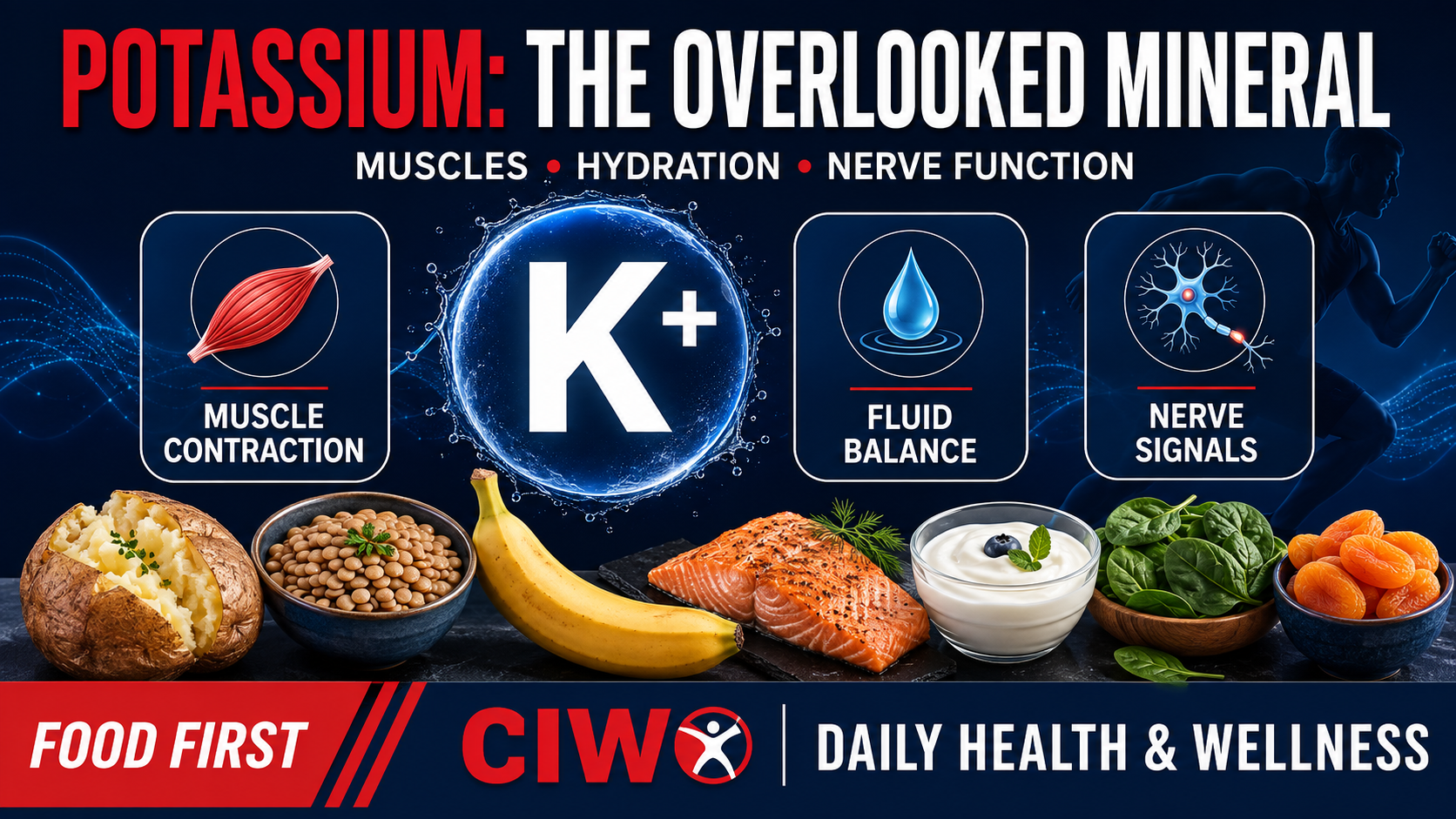

Potassium is an essential mineral and electrolyte involved in muscle contraction, nerve signaling, fluid balance and normal cell function. It works closely with sodium, yet it often receives far less attention than sodium on food labels and in everyday nutrition.
Most healthy people should focus on obtaining potassium from a varied diet rather than treating it as a quick fix for cramps or dehydration. Blood potassium that is too low or too high can be dangerous, so supplements and potassium-based salt substitutes require extra care.
What Does Potassium Do?
- Supports muscle contraction: Potassium helps create the electrical gradients muscle cells need to contract and relax.
- Transmits nerve signals: Nerves depend on shifts in electrolytes, including potassium and sodium, to send impulses.
- Maintains fluid balance: Potassium is the major positively charged electrolyte inside cells and helps regulate intracellular fluid volume.
- Supports a regular heartbeat: Normal potassium levels are important for the electrical activity of the heart.
- Supports normal cell and kidney function: Healthy kidneys adjust potassium excretion to help keep blood levels within a narrow range.
Potassium, Exercise and Muscle Function
Muscle cells release and recover potassium as they repeatedly contract. A balanced diet usually supplies what active adults need, and healthy kidneys regulate the amount in the body. Potassium is one part of performance nutrition—not a stand-alone muscle builder or guaranteed treatment for exercise cramps.
Muscle cramps can have many causes, including fatigue, training load, conditioning, fluid loss and other electrolyte changes. Persistent weakness, severe cramping, palpitations, fainting or symptoms following prolonged vomiting or diarrhea deserve medical attention rather than self-treatment with high-dose potassium.
Potassium and Hydration
Hydration is more than drinking water. Sodium helps regulate fluid outside cells, while potassium is concentrated mainly inside cells. Together with other electrolytes, they help maintain fluid distribution and normal nerve and muscle function.
For most routine workouts and ordinary daily activity, water plus balanced meals is sufficient. Longer or hotter sessions with heavy sweating may require a more deliberate hydration plan that considers water, sodium, carbohydrates and other electrolytes—not potassium alone.
How Much Potassium Do Adults Need?
The National Academies established an Adequate Intake of 3,400 milligrams per day for adult men and 2,600 milligrams per day for adult women. Pregnancy and lactation have separate targets. These values apply to generally healthy people and may not apply when kidney function or medications alter potassium excretion.
The FDA uses a Daily Value of 4,700 milligrams on Nutrition Facts labels for adults and children age four and older. The Daily Value is a food-label reference, while Adequate Intakes are age- and sex-specific nutrition recommendations—so the numbers serve different purposes.
- 5% Daily Value or less per serving is considered low.
- 20% Daily Value or more per serving is considered high.
- Compare the milligrams, % Daily Value and serving size together.
Potassium-Rich Foods
Bananas are useful, but they are only one option. Potassium is found across fruits, vegetables, legumes, dairy foods, fish, poultry, meat and nuts.
- Dried apricots: about 755 mg per 1/2 cup
- Cooked lentils: about 731 mg per cup
- Mashed acorn squash: about 644 mg per cup
- Medium baked potato, flesh only: about 610 mg
- Canned kidney beans: about 607 mg per cup
- Medium banana: about 422 mg
- One-percent milk: about 366 mg per cup
- Raw spinach: about 334 mg per two cups
- Grilled chicken breast: about 332 mg per three ounces
- Cooked salmon: about 326 mg per three ounces
Amounts are approximate and can vary by variety, preparation and brand. Values above are drawn from the NIH Office of Dietary Supplements food-source table.
Easy Ways to Add More Potassium
- Add lentils or beans to soups, salads, chili and meal-prep bowls.
- Pair Greek yogurt with fruit at breakfast or after training.
- Use potatoes or sweet potatoes as a meal-prep carbohydrate.
- Include spinach, tomatoes, broccoli or squash with lunch and dinner.
- Rotate salmon, chicken and other protein sources instead of relying on one food.
- Choose a variety of minimally processed foods across the day.
Can Low Potassium Cause Muscle Cramps?
Low blood potassium, called hypokalemia, can cause muscle weakness, twitching or cramps, fatigue, constipation and abnormal heart rhythms. However, a cramp by itself does not prove a potassium deficiency. Significant losses can occur with prolonged vomiting or diarrhea and with certain diuretics or medical conditions. A blood test and clinical evaluation—not guesswork—are used to assess abnormal potassium levels.
When More Potassium Can Be Dangerous
Healthy kidneys usually remove excess potassium from food. However, potassium can build up to dangerous levels when kidney function is impaired or certain conditions and medications reduce potassium excretion.
- Chronic kidney disease or other impaired kidney function
- ACE inhibitors or angiotensin receptor blockers (ARBs)
- Potassium-sparing diuretics such as spironolactone or amiloride
- Heart failure, adrenal insufficiency, type 1 diabetes or liver disease in some circumstances
- Large amounts of potassium supplements or potassium-containing salt substitutes
People in these groups should ask a physician, registered dietitian or pharmacist about an appropriate intake. Do not begin a potassium supplement or replace salt with potassium chloride simply because a product is marketed as an electrolyte.
Frequently Asked Questions
Is a banana enough potassium for the day?
No. A medium banana provides roughly 422 mg. It can contribute to your total, but meeting daily needs requires a varied eating pattern.
Should I take potassium before or after a workout?
Most people do not need a stand-alone potassium supplement around routine workouts. Consistent food intake and an appropriate hydration plan matter more. Supplements should be used only when medically appropriate.
Are electrolyte drinks always necessary?
No. Water and balanced meals are generally enough for shorter, ordinary sessions. Longer, hotter or high-sweat activity may call for individualized replacement of fluid, sodium, carbohydrate and other electrolytes.
Is food safer than a potassium supplement?
For healthy people with normal kidney function, food is generally the preferred source. Anyone with kidney disease or medications that affect potassium must also follow individualized food guidance.
The Bottom Line
Potassium supports normal muscle contraction, nerve signaling, heartbeat and fluid balance. Build intake through a varied diet that includes potatoes, beans, lentils, fruit, vegetables, dairy foods, fish and lean protein. Treat supplements and potassium salt substitutes with caution, especially when kidney disease or medication changes the body’s ability to remove potassium.
Sources
- NIH Office of Dietary Supplements: Potassium Fact Sheet for Health Professionals
- NIH Office of Dietary Supplements: Potassium Fact Sheet for Consumers
- U.S. Food and Drug Administration: Daily Value on Nutrition and Supplement Facts Labels
- NIH MedlinePlus: Dietary Potassium
Shop CIWO Fitness Picks
Looking for meal-prep essentials, hydration gear, fitness equipment and wellness accessories? Visit the Checked In. Worked Out. Shop and explore products selected to support an active lifestyle.
Affiliate disclosure: Some shop links may be affiliate links. CIWO may earn a commission from qualifying purchases at no additional cost to you.
Medical Disclaimer
This article provides general education and is not medical advice, diagnosis or treatment. Potassium needs and safe intake can change with kidney function, health conditions and medications. Consult a qualified healthcare professional before using potassium supplements, potassium-based salt substitutes or making major dietary changes.
Fitness never takes a vacation.