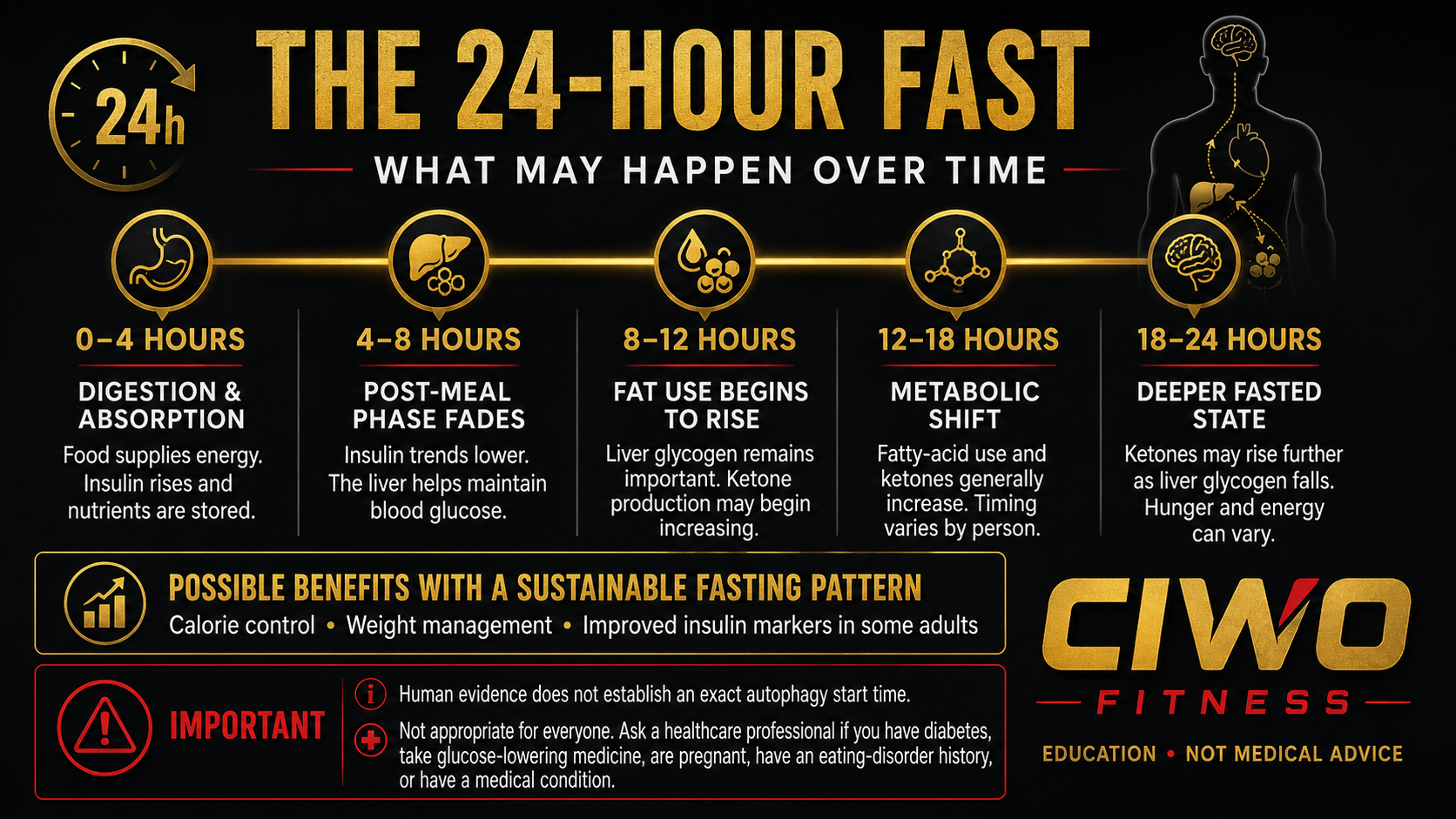

A 24-hour fast usually means consuming no calories for one full day—for example, finishing dinner at 7 p.m. and eating again at 7 p.m. the next day. During that period, the body gradually moves from using recently eaten nutrients toward drawing more heavily on stored fuel. This transition is real, but it does not happen at the exact same hour for everyone.
Important: This article is for education—not medical advice. A 24-hour fast is not appropriate for everyone. Speak with a qualified healthcare professional before fasting if you have a medical condition, take medication, are pregnant or breastfeeding, or have a history of disordered eating.
The Timeline Is an Estimate, Not a Stopwatch
Meal size and composition, recent carbohydrate intake, physical activity, sleep, stress, metabolic health and individual physiology all affect how quickly fuel use changes. The intervals below describe a typical progression, not universal biological deadlines.
0–4 Hours: Digestion and Absorption
- Food is being digested and nutrients are entering the bloodstream.
- Blood glucose and insulin generally rise after a mixed meal.
- The body uses incoming glucose, fatty acids and amino acids for immediate energy and repair.
- Excess glucose can be stored as glycogen in the liver and muscles.
This is still primarily the fed state. Calling it “fasted” immediately after the final bite would be misleading because digestion and absorption continue for several hours.
4–8 Hours: The Post-Meal Phase Fades
- Absorption from the last meal slows.
- Insulin generally trends downward as fewer nutrients enter the bloodstream.
- The liver begins releasing more stored glucose to help keep blood glucose within a normal range.
- Fat release from adipose tissue may begin increasing as insulin falls.
You may notice hunger because of routine meal timing, food cues or the hormone patterns associated with your normal schedule. Hunger often comes in waves rather than rising continuously.
8–12 Hours: Fat Use and Ketone Production Begin Rising
- Liver glycogen remains an important source for maintaining blood glucose.
- Fatty acids contribute a larger share of the body’s energy.
- The liver may begin producing more ketones from fatty acids.
- Blood glucose usually remains regulated in healthy adults through glycogen breakdown and new glucose production.
Human research indicates that ketones can begin increasing within approximately 8–12 hours of fasting, but the magnitude varies widely. This is a gradual metabolic transition—not an on/off switch.
12–18 Hours: The Metabolic Shift Becomes More Noticeable
- Insulin is generally lower than it was after the last meal.
- Fatty-acid oxidation and ketone production usually continue increasing.
- Liver glycogen continues supplying glucose while gluconeogenesis also contributes.
- Energy, concentration and hunger can improve, remain unchanged or feel worse depending on the individual.
People sometimes describe this period as “the metabolic switch,” meaning reliance is moving away from meal-derived glucose and toward stored fat and ketones. The switch is progressive and its timing depends partly on activity and glycogen availability.
18–24 Hours: A Deeper Fasted State
- Liver glycogen is lower, although it is not guaranteed to be completely depleted at 24 hours.
- Fat mobilization and ketone production may be more pronounced.
- The liver continues helping maintain blood glucose through glycogen breakdown and gluconeogenesis.
- Some people feel steady while others experience fatigue, irritability, headache, weakness or reduced exercise capacity.
A 24-hour fast does not mean the body has stopped using glucose, nor does it mean it is burning only body fat. The body continues using a mixture of fuels and also needs amino acids for normal turnover and glucose production.
Potential Benefits of a Fasting Pattern
Most benefit research studies repeated intermittent-fasting or time-restricted-eating patterns—not one isolated 24-hour fast. Depending on the person and the overall diet, a sustainable fasting routine may:
- Simplify meal timing and reduce opportunities to eat.
- Help create a calorie deficit and support weight management.
- Improve fasting insulin or insulin-resistance markers in some adults.
- Lower body weight, waist circumference or certain cardiometabolic risk markers in some studies.
- Increase metabolic flexibility—the ability to shift between carbohydrate and fat-derived fuels.
Fasting is not consistently superior to ordinary calorie restriction when calories and food quality are comparable. Long-term outcomes depend heavily on adherence, diet quality, sleep, exercise and whether the approach is medically appropriate.
What About Autophagy?
Autophagy is a normal cellular recycling and maintenance process. Fasting influences autophagy-related pathways in laboratory and animal research, but human evidence does not establish a universal hour when meaningful autophagy “starts.” Claims that it begins at exactly 16, 18 or 24 hours are more precise than current human research supports.
Hydration During a 24-Hour Fast
- Drink water regularly and respond to thirst.
- Unsweetened tea and plain black coffee are commonly used during a calorie-free fast, if tolerated.
- Avoid excessive caffeine, especially if fasting makes you jittery, nauseated or light-headed.
- Heavy sweating, hot environments and prolonged exercise increase fluid and electrolyte needs.
- Do not force excessive water intake; too much water can also be dangerous.
How to Prepare
- Choose a lower-stress day without demanding training, hazardous work or a long drive.
- Eat a balanced final meal containing protein, fiber-rich carbohydrates, vegetables and healthy fats.
- Hydrate normally before the fast begins.
- Avoid treating the final meal as an unrestricted “last supper.”
- Plan the time and composition of the meal that will end the fast.
How to Break a 24-Hour Fast
Break the fast with a moderate, balanced meal rather than an oversized feast. A practical option includes lean protein, easily tolerated carbohydrates, vegetables or fruit, and a moderate amount of fat. Eat slowly, because consuming a very large meal quickly may cause bloating, reflux, cramping or diarrhea.
Who Should Avoid Fasting or Seek Medical Guidance?
- People with type 1 diabetes or anyone at risk for diabetic ketoacidosis.
- People taking insulin, sulfonylureas or other medicines that can cause low blood glucose.
- Anyone who is pregnant, breastfeeding, under 18 or frail.
- People with a current or previous eating disorder.
- People who are underweight, malnourished or recovering from surgery or illness.
- People with kidney, liver, heart or other significant medical conditions.
- Anyone whose medication must be taken with food.
Stop the Fast and Seek Help When Needed
End the fast if you develop fainting, confusion, severe weakness, persistent vomiting, chest pain, difficulty breathing, severe headache, signs of dehydration or symptoms of low blood glucose such as shaking, sweating, dizziness or impaired thinking. Seek urgent medical care for severe or persistent symptoms.
Frequently Asked Questions
Does a 24-hour fast guarantee fat loss?
No. Fat oxidation generally rises during fasting, but lasting body-fat loss requires an energy deficit over time. Compensatory overeating after the fast can erase that deficit.
Will a 24-hour fast cause muscle loss?
The body continues normal protein turnover and may use some amino acids during a fast. One occasional 24-hour fast is different from repeated prolonged fasting or chronic under-eating. Resistance training, adequate total calories and sufficient daily protein remain important for preserving muscle.
Can I exercise while fasting?
Some healthy, experienced adults tolerate light or moderate exercise, but high-intensity performance may decline. Avoid experimenting with a first 24-hour fast during a demanding workout, endurance event or hazardous activity.
Does black coffee break the fast?
Plain black coffee contains very few calories and is commonly included in practical calorie-free fasting approaches. Cream, sugar and caloric additions end a strict no-calorie fast.
How often should someone complete a 24-hour fast?
There is no universal schedule that is best or safe for everyone. Frequency should reflect health status, medication use, nutritional needs, training demands and guidance from a qualified healthcare professional.
Evidence and Further Reading
- National Institute on Aging: Research on intermittent fasting
- NIDDK: Intermittent fasting and type 2 diabetes
- NIDDK: Fasting safely with diabetes
- Metabolic-switch review
- Review of fasting and human metabolism
- American Heart Association: Meal timing and cardiovascular health
Shop Fitness and Wellness Essentials
Support your training, hydration and healthy-living routine with products selected by Checked In. Worked Out. Visit the CIWO Shop to explore fitness equipment, accessories, nutrition products and wellness essentials.
Affiliate disclosure: Some shop links may be affiliate links. CIWO may earn a commission from qualifying purchases at no additional cost to you.
Fitness on the go or wherever life takes you. Fitness never takes a vacation!