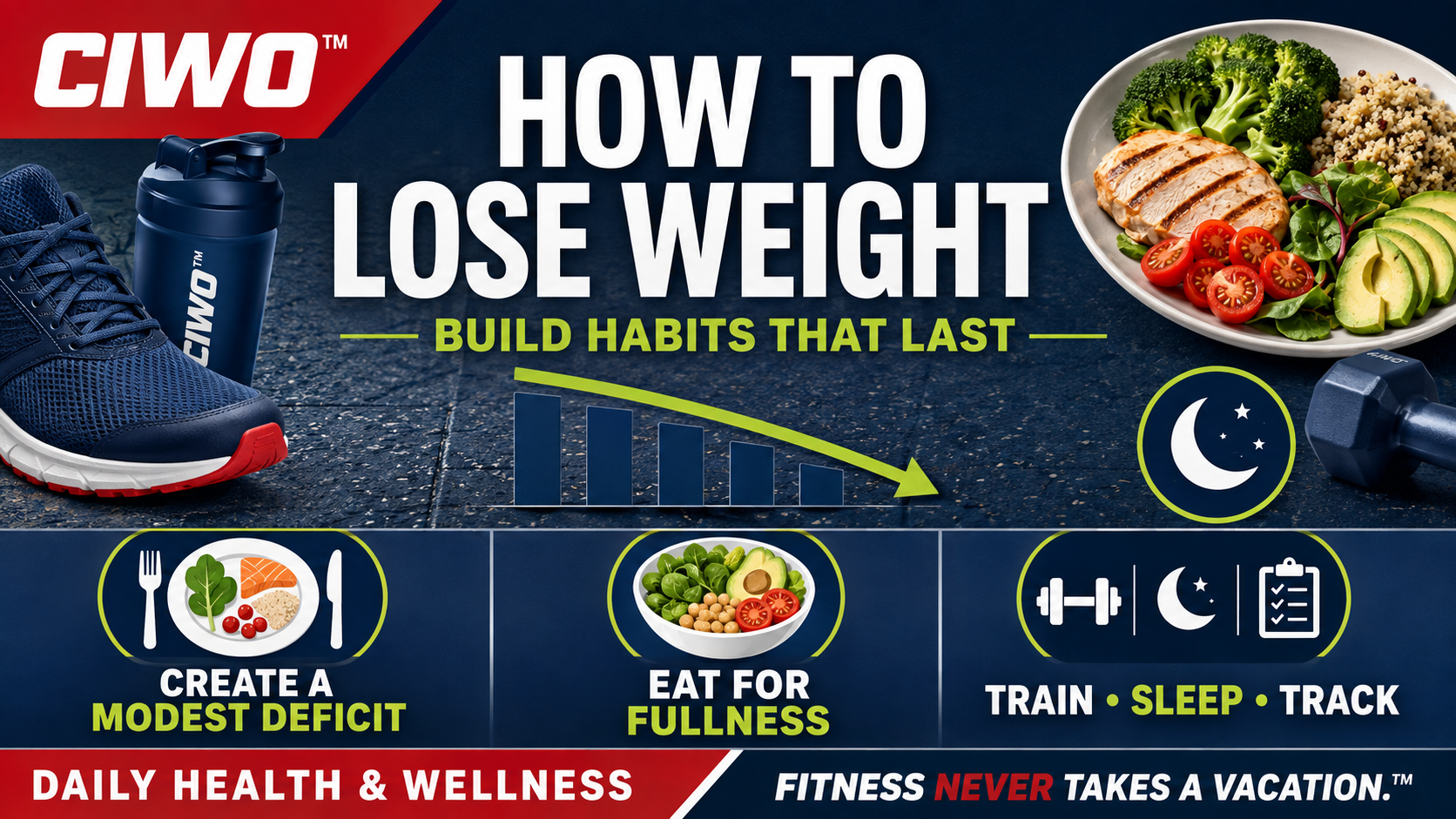

Losing weight does not require a perfect diet, punishing workouts or eliminating every food you enjoy. It requires a pattern you can repeat: consuming slightly less energy than your body uses, choosing filling foods, staying active, sleeping consistently and adjusting your plan using real progress data.
The best approach is usually gradual. The CDC notes that people who lose weight at a steady pace—about 1 to 2 pounds per week—are more likely to keep it off than people who lose weight more quickly. Progress may be slower for some people, and that can still be meaningful.
How Weight Loss Works
Body weight generally trends downward when you maintain an energy deficit over time—meaning your body uses more energy than you consume. Food and drinks supply calories, while basic body functions, daily movement and exercise use them.
This principle is simple, but real life is not. Appetite, sleep, stress, medications, medical conditions, hormones, age, environment and access to food can all influence weight management. A calorie target is therefore a starting estimate, not a moral score or a guarantee.
Start With a Modest Calorie Deficit
A modest deficit is easier to sustain than an extreme one. Some adults begin by reducing their usual intake by approximately 250 to 500 calories per day, then monitor the trend for several weeks. Individual needs vary considerably, so avoid treating one calorie number as appropriate for everyone.
Example 1: A smaller starting change
If someone maintains weight near 2,400 calories per day, an initial target near 2,150 calories would create an estimated 250-calorie daily deficit. They could reassess after two to four weeks using average body weight, waist measurements, hunger, energy and workout performance.
Example 2: Combining food and activity
Instead of removing 500 calories entirely from meals, a person might reduce food and drink intake by about 300 calories and add regular walking or training that increases activity. Exercise-calorie estimates from watches and machines can be inaccurate, so use them as rough information rather than permission to automatically eat every estimated calorie back.
These numbers are examples, not prescriptions. Weight loss is not perfectly linear, and the familiar “3,500 calories equals one pound” calculation does not reliably predict long-term results because energy needs and behavior change over time.
Build Meals That Help Control Hunger
- Prioritize protein: include lean meat, poultry, fish, eggs, Greek yogurt, cottage cheese, tofu, beans or lentils at meals.
- Choose high-fiber foods: vegetables, fruit, beans, whole grains and other fiber-rich foods add volume and support fullness.
- Use sensible portions of carbohydrates: potatoes, rice, oats, pasta, bread and fruit can fit a weight-loss plan.
- Include fats deliberately: avocado, nuts, seeds, oils and cheese provide nutrients and flavor but are calorie-dense.
- Watch liquid calories: sweet drinks, specialty coffees and frequent alcohol can add calories without much fullness.
- Plan enjoyable foods: a sustainable plan can include treats in portions that fit the overall pattern.
A Simple Plate Example
- Fill about half the plate with non-starchy vegetables or add a generous side salad.
- Add a palm-sized or appropriately portioned protein source.
- Add a measured portion of rice, potatoes, pasta, beans or another carbohydrate.
- Add a modest amount of sauce, oil, cheese, nuts or avocado for flavor and dietary fat.
- Choose water or another low-calorie drink most of the time.
For example: grilled chicken, roasted potatoes, green beans and Greek-yogurt sauce can provide protein, carbohydrates, produce and flavor without requiring a separate “diet food” meal.
Use Both Strength Training and Cardio
Nutrition usually produces most of the calorie deficit, but physical activity improves health and supports weight maintenance. Strength training helps preserve or build muscle while you lose weight. Cardio, walking and everyday movement increase activity and improve cardiovascular fitness.
- Strength training: train major muscle groups at least two days per week when appropriate for your ability.
- Aerobic activity: work toward at least 150 minutes of moderate-intensity activity per week, or the equivalent, and increase gradually.
- Daily movement: walking breaks, stairs, chores and active travel can meaningfully raise total activity.
- Progress gradually: add time, frequency or intensity in manageable steps instead of doing too much at once.
Do Not Ignore Sleep and Stress
Short or inconsistent sleep can make appetite, cravings, recovery and decision-making harder to manage. Stress can also change eating patterns and reduce activity. Keep a regular sleep schedule when possible, create a wind-down routine and use realistic stress-management strategies such as walking, breathing exercises, planning meals or asking for support.
Track Progress Without Letting One Number Control You
- Weigh under similar conditions and use a weekly average rather than reacting to one day.
- Measure your waist periodically.
- Notice how clothing fits.
- Track strength, endurance, steps and workout consistency.
- Monitor hunger, energy, sleep and mood.
- Review food portions honestly, including drinks, oils, sauces and weekend meals.
Water, sodium, carbohydrate intake, digestion and the menstrual cycle can change scale weight from day to day. Look for a trend across several weeks.
Set a Meaningful First Goal
You do not have to reach an “ideal” weight before health can improve. A useful first target for an adult with overweight or obesity may be approximately 5% to 10% of starting weight, pursued gradually with professional guidance when needed.
Example: for a person starting at 200 pounds, 5% is 10 pounds and 10% is 20 pounds. That turns one distant goal into smaller milestones: 195, 190 and then reassess.
Potential Benefits of Modest Weight Loss
For adults with overweight or obesity, even modest weight loss can improve health markers. Benefits vary by person and may include:
- Improved blood-pressure readings
- Improved cholesterol and triglyceride levels
- Better blood-sugar control and lower risk of type 2 diabetes
- Less stress on weight-bearing joints and easier daily movement
- Improved mobility, stamina and exercise tolerance
- Possible improvement in sleep and quality of life
- Greater confidence in maintaining consistent nutrition and activity habits
Weight loss is not medically necessary for every person, and body weight is only one part of health. Improved nutrition, exercise, sleep and fitness can provide benefits even when the scale changes slowly.
What to Do When Progress Stalls
- Confirm the stall using at least two to four weeks of consistent data.
- Check whether portions, snacks, drinks, oils or weekend meals have gradually increased.
- Review steps and workout consistency.
- Make one small adjustment, such as reducing daily intake modestly or adding manageable activity.
- Keep protein, produce and strength training in place rather than cutting food aggressively.
- Reassess again after enough time to see a trend.
Common Mistakes to Avoid
- Starting with an extreme calorie restriction
- Expecting the scale to drop every day
- Eliminating entire food groups without a medical reason
- Relying on detoxes, fat burners or sweat loss
- Doing only cardio while ignoring muscle-strengthening exercise
- Drinking hidden calories while carefully tracking food
- Trying to “earn” food through exercise
- Quitting after one difficult meal or weekend
A Realistic One-Week Starter Plan
- Nutrition: plan three repeatable breakfasts, lunches and dinners; include protein and produce at each meal.
- Training: complete two full-body strength sessions.
- Cardio: complete three brisk 20- to 30-minute walks or equivalent sessions.
- Movement: add one short walk after a meal on most days.
- Hydration: keep water accessible and replace one calorie-heavy drink.
- Sleep: set a consistent bedtime and wake time.
- Review: record a starting average, waist measurement and one performance goal.
Who Should Get Professional Guidance?
Talk with a qualified healthcare professional or registered dietitian before attempting significant weight loss if you are pregnant or breastfeeding, under 18, have diabetes, kidney disease, heart disease, an eating-disorder history, unexplained weight change, take medications that affect weight or blood sugar, or have symptoms that make eating or exercise unsafe.
Seek help if weight-loss efforts produce fainting, chest pain, severe weakness, persistent dizziness, repeated vomiting, loss of menstrual periods, compulsive exercise or intense fear around food.
Frequently Asked Questions
How fast should I lose weight?
A gradual pace of approximately 1 to 2 pounds per week is commonly recommended, but smaller changes can be appropriate. People with less weight to lose may progress more slowly.
Do I have to count calories?
No. Calorie tracking can teach portion awareness, but structured meals, plate portions, meal prep and consistent food choices can also create a deficit. Choose a method you can sustain without becoming overly restrictive.
Can I lose weight without exercising?
A calorie deficit can reduce weight without formal exercise, but physical activity offers substantial health benefits, helps preserve function and supports long-term maintenance.
Are carbohydrates preventing weight loss?
Not automatically. Total energy intake and the overall eating pattern matter more than banning one macronutrient. High-fiber carbohydrate foods can be useful parts of a filling diet.
Should I use a weight-loss medication?
Prescription weight-management medications can be appropriate for some people, but they require evaluation, monitoring and a discussion of benefits, risks, cost and long-term use with a qualified prescriber. Do not buy unapproved products or use another person’s medication.
The Bottom Line
Sustainable weight loss comes from repeatable habits, not temporary punishment. Begin with a modest deficit, build filling meals, train your muscles, move regularly, protect sleep and judge progress by trends. Aim first for improved health and consistency; the scale is one measurement, not the entire mission.
Sources
- CDC: Steps for Losing Weight
- CDC: Physical Activity and Your Weight and Health
- CDC: Tips for Healthy Eating for a Healthy Weight
- NIH/NHLBI: Aim for a Healthy Weight
- NIH/NHLBI: High Blood Pressure Treatment and Healthy Weight
Shop CIWO Fitness Picks
Looking for home workout equipment, meal-prep essentials, fitness accessories and wellness products? Visit the Checked In. Worked Out. Shop and explore products that can support your routine wherever life takes you.
Affiliate disclosure: Some shop links may be affiliate links. CIWO may earn a commission from qualifying purchases at no additional cost to you.
Medical Disclaimer
This article provides general education and is not medical advice, diagnosis or treatment. Weight-management needs vary with medical history, medications, age, pregnancy status and other factors. Consult a qualified healthcare professional for individualized guidance.
Fitness Never Takes a Vacation.™