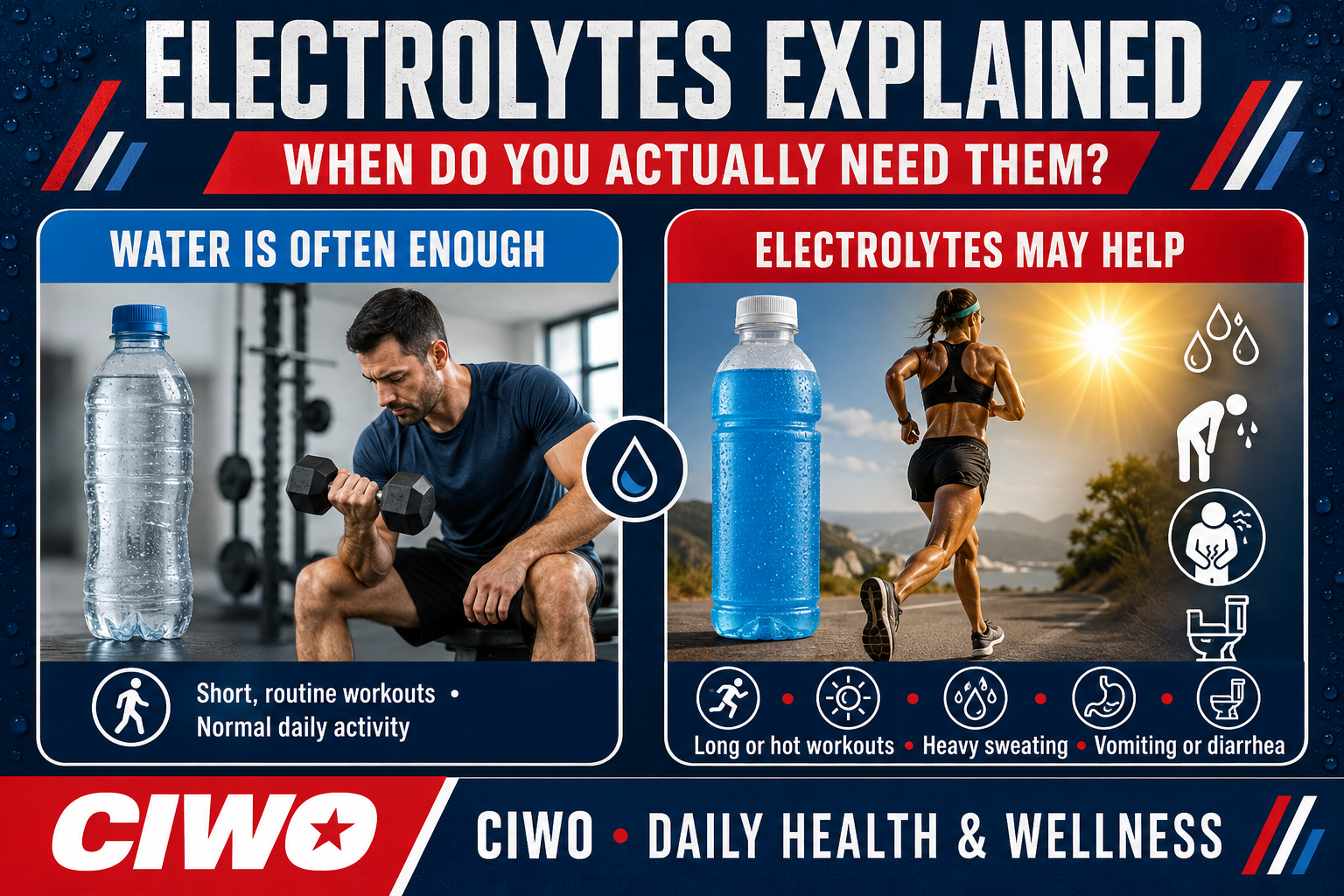
Electrolytes are electrically charged minerals that help regulate fluid balance, nerve signals, muscle contraction, heartbeat and acid-base balance. They are essential—but that does not mean everyone needs an electrolyte drink throughout the day.
Most healthy people replace ordinary electrolyte losses through food and water. Extra replacement becomes more relevant when fluid and mineral losses are unusually high, such as during prolonged sweating, demanding exercise in heat, repeated training sessions or vomiting and diarrhea.
What Are Electrolytes?
Electrolytes are minerals that carry an electrical charge when dissolved in body fluids. Important electrolytes include sodium, potassium, chloride, magnesium, calcium, phosphate and bicarbonate.
- Sodium: helps regulate fluid outside cells and supports nerve and muscle function.
- Potassium: is concentrated primarily inside cells and supports muscle contraction, nerve signaling and normal heart function.
- Chloride: works with sodium to support fluid balance and normal blood volume.
- Magnesium: participates in nerve, muscle, heart and energy-related processes.
- Calcium: supports bones, muscle contraction, nerve transmission and other cellular functions.
The Short Answer: Water Is Often Enough
For normal daily activity and many shorter, routine workouts performed in comfortable conditions, water plus regular balanced meals is usually sufficient. Your food supplies sodium, potassium, chloride, magnesium and other minerals throughout the day.
An electrolyte packet is not automatically better hydration. Some products contain substantial sodium, added sugar, artificial sweeteners or doses of minerals that may not match what you lost. The correct choice depends on the duration, intensity, environment, sweat rate, diet and individual health.
When Electrolytes May Be Useful
- Long-duration exercise: continuous endurance activity lasting longer than approximately one hour can make fluid, sodium and carbohydrate replacement more relevant.
- Hot or humid conditions: heat increases sweating, and several hours of sweating can produce meaningful fluid and electrolyte losses.
- Heavy or salty sweating: visible salt on clothing or skin, very high sweat volume and large changes in body weight during training may indicate greater replacement needs.
- Multiple demanding sessions: repeated workouts or competitions with limited recovery time can make deliberate rehydration more important.
- Vomiting or diarrhea: gastrointestinal illness can cause losses of both water and electrolytes. An oral rehydration solution may be more appropriate than an ordinary sports drink when losses are significant.
- Heat cramps or heat exhaustion: cooling, rest and appropriate fluids are important. Severe symptoms require medical evaluation rather than simply consuming more electrolytes.
Duration Is Only One Factor
The familiar one-hour guideline is a useful starting point—not a universal switch. A gentle 75-minute walk in cool weather is different from 45 minutes of intense work in heavy protective clothing under extreme heat. Consider all of the following:
- Exercise intensity and duration
- Temperature, humidity and sun exposure
- Clothing and protective equipment
- Individual sweat rate and sweat sodium concentration
- Access to meals and fluids before and after activity
- Illness, medications and medical conditions
Sports Drink, Electrolyte Mix or Oral Rehydration Solution?
Sports drinks
Sports drinks generally provide water, sodium and carbohydrates. The carbohydrate can supply fuel during longer or harder sessions, but it may be unnecessary during routine activity.
Low-sugar electrolyte products
These can provide sodium and other minerals without much carbohydrate. They may suit someone who needs fluid and sodium replacement but obtains training fuel from food or another source.
Oral rehydration solutions
Oral rehydration solutions use a deliberate balance of glucose and electrolytes to promote absorption during dehydration from illness. They are not identical to ordinary flavored water or every sports drink. Adults with severe diarrhea, signs of dehydration, advanced age or weakened immunity may need a commercial oral rehydration solution and medical guidance.
What Should You Check on the Label?
- Serving size: a packet may be designed for a specific amount of water.
- Sodium: this is the primary electrolyte lost in sweat, but more is not always better.
- Carbohydrate and added sugar: potentially useful fuel during endurance activity, but often unnecessary for casual hydration.
- Potassium and magnesium: useful nutrients, although large supplemental doses are not a substitute for a balanced diet.
- Caffeine or stimulants: electrolyte products and energy products are not the same category.
- Directions and warnings: follow the labeled mixing instructions rather than concentrating several servings into one bottle.
The FDA Daily Value for sodium is less than 2,300 milligrams per day for adults and children age four or older. That general reference does not prescribe an athlete’s hour-by-hour replacement plan, but it is an important reminder that sodium from drinks adds to sodium from food.
Can You Drink Too Much Water?
Yes. Drinking fluid substantially faster than the body can eliminate it—especially during prolonged exercise—can dilute blood sodium and contribute to exercise-associated hyponatremia. Do not force extreme quantities of water or assume that clear urine at all times is the goal.
A practical hydration plan should replace losses without producing progressive weight gain during exercise. Endurance athletes and people working for hours in heat may benefit from an individualized strategy developed with a qualified sports dietitian or medical professional.
Who Should Be Especially Careful?
Ask a healthcare professional before deliberately increasing electrolyte or salt intake if you have kidney disease, heart failure, liver disease, uncontrolled high blood pressure, fluid restrictions or medications that affect sodium or potassium. This includes some diuretics, ACE inhibitors, angiotensin receptor blockers and potassium-sparing medicines.
A product marketed for hydration can still be inappropriate when the kidneys or heart cannot manage extra fluid or minerals normally.
Warning Signs That Need Medical Attention
- Confusion, fainting, seizures or unusual behavior
- Severe weakness, chest pain or heart palpitations
- Inability to keep fluids down
- Very little or no urination
- Severe or persistent vomiting or diarrhea
- Hot skin, altered mental status or suspected heat stroke
- Symptoms that worsen despite rest, cooling and fluids
Possible heat stroke, seizures, severe confusion or loss of consciousness is an emergency. Call emergency services and begin cooling while help is on the way.
Frequently Asked Questions
Do I need electrolytes for a 30-minute workout?
Usually not. Water and normal meals are generally enough for a short routine session in comfortable conditions. Extreme heat, unusually heavy sweating or a medical issue can change that answer.
Are muscle cramps always caused by low electrolytes?
No. Cramps can involve fatigue, training load, conditioning, prior injury, fluid loss and other factors. Persistent or severe cramping should not be self-diagnosed as a mineral deficiency.
Is coconut water a complete electrolyte drink?
Coconut water supplies potassium and carbohydrate, but it may contain less sodium than is useful after prolonged salty sweating. Compare the label with your actual needs.
Should I take electrolyte tablets every day?
Not automatically. Most healthy people obtain routine electrolytes from food and water. Daily supplements should address a genuine need rather than marketing alone.
Are salt tablets a good solution?
Do not use salt tablets casually. They can cause complications and may worsen nausea. Food, properly mixed beverages or an individualized plan are generally more appropriate.
The Bottom Line
Electrolytes are essential, but special electrolyte products are situational. Water and balanced meals are usually enough for ordinary daily activity and shorter workouts. Consider targeted replacement during prolonged or hot exercise, several hours of heavy sweating, repeated demanding sessions or gastrointestinal fluid loss. Match the product to the situation, read the label and avoid treating more sodium or more water as automatically better.
Sources
- NIH Office of Dietary Supplements: Hydration and Electrolyte Misconceptions
- NIH MedlinePlus: Fluid and Electrolyte Balance
- CDC/NIOSH: Workplace Heat-Stress Recommendations
- CDC/NIOSH: Heat-Related Illnesses
- NIH/NIDDK: Treatment of Diarrhea and Oral Rehydration
- U.S. Food and Drug Administration: Sodium in Your Diet
- American College of Sports Medicine: Hydration During Exercise Recovery
Shop CIWO Fitness Picks
Looking for water bottles, hydration gear, fitness equipment and wellness accessories? Visit the Checked In. Worked Out. Shop and explore products selected to support an active lifestyle.
Affiliate disclosure: Some shop links may be affiliate links. CIWO may earn a commission from qualifying purchases at no additional cost to you.
Medical Disclaimer
This article provides general education and is not medical advice, diagnosis or treatment. Hydration and electrolyte needs can change with health conditions, medications, climate and activity. Consult a qualified healthcare professional for individualized guidance.
Fitness Never Takes a Vacation.™