

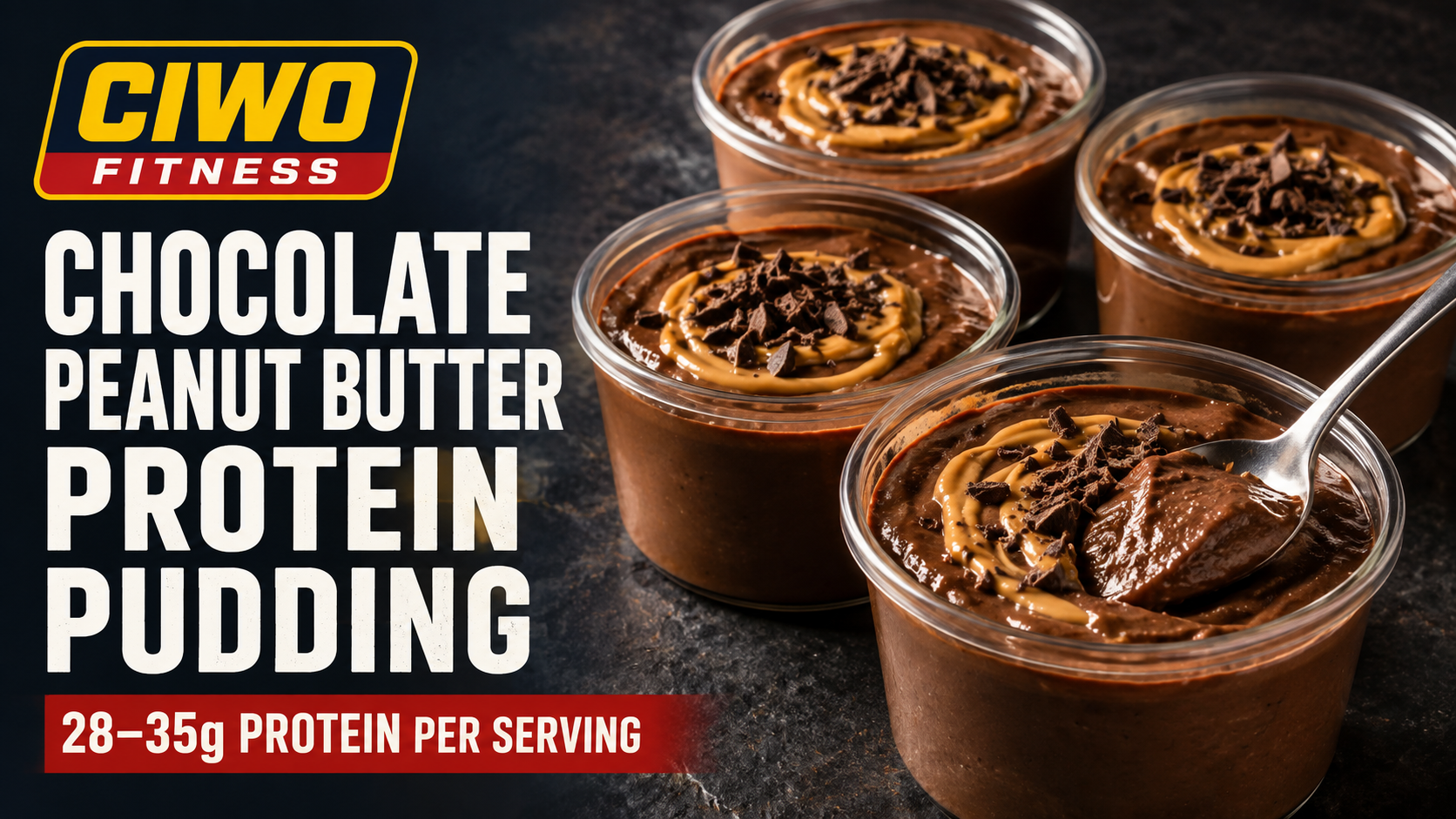
Rich chocolate and creamy peanut butter come together in this Chocolate Peanut Butter Protein Pudding. Greek yogurt, blended cottage cheese and chocolate protein powder create a thick, smooth, no-cook snack or dessert that is easy to portion for the week.
Why You’ll Love This Protein Pudding
- No cooking required
- Approximately 28–35 grams of protein per serving
- Rich chocolate-peanut-butter flavor
- Four convenient meal-prep portions
- Ready after a short chill in the refrigerator
Ingredients
Makes 4 servings
- 2 cups plain Greek yogurt
- 1 cup cottage cheese
- 2 scoops chocolate protein powder
- 1/4 cup unsweetened cocoa powder
- 1/3 cup natural peanut butter
- 2 tablespoons maple syrup or honey, or to taste
- 1 teaspoon vanilla extract
- Pinch of salt
- 2–6 tablespoons milk, as needed for texture
- Dark chocolate shavings or chopped peanuts for topping, optional
Step-by-Step Instructions
1. Add the Ingredients
Add the Greek yogurt, cottage cheese, protein powder, cocoa powder, peanut butter, maple syrup, vanilla and salt to a blender or food processor.
2. Blend Until Smooth
Blend until completely smooth, pausing to scrape down the sides. Add milk one tablespoon at a time until the pudding reaches your preferred consistency.
3. Adjust the Flavor
Taste the pudding and add a little more sweetener, cocoa or peanut butter if desired. Blend again until evenly combined.
4. Portion and Chill
Divide the pudding among four cups or containers. Cover and refrigerate for at least 1 hour so the pudding can chill and thicken.
5. Add Toppings
Before serving, add a small peanut-butter swirl and optional dark chocolate shavings or chopped peanuts.
Estimated Nutrition
Per serving, based on 4 servings: approximately 310–390 calories, 28–35 grams of protein, 22–32 grams of carbohydrates and 13–19 grams of fat.
Nutrition values are estimates and will vary based on the yogurt, cottage cheese, protein powder, peanut butter, sweetener, milk and toppings used.
Meal-Prep and Storage Tips
- Refrigerator: Store covered portions for up to 4 days.
- Best texture: Stir before serving and add a splash of milk if the pudding becomes too thick.
- Portable portions: Use small containers with tight-fitting lids.
- Toppings: Add crunchy toppings immediately before serving.
- Freezing: Freezing is not recommended because the dairy mixture may separate after thawing.
Easy Swaps and Variations
- Use almond or cashew butter instead of peanut butter.
- Add instant espresso powder for a mocha flavor.
- Blend in half a banana for natural sweetness.
- Top with sliced strawberries, raspberries or banana.
- Use vanilla protein powder and extra cocoa when chocolate protein powder is unavailable.
Food-Safety Note
Keep the pudding refrigerated because it contains dairy products. Do not leave it at room temperature for more than two hours, and use clean utensils when portioning and serving.
Fitness on the go or wherever life takes you. Fitness never takes a vacation!
CIWO Meal-Prep Notes
Chocolate Peanut Butter Protein Pudding works best when the serving size is planned around your own calorie, protein and training needs. Nutrition numbers in recipes are estimates because brands, ingredient weights, sauces and substitutions can change the final totals.
Storage, reheating and food safety
Cool cooked food appropriately, portion it into clean covered containers and refrigerate promptly. As a practical rule, many cooked leftovers are best used within about three to four refrigerated days; freeze later-week portions when appropriate. Reheat hot components thoroughly, and keep fresh toppings or cold sauces separate when that improves texture.
Adjust the meal for your goal
For a higher-energy training meal, increase an appropriate carbohydrate portion or add a nutrient-dense side. For a lighter meal, emphasize vegetables and moderate calorie-dense sauces, oils and cheese. For more protein, adjust the main lean-protein portion or pair the meal with a protein-rich side.
Make the nutrition estimate more accurate
Weigh or measure the ingredients you actually use and calculate the batch from their labels, then divide by the number of portions. This is more reliable than assuming every version of the recipe has identical calories or macros.
Explore more CIWO meal-prep recipes or pair your nutrition plan with the CIWO workout library.
Planning This Meal Across the Week
Meal prep is most useful when it reduces decisions without forcing you to eat identical portions regardless of the day. A harder training day may call for a larger carbohydrate portion, while a less active day may fit a smaller portion. Keep the protein serving consistent with your overall daily target and adjust the rest of the plate around appetite, activity and goals.
For best results, label refrigerated or frozen portions with the preparation date. If texture matters, keep crunchy toppings, fresh vegetables and cold sauces separate until serving. When changing ingredients, recalculate nutrition from the products you actually use rather than relying on the original estimate.