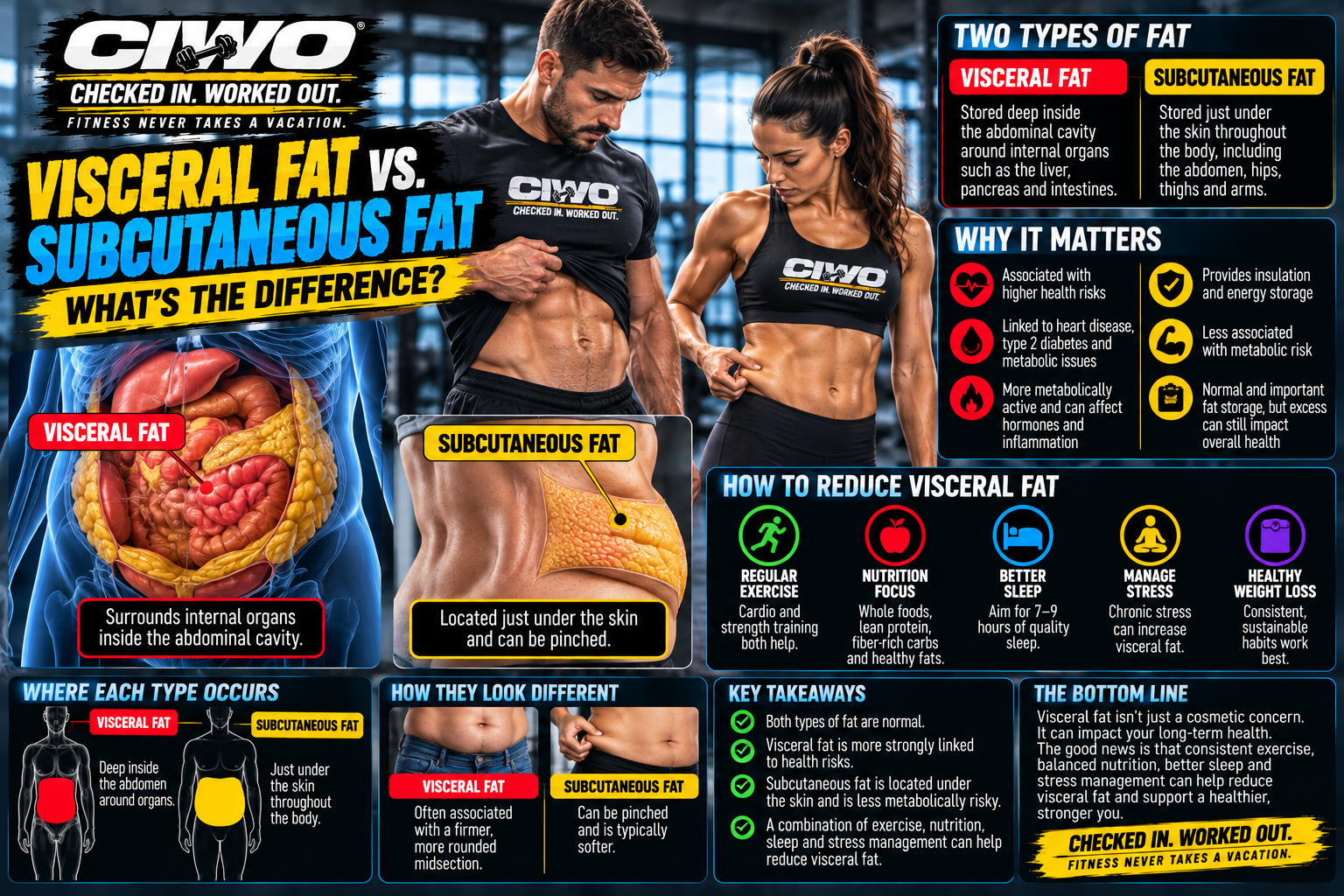

Body fat is not stored in only one place or in only one form. Two terms you may hear are visceral fat and subcutaneous fat. Both are forms of adipose tissue, but their locations and relationships with health are different. Understanding that difference can provide better context than judging health by appearance alone.
What Is Subcutaneous Fat?
Subcutaneous fat is stored directly beneath the skin. It is found throughout the body, including around the abdomen, hips, thighs and arms. This is generally the softer fat you can pinch beneath the skin.
Subcutaneous fat is normal body tissue. It stores energy, helps insulate the body and contributes to normal physiological functions. Having subcutaneous fat is not inherently unhealthy. However, a high overall level of body fat can still be relevant to health depending on the individual and other risk factors.
What Is Visceral Fat?
Visceral fat is stored deeper within the abdominal cavity around internal organs. Unlike subcutaneous fat, it cannot simply be pinched from the outside.
Higher amounts of visceral fat are more strongly associated with cardiometabolic risk, including insulin resistance, type 2 diabetes and cardiovascular disease. Visceral adipose tissue is biologically active and can influence inflammatory and metabolic signaling.
Visceral vs. Subcutaneous Fat
- Location: visceral fat is deep within the abdomen; subcutaneous fat is directly beneath the skin.
- Visibility: subcutaneous fat can usually be felt or pinched; visceral fat cannot be accurately identified just by looking at someone.
- Health relationship: excess visceral fat generally has a stronger association with cardiometabolic disease risk.
- Function: both are forms of energy storage and metabolically active tissue, but their biological behavior differs.
Can You Tell How Much Visceral Fat You Have by Looking?
Not reliably. Body shape or waist size can provide clues about abdominal fat distribution at a population level, but appearance cannot determine exactly how much visceral fat a person has. Medical imaging such as CT or MRI can directly assess visceral adipose tissue, although these tests are not routinely needed simply to estimate body fat.
Waist circumference may be used by healthcare professionals alongside other information when evaluating cardiometabolic risk. It is a screening measure, not a direct measurement of visceral fat and not a diagnosis by itself.
What Influences Visceral Fat?
Fat distribution is influenced by many factors, including genetics, age, sex hormones, overall energy balance, physical activity, sleep, alcohol intake, smoking status, medications and certain health conditions. This is one reason two people with similar body weights can have different fat distributions and health profiles.
Can Exercise Help?
Regular physical activity is associated with improvements in cardiometabolic health and can help reduce visceral fat, particularly when combined with sustainable nutrition and weight-management strategies when weight loss is appropriate. Both aerobic exercise and resistance training can be useful.
You cannot choose exactly where your body loses fat through a particular abdominal exercise. Crunches and other core exercises can strengthen abdominal muscles, but they do not selectively burn visceral or subcutaneous abdominal fat.
Practical Habits That Support Metabolic Health
- Accumulate regular aerobic activity appropriate for your ability.
- Include resistance training to support strength and muscle function.
- Build meals around nutrient-dense foods, including vegetables, fruits, whole grains, legumes, lean or appropriate protein sources and unsaturated fats.
- Prioritize adequate sleep and a consistent sleep schedule when possible.
- Limit or avoid smoking and excessive alcohol intake.
- Use sustainable habits rather than extreme diets or rapid-weight-loss approaches.
Health Is More Than Body Fat
Body composition is only one part of health. Blood pressure, blood glucose, cholesterol and triglycerides, fitness, sleep, smoking status, family history and other factors can all matter. Someone’s appearance alone cannot tell you their metabolic health.
When to Talk With a Healthcare Professional
If you are concerned about abdominal fat or cardiometabolic risk, a healthcare professional can evaluate the bigger picture rather than relying on appearance alone. Depending on your circumstances, that may include blood pressure, laboratory testing, medical history and other appropriate measurements.
The CIWO Takeaway
Subcutaneous fat sits beneath the skin, while visceral fat is stored deeper around abdominal organs. Higher visceral fat is more strongly associated with cardiometabolic risk, but neither type should be judged from appearance alone. Focus on sustainable physical activity, balanced nutrition, adequate sleep and the health measurements that matter for you.