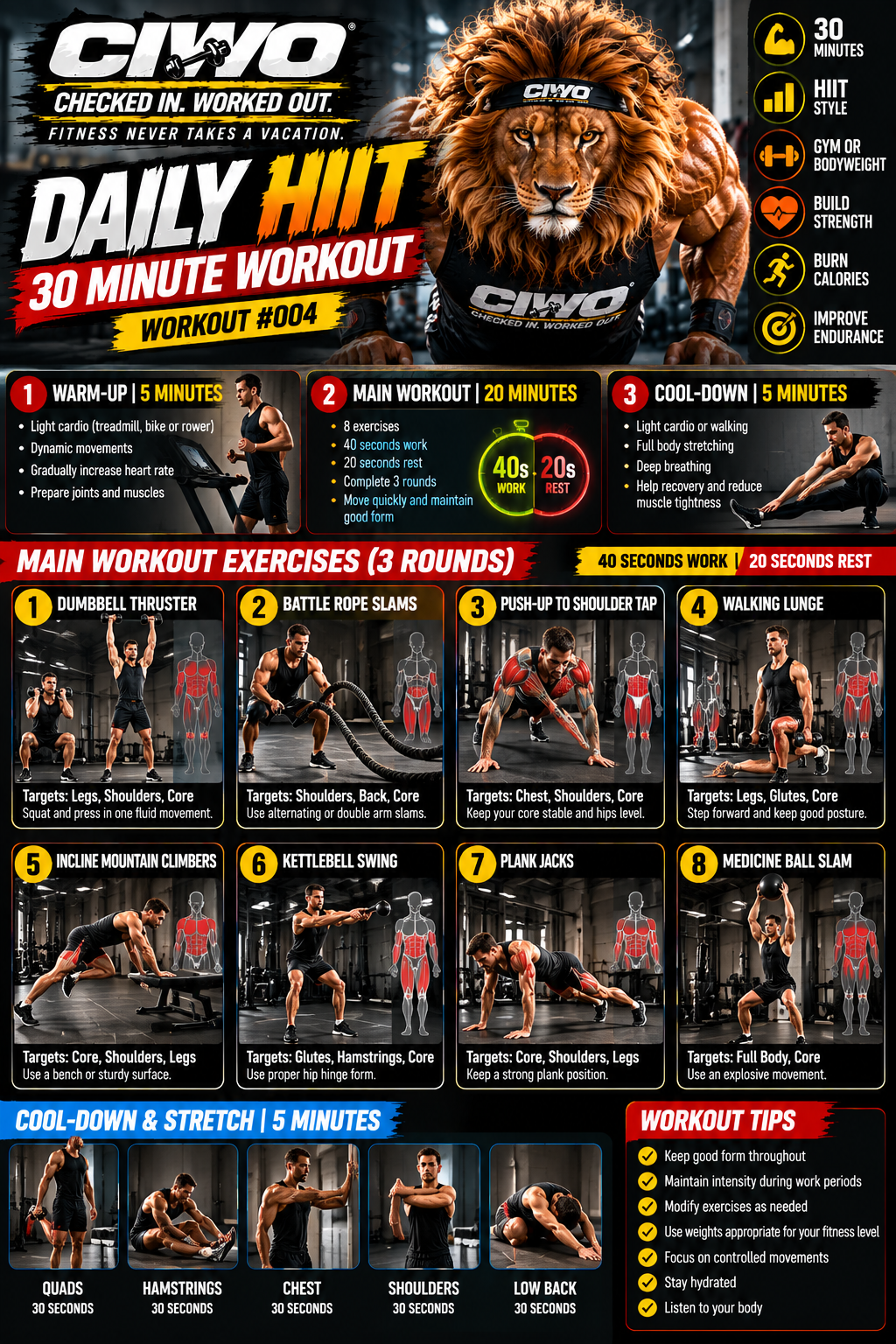

CIWO Daily HIIT Workout #004 is a 30-minute gym-based interval session that combines dumbbells, battle ropes, kettlebells, a medicine ball and bodyweight movements. This workout changes the exercise combination from the earlier Daily HIIT sessions while keeping the series focused on scalable conditioning and controlled movement.
Workout #004 Overview
- Total target time: 30 minutes
- Warm-up: 5 minutes
- Main workout: 20 minutes
- Cooldown: 5 minutes
- Main interval: 40 seconds work / 20 seconds recovery or transition
- Equipment: dumbbells, battle ropes, kettlebell, bench or sturdy elevated surface, medicine ball
1. Warm-Up — 5 Minutes
Begin with light cardio on a treadmill, stationary bike or rower. Gradually increase your breathing rate, then add comfortable dynamic movements for the hips, shoulders and trunk. The warm-up should prepare you for the session rather than exhaust you before the first interval.
2. Main Workout — 20 Minutes
Move through the following eight exercises using approximately 40 seconds of work followed by 20 seconds of recovery or transition. Complete the circuit at a pace that fits the 20-minute training block. Three rounds can be used when transitions and individual modifications allow; shorten work periods or rounds when needed to preserve the overall 30-minute structure and good technique.
1. Dumbbell Thruster
Hold the dumbbells securely near shoulder level. Squat through a comfortable range, stand with control and transition into an overhead press. Use a load that lets you maintain trunk control. If overhead pressing is not appropriate for you, substitute a dumbbell squat.
2. Battle Rope Slams
Use an athletic stance with soft knees and a stable trunk. Create controlled alternating waves or double-arm slams. Keep enough space between yourself and the rope anchor and reduce speed if technique begins to deteriorate.
3. Push-Up to Shoulder Tap
Perform a controlled push-up, return to the top position and tap the opposite shoulder with one hand. Alternate sides while limiting unnecessary hip rotation. Use an elevated surface for an easier variation.
4. Walking Lunge
Step forward into a comfortable lunge, push through the lead foot and continue into the next repetition. Keep the movement controlled and shorten the range if needed. Bodyweight is sufficient; dumbbells are optional.
5. Incline Mountain Climbers
Place your hands on a secure bench or sturdy elevated surface. Maintain a strong plank position while alternating knee drives. The incline can reduce the difficulty compared with the floor version while still providing a conditioning interval.
6. Kettlebell Swing
Use a hip-hinge pattern rather than turning the movement into a squat or an arm raise. Drive through the hips and allow the kettlebell to travel naturally. Choose a manageable load and substitute a kettlebell or dumbbell Romanian deadlift if you have not learned the swing technique.
7. Plank Jacks
Maintain a stable plank while moving the feet outward and inward. For a lower-impact option, alternate stepping one foot to the side instead of jumping both feet.
8. Medicine Ball Slam
Use a medicine ball specifically designed for slamming and a suitable training surface. Raise the ball under control and drive it toward the floor while maintaining awareness of the rebound characteristics of the ball. If your ball is not designed for slams, substitute a controlled medicine-ball squat or another conditioning movement.
3. Cooldown — 5 Minutes
Gradually reduce your effort with easy walking or another light activity. Follow with comfortable mobility or stretches for areas such as the quadriceps, hamstrings, chest, shoulders and lower body. Avoid forcing stretches or holding painful positions.
Equipment Substitutions
- No battle ropes: use fast controlled shadowboxing or lateral step-and-reaches.
- No kettlebell: use a dumbbell Romanian deadlift rather than attempting an unfamiliar swing.
- No medicine ball: use a bodyweight squat-to-reach.
- No bench: use a sturdy elevated surface appropriate for exercise or choose controlled standing knee drives.
- Need lower impact: remove jumping and use step-based variations.
How Hard Should HIIT #004 Feel?
HIIT intensity is individual. Work hard enough to noticeably increase your breathing and heart rate, but do not sacrifice movement quality just to perform more repetitions. With loaded exercises, choose resistance you can control throughout the interval. Increase recovery, reduce resistance or shorten the work interval when necessary.
Safety Notes
Keep your workout area clear and make sure equipment is secure before beginning. Set weights down deliberately rather than dropping equipment that is not designed for impact. Stop exercising if you experience sharp or unusual pain, chest pain or pressure, faintness, dizziness, severe or unusual shortness of breath, or another concerning symptom. Exercise selection and intensity should be adjusted for your current ability and any professional guidance you have been given.
The CIWO Daily HIIT Series
Daily HIIT #004 continues the rotating format by introducing a new combination of gym equipment and bodyweight movements. The goal of the series is variety without simply repeating the same workout every day: different movements, different equipment and different conditioning challenges while keeping the instructions clear and scalable.