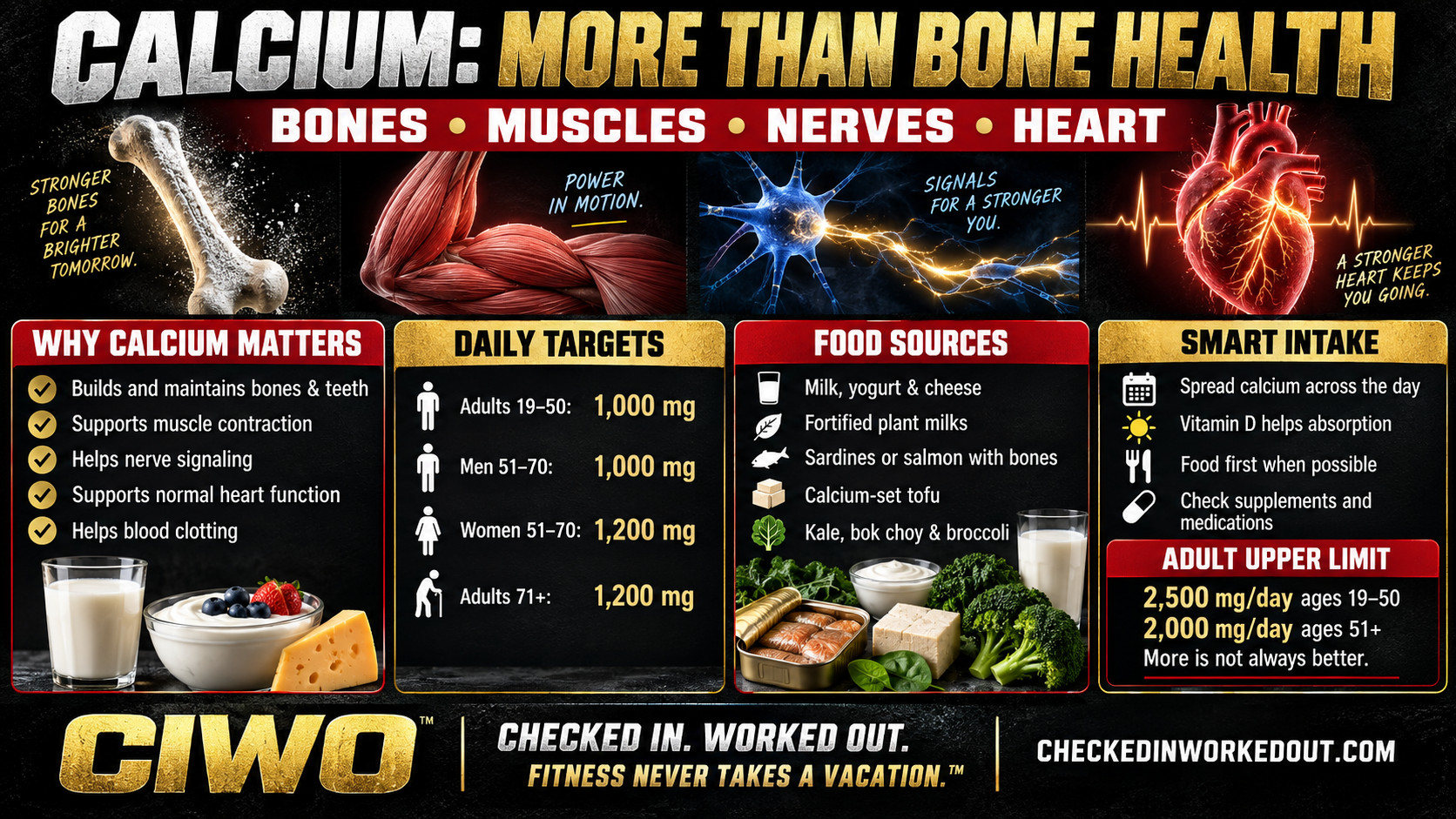

Calcium is famous for supporting strong bones and teeth, but its job does not stop there. This essential mineral also helps muscles contract, nerves carry signals, the heart function normally and blood clot when needed. Because the body cannot make calcium, a steady supply must come from food, beverages and, when appropriate, supplements.
What Calcium Does in the Body
- Builds and maintains bones and teeth: Nearly all calcium in the body is stored in the skeleton and teeth, where it provides structure and strength.
- Supports muscle contraction: Calcium helps muscle fibers contract and relax, whether you are lifting weights, walking or breathing.
- Helps nerves communicate: Nerve cells use calcium as part of the process that releases chemical messengers.
- Supports normal heart function: The heart is a muscle, and calcium contributes to its regular contraction and electrical activity.
- Helps blood clot: Calcium participates in the chain of reactions that allows the body to form a clot after an injury.
- Supports cellular signaling: Cells use calcium to activate many enzymes, hormones and other biological processes.
Your Skeleton Is Also a Calcium Reserve
The body keeps blood calcium within a narrow range because nerves, muscles and the heart depend on it. When dietary calcium is consistently low, the body can draw calcium from bone to maintain that blood level. Over time, inadequate intake can contribute to weaker bones. Resistance training and weight-bearing activity support bone health, but they do not replace adequate calcium and vitamin D.
Recommended Daily Calcium Intake
| Life stage | Recommended amount |
|---|---|
| Teens ages 14–18 | 1,300 mg daily |
| Adults ages 19–50 | 1,000 mg daily |
| Men ages 51–70 | 1,000 mg daily |
| Women ages 51–70 | 1,200 mg daily |
| Adults age 71 and older | 1,200 mg daily |
| Pregnant or breastfeeding adults ages 19–50 | 1,000 mg daily |
These targets include calcium from food, drinks and supplements combined. Individual needs may differ when a medical condition, medication, pregnancy or a clinician’s treatment plan is involved.
Calcium-Rich Foods
- Milk, yogurt and cheese
- Calcium-fortified soy, almond or other plant beverages
- Calcium-fortified orange juice and breakfast cereals
- Sardines and canned salmon eaten with their soft bones
- Tofu prepared with calcium salts; check the Nutrition Facts label
- Kale, bok choy, broccoli and other selected green vegetables
- Beans, almonds and other foods that contribute smaller amounts
Fortification and serving sizes vary, so compare Nutrition Facts labels. For many adults, combining two or three calcium-rich choices across the day is easier than trying to consume the full amount at one meal.
Vitamin D Helps You Use Calcium
Vitamin D helps the intestines absorb calcium. A diet can contain calcium yet still fail to support bone health fully if vitamin D status is inadequate. Fatty fish, fortified milk or plant beverages and some fortified foods provide vitamin D, while sunlight exposure and supplements may also contribute. Ask a healthcare professional whether testing or supplementation is appropriate for you.
A Practical Food-First Day
- Add milk or a calcium-fortified plant beverage to breakfast.
- Choose Greek yogurt or regular yogurt as a snack.
- Include tofu, beans, broccoli, kale or bok choy with lunch or dinner.
- Use canned salmon with bones or sardines when they fit your preferences.
- Check labels and spread calcium-rich foods across the day.
What to Know About Supplements
Supplements can help close a documented intake gap, but more is not automatically better. Calcium is generally absorbed best in amounts of 500 mg or less at one time. Calcium carbonate is usually taken with food, while calcium citrate can be taken with or without food and may be easier to absorb for people with lower stomach acid.
- Add up calcium from food, fortified drinks and supplements before choosing a dose.
- Increase gradually if a supplement causes gas, bloating or constipation.
- Ask a clinician or pharmacist about timing if you take levothyroxine, certain antibiotics, bisphosphonates or other prescription medicines.
- Do not use supplements to treat symptoms or a suspected deficiency without medical guidance.
How Much Is Too Much?
The tolerable upper intake level for adults ages 19–50 is 2,500 mg per day. For adults age 51 and older, it is 2,000 mg per day. These limits include food, beverages and supplements. Regularly exceeding them can increase the risk of adverse effects; high supplemental intake may cause constipation and may contribute to kidney stones in some people.
Who Should Pay Extra Attention?
- People who avoid dairy without using fortified alternatives
- Postmenopausal women and older adults
- People with lactose intolerance or milk allergy
- People with conditions that reduce nutrient absorption
- Anyone following a highly restrictive eating pattern
- People taking medications that affect calcium or bone health
Frequently Asked Questions
Is dairy required to get enough calcium?
No. Fortified plant beverages, calcium-set tofu, canned fish with bones and selected vegetables can contribute meaningful calcium. Check labels because amounts vary widely.
Does calcium directly improve workout performance?
Calcium is necessary for normal muscle contraction and nerve signaling, but taking extra calcium above your needs is not a performance enhancer. Adequate intake supports normal function and long-term skeletal health.
Should I take calcium and vitamin D together?
Vitamin D supports calcium absorption, but whether you need either supplement depends on your diet, health history, medications and laboratory results. A clinician can help determine an appropriate plan.
Can I take my entire calcium supplement at once?
Absorption is generally best at doses of 500 mg or less at one time. If a larger supplemental amount is recommended, it may need to be divided across the day.
The CIWO Takeaway
Calcium is a whole-body nutrient—not merely a bone ingredient. Build a consistent food-first routine, include vitamin D sources, review labels and use supplements thoughtfully. Small daily choices help support strong bones, dependable muscle action and normal nerve and heart function for the long haul.
Sources
- NIH Office of Dietary Supplements: Calcium Fact Sheet for Consumers
- NIH Office of Dietary Supplements: Calcium Fact Sheet for Health Professionals
- NIH Office of Dietary Supplements: Vitamin D Fact Sheet for Consumers
- MedlinePlus: Calcium in Diet
This article is for general educational purposes and is not medical advice. Speak with a qualified healthcare professional about symptoms, deficiencies, supplements, kidney disease, medication interactions or individual nutrition needs.
Shop CIWO Health & Fitness Essentials
Looking for nutrition tools, meal-prep essentials, protein snacks, workout equipment and everyday fitness products? Visit the Checked In. Worked Out. Shop and explore products selected to support your health and training goals.
Affiliate disclosure: Some shop links may be affiliate links. CIWO may earn a commission from qualifying purchases at no additional cost to you.
Fitness Never Takes a Vacation.™