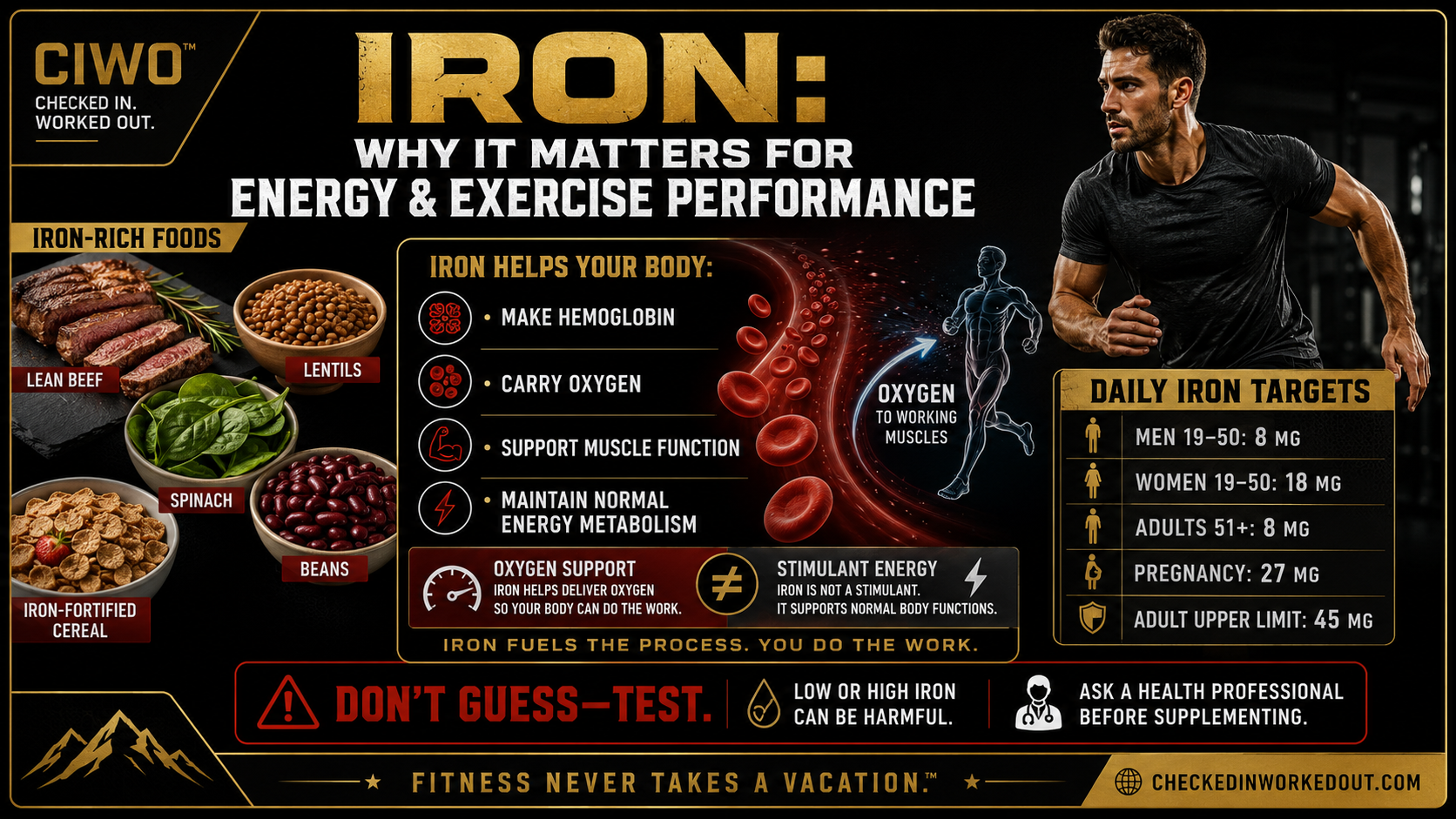
Iron is essential for oxygen delivery, muscle function and normal energy metabolism. Your body uses it to make hemoglobin in red blood cells and myoglobin in muscle. When iron stores become too low, training can feel harder—but taking extra iron when you do not need it will not act like a stimulant and can be harmful.
Fatigue, shortness of breath and declining exercise tolerance have many possible causes. Iron deficiency cannot be diagnosed from symptoms alone. Blood testing and professional interpretation are the safest ways to determine whether low iron is part of the problem.
What Does Iron Do?
- Hemoglobin production: Iron is part of hemoglobin, the protein that carries oxygen from the lungs through the blood.
- Muscle oxygen: Iron is part of myoglobin, which helps provide oxygen within muscle tissue.
- Energy metabolism: Iron participates in enzymes involved in cellular energy production.
- Growth and development: It supports normal development and several hormone-related processes.
- Brain and immune function: Adequate iron supports normal cognition and immune activity.
Iron, Energy and Exercise Performance
Exercise increases the muscles’ demand for oxygen. Adequate hemoglobin helps deliver that oxygen, while iron-containing proteins support its use inside cells. Iron deficiency anemia reduces the blood’s oxygen-carrying capacity and can contribute to fatigue, breathlessness, weakness and reduced ability to work or exercise.
Iron is not an energy drink. If iron status is already adequate, taking more has not been established as a reliable way to improve performance. The benefit of treatment is greatest when a confirmed deficiency is corrected under appropriate guidance.
Recommended Daily Iron Intake
- Adult men ages 19–50: 8 mg per day
- Adult women ages 19–50: 18 mg per day
- Adults age 51 and older: 8 mg per day
- Pregnancy: 27 mg per day
- Breastfeeding women: 9 mg per day
- Adult tolerable upper intake level: 45 mg per day from food, beverages and supplements combined
Needs vary by age, sex, pregnancy, blood loss, diet and health status. NIH notes that vegetarians who eat no meat, poultry or seafood may need almost twice the listed amount because nonheme iron is absorbed less efficiently. A clinician may prescribe more than the upper limit temporarily to treat a diagnosed deficiency; that is medical treatment, not a general intake target.
Heme Iron vs. Nonheme Iron
Heme iron
Heme iron comes from animal foods and is generally absorbed more efficiently. Sources include lean beef, poultry, seafood and other meats.
Nonheme iron
Nonheme iron is found in beans, lentils, peas, spinach, nuts, seeds and iron-fortified grains. Animal foods can contain both forms, while plant foods and fortified foods provide nonheme iron.
Iron-Rich Foods
- Lean beef and other lean meats
- Oysters, clams and other seafood
- Chicken and turkey
- Lentils, kidney beans, white beans, chickpeas and peas
- Iron-fortified breakfast cereal and bread
- Spinach and other dark leafy greens
- Tofu and soybeans
- Nuts, seeds, raisins and other selected dried fruits
Check Nutrition Facts labels because iron content varies considerably by food and brand, especially among fortified cereals and plant-based products.
How to Improve Iron Absorption
- Pair plant-based iron with vitamin C foods such as citrus, strawberries, bell peppers, tomatoes or broccoli.
- Combine beans, lentils or greens with meat, poultry or seafood when those foods fit your diet.
- Avoid assuming one “superfood” will correct a deficiency; overall intake and the cause of low iron matter.
- Calcium can interfere with iron absorption in some circumstances. Ask a clinician or pharmacist how to time prescribed iron and calcium.
- Coffee and tea contain compounds that can reduce nonheme iron absorption. People being treated for deficiency may be advised to separate them from iron-rich meals or supplements.
Who Is More Likely to Have Low Iron?
- People with heavy menstrual bleeding
- Pregnant women and teens
- Frequent blood donors
- People who avoid meat, poultry and seafood without replacing their iron carefully
- Endurance athletes and others with high training loads, especially when energy intake is inadequate
- People with gastrointestinal disorders, surgery or conditions that affect absorption
- People with ongoing blood loss
- Infants, young children and adolescents during rapid growth
Being in a higher-risk group does not prove deficiency. It means screening and dietary review may deserve more attention.
Possible Signs of Iron Deficiency
- Persistent fatigue or weakness
- Shortness of breath with usual activity
- Reduced exercise tolerance or declining performance
- Dizziness, headaches or feeling unusually cold
- Pale skin
- Difficulty concentrating
- Rapid heartbeat or palpitations
- Unusual cravings for nonfood substances, known as pica
These symptoms are not specific to iron deficiency and can occur with many medical conditions. New, persistent or severe symptoms require medical evaluation. Seek urgent care for chest pain, fainting, severe breathing difficulty or other concerning symptoms.
Testing: Don’t Guess
A healthcare professional may use a complete blood count along with tests such as ferritin, serum iron, total iron-binding capacity or transferrin saturation. Ferritin reflects stored iron but can be influenced by inflammation, illness and other factors, so results should be interpreted in context.
Finding the cause matters. Low iron may result from inadequate intake, blood donation, menstrual or gastrointestinal blood loss, pregnancy, impaired absorption or another health condition. Treating only the number without investigating the reason can miss an important problem.
Iron Supplements: Important Safety Guidance
- Do not start high-dose iron solely because you feel tired.
- Iron can cause nausea, abdominal pain, constipation, vomiting or diarrhea.
- Too much iron can damage organs and may be especially dangerous for people with hereditary hemochromatosis.
- Iron products can be fatal to young children. Keep every iron-containing supplement locked away and out of reach.
- Iron may interact with levothyroxine, levodopa, calcium and other medicines or supplements.
- Proton-pump inhibitors and other factors that reduce stomach acid may affect nonheme iron absorption.
- Use the dose, form and duration recommended by your healthcare professional and complete follow-up testing when advised.
A Practical Food-First Day
- Breakfast: iron-fortified cereal with berries or another vitamin C-rich fruit.
- Lunch: a lentil-and-spinach bowl with tomatoes and bell peppers.
- Snack: pumpkin seeds with fruit.
- Dinner: lean beef, chicken or seafood with beans and broccoli.
This is an example, not a prescription. Food needs, allergies, medical conditions and calorie targets differ from person to person.
Frequently Asked Questions
Will iron give me more energy?
Correcting a diagnosed deficiency may improve fatigue and exercise tolerance. Iron is not a stimulant, and extra iron is unlikely to create an energy boost when status is already adequate.
Do athletes need more iron?
Some athletes—particularly endurance athletes, menstruating athletes, frequent blood donors and people restricting food intake—have greater risk of low iron. That does not mean every athlete needs a supplement. Diet review and testing are more useful than routine self-treatment.
Can I get enough iron without red meat?
Yes. Beans, lentils, tofu, fortified cereals, spinach, seeds, poultry and seafood can contribute. Plant-based eaters need thoughtful planning because nonheme iron is absorbed less efficiently.
Should I take iron before a workout?
No special pre-workout timing is recommended for general performance. When iron is prescribed, follow the clinician’s timing instructions and consider stomach tolerance and medication interactions.
Is the 45 mg upper limit a supplement target?
No. It is the adult tolerable upper intake level from all sources, not a daily goal. Therapeutic doses above it should be used only under medical supervision.
The Bottom Line
Iron helps your blood carry oxygen and your muscles use it, making adequate intake important for health and exercise. Build meals around varied iron-rich foods, pair plant sources with vitamin C and pay attention to risk factors. If fatigue or performance changes persist, do not guess—seek testing before supplementing.
Sources
- NIH Office of Dietary Supplements: Iron Fact Sheet for Consumers
- NIH Office of Dietary Supplements: Iron Fact Sheet for Health Professionals
- MedlinePlus: Iron
- MedlinePlus: Ferritin Blood Test
Shop CIWO Fitness & Wellness Picks
Looking for meal-prep tools, kitchen essentials, fitness equipment and wellness accessories? Visit the Checked In. Worked Out. Shop and explore products selected to support an active lifestyle.
Affiliate disclosure: Some shop links may be affiliate links. CIWO may earn a commission from qualifying purchases at no additional cost to you.
Medical Disclaimer
This article provides general education and is not medical advice, diagnosis or treatment. Do not diagnose or treat iron deficiency based on symptoms alone. Consult a qualified healthcare professional for testing, interpretation and individualized nutrition or supplement guidance.
Fitness Never Takes a Vacation.™