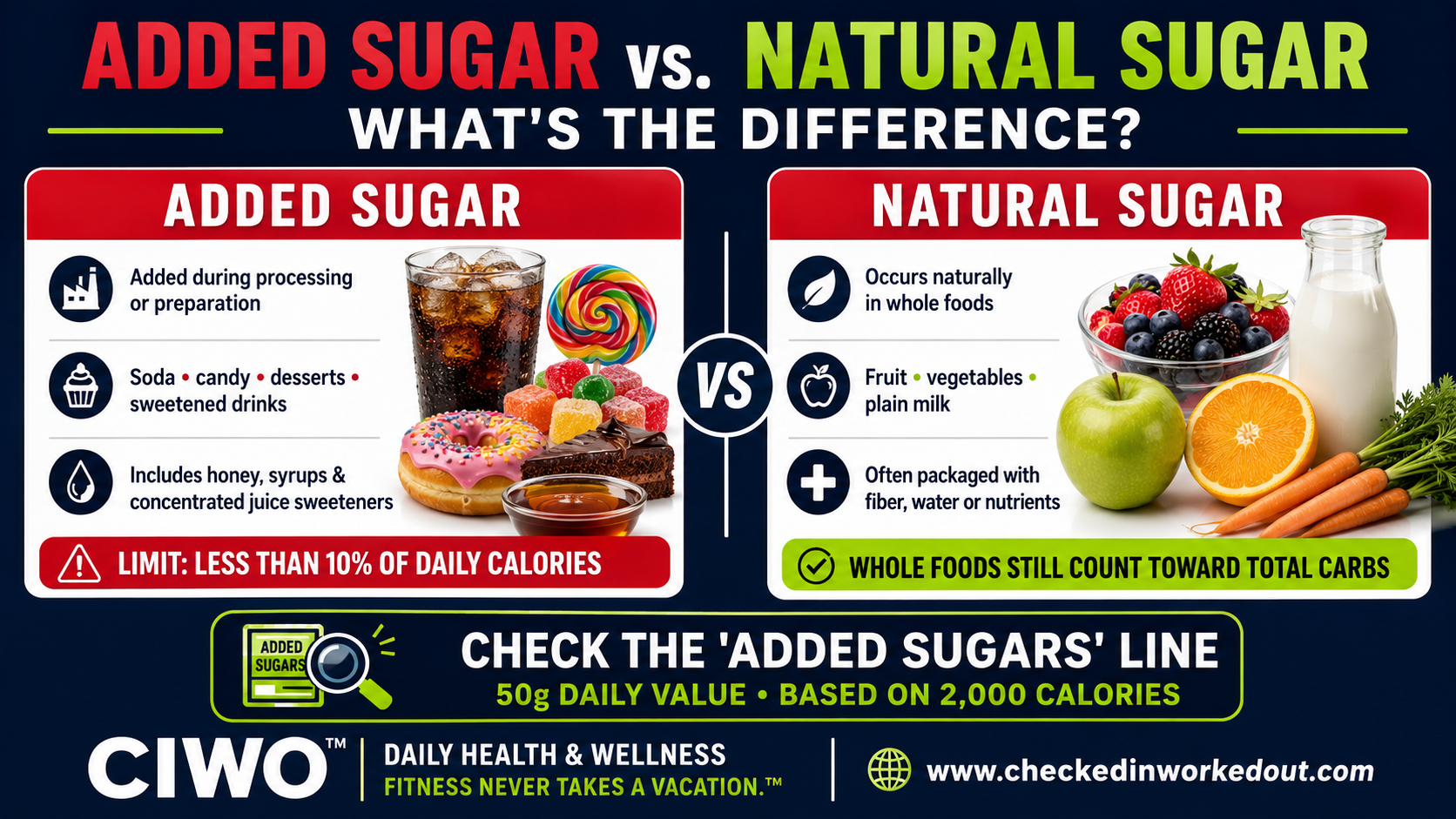

Sugar is sugar chemically, but the food carrying it matters. Added sugars are placed into foods or drinks during processing or preparation. Naturally occurring sugars are already present in foods such as fruit, vegetables and plain milk, where they may arrive with fiber, water, vitamins, minerals or protein.
This does not make every naturally sweet food unlimited or every food containing added sugar forbidden. The practical goal is to understand the label, prioritize nutrient-dense foods and keep added sugar within a reasonable share of your total calories.
What Is Added Sugar?
Added sugars include sugars added while a food or beverage is processed, packaged, cooked or prepared. Table sugar, brown sugar, syrups, honey, molasses and sugars from concentrated fruit or vegetable juices can all count as added sugar when used as sweeteners.
- Regular soda, sweet tea and many energy drinks
- Candy, cookies, cakes, doughnuts and pastries
- Sweetened breakfast cereals and granola
- Flavored yogurt and sweetened dairy drinks
- Sweetened coffee beverages
- Sauces, dressings, marinades and condiments
- Some breads, protein bars and flavored oatmeal
What Is Naturally Occurring Sugar?
Naturally occurring sugar exists in a food before anything is added. Fructose and glucose occur naturally in fruit and vegetables, while lactose occurs naturally in plain milk and unsweetened dairy products.
- Whole fruit: sugar is packaged with water, fiber and micronutrients.
- Vegetables: some contain natural sugar along with fiber, vitamins and minerals.
- Plain milk: lactose occurs naturally and comes with protein, calcium and other nutrients.
- Plain yogurt: its Total Sugars line can include natural lactose even when the Added Sugars line shows zero.
The Main Difference Is the Food Package
The body breaks many dietary sugars into simple sugars that can enter the bloodstream. However, whole foods often change the experience because their fiber, water, protein and physical structure can affect digestion, fullness and how quickly the food is consumed.
An apple requires chewing and provides water and fiber. Apple-flavored candy can deliver added sugar with little fiber and is easier to eat quickly. Both can contain sugar, but they are not nutritionally interchangeable.
How Much Added Sugar Is Recommended?
Current federal guidance recommends limiting added sugars to less than 10% of total daily calories for people age two and older. On a 2,000-calorie diet, 10% equals 200 calories or 50 grams of added sugar. The FDA therefore uses 50 grams as the Daily Value on a 2,000-calorie Nutrition Facts label.
Fifty grams is approximately 12½ teaspoons because one teaspoon of granulated sugar weighs about four grams. This is a maximum reference amount, not a daily target you need to reach. Individual calorie needs vary, so a percentage-based limit may translate to fewer or more grams.
Children younger than two should avoid added sugars. Parents and caregivers should follow age-appropriate pediatric nutrition guidance.
How to Read the Nutrition Facts Label
1. Check the serving size
Every number on the label applies to the listed serving. If a bottle contains two servings and you drink the entire bottle, multiply the calories, carbohydrates and sugars by two.
2. Find Total Sugars
Total Sugars includes both naturally occurring and added sugars. The label does not assign a Daily Value to Total Sugars.
3. Find Includes Added Sugars
The indented Includes X g Added Sugars line tells you how much of the total was added. It also supplies a percent Daily Value. As a general label guide, 5% Daily Value or less is considered low and 20% or more is considered high.
4. Compare similar products
Compare products using the same serving size. A plain yogurt and flavored yogurt may have similar natural lactose, but the flavored version can contain substantially more added sugar.
Common Names for Added Sugar
- Sucrose, glucose, dextrose and fructose
- Corn syrup and high-fructose corn syrup
- Brown sugar, cane sugar and invert sugar
- Honey, maple syrup, agave syrup and molasses
- Malt syrup, rice syrup and tapioca syrup
- Fruit-juice concentrate used as a sweetener
An ingredient being “natural,” organic or less refined does not prevent it from counting as added sugar. Honey and maple syrup may have distinct flavors, but they still contribute added sugar when added to a food.
What About 100% Fruit Juice?
The sugars naturally present in 100% fruit juice generally are not labeled as added sugars. However, juice contains less fiber than whole fruit and can be consumed quickly, so portion size still matters. A fruit drink, punch or cocktail may contain both juice and added sweeteners—check the label.
Does Natural Sugar Raise Blood Sugar?
Yes. Naturally occurring sugars and other digestible carbohydrates can raise blood glucose. Fiber, protein, fat, portion size, food form and the rest of the meal can influence the response, but “no added sugar” does not mean “no carbohydrate” or “free food.”
People managing diabetes should pay attention to total carbohydrate, serving size and their individualized plan—not only the Added Sugars line. A registered dietitian or diabetes-care professional can help personalize targets.
Why Limit Added Sugar?
- High-added-sugar foods can add substantial calories without helping meet vitamin, mineral, protein or fiber needs.
- Frequent sugary drinks are easy to consume without producing the fullness of solid food.
- Excess added-sugar intake can make weight management more difficult.
- Frequent exposure to sugary foods and drinks can contribute to tooth decay.
- Replacing nutrient-dense foods with sweets can reduce overall diet quality.
Seven Practical Ways to Reduce Added Sugar
- Replace regular soda, sweet tea and sugary sports drinks with water, sparkling water or unsweetened beverages.
- Choose plain Greek yogurt and add fresh fruit, cinnamon or a small measured amount of sweetener.
- Compare cereal, oatmeal, bread, sauce and protein-bar labels before buying.
- Order coffee with fewer pumps of flavored syrup or gradually reduce sweetener.
- Choose fruit canned in water or its own juice instead of heavy syrup.
- Use salsa, mustard, herbs, spices and vinegar in place of some sweet sauces.
- Reduce sugar gradually in recipes; many baked goods remain enjoyable with a modest reduction.
Common Misconceptions
“Fruit has too much sugar.”
Whole fruit provides water, fiber and nutrients and is not treated the same as foods high in added sugar. Portion needs can vary, particularly for people following a medically prescribed carbohydrate plan.
“Honey does not count as added sugar.”
Honey counts as added sugar when used as a sweetener, even though bees produce it naturally.
“No added sugar means sugar-free.”
No. A product can contain natural sugar from fruit or milk and still truthfully say no added sugar. Check Total Sugars and Total Carbohydrate.
“One dessert ruins a healthy diet.”
A healthy eating pattern is built over time. Desserts can fit in deliberate portions when most food choices support overall nutrition needs.
Frequently Asked Questions
Is the sugar in milk added sugar?
The lactose in plain milk occurs naturally. Chocolate milk and other flavored milks may also contain added sugar, which appears on the separate Added Sugars line.
Are zero-sugar products automatically healthy?
No. Consider the entire food, including calories, fiber, protein, sodium, saturated fat, ingredients and portion size. Some products use sugar alcohols or non-sugar sweeteners that can affect taste or digestion.
Should athletes avoid added sugar completely?
Not necessarily. Quickly digested carbohydrate can be useful during prolonged or demanding exercise, but ordinary workouts usually do not require a sugary sports drink. Match the product to the activity and overall nutrition plan.
What is the fastest place to find added sugar?
Look directly beneath Total Sugars on the Nutrition Facts label for “Includes X g Added Sugars.” Then check the serving size and ingredient list.
The Bottom Line
Added sugar is introduced during processing or preparation, while natural sugar already exists in fruit, vegetables and plain milk. The sugar molecules may be similar, but whole foods often provide a more nutritious package. Read the Added Sugars line, compare serving sizes, keep added sugar below 10% of daily calories and prioritize whole or minimally processed foods most of the time.
Sources
- U.S. Food and Drug Administration: Added Sugars on the Nutrition Facts Label
- U.S. Food and Drug Administration: How to Understand and Use the Nutrition Facts Label
- Centers for Disease Control and Prevention: Get the Facts—Added Sugars
- Centers for Disease Control and Prevention: Spotting Hidden Sugars
- Healthy People 2030: Reduce Consumption of Added Sugars
Shop CIWO Fitness Picks
Looking for meal-prep tools, kitchen essentials, fitness equipment and nutrition products? Visit the Checked In. Worked Out. Shop and explore products selected to support an active lifestyle.
Affiliate disclosure: Some shop links may be affiliate links. CIWO may earn a commission from qualifying purchases at no additional cost to you.
Medical Disclaimer
This article provides general education and is not medical advice, diagnosis or treatment. Sugar and carbohydrate needs vary with age, health, medications, pregnancy, activity and goals. Consult a physician or registered dietitian for individualized guidance, especially when managing diabetes or another metabolic condition.
Fitness Never Takes a Vacation.™