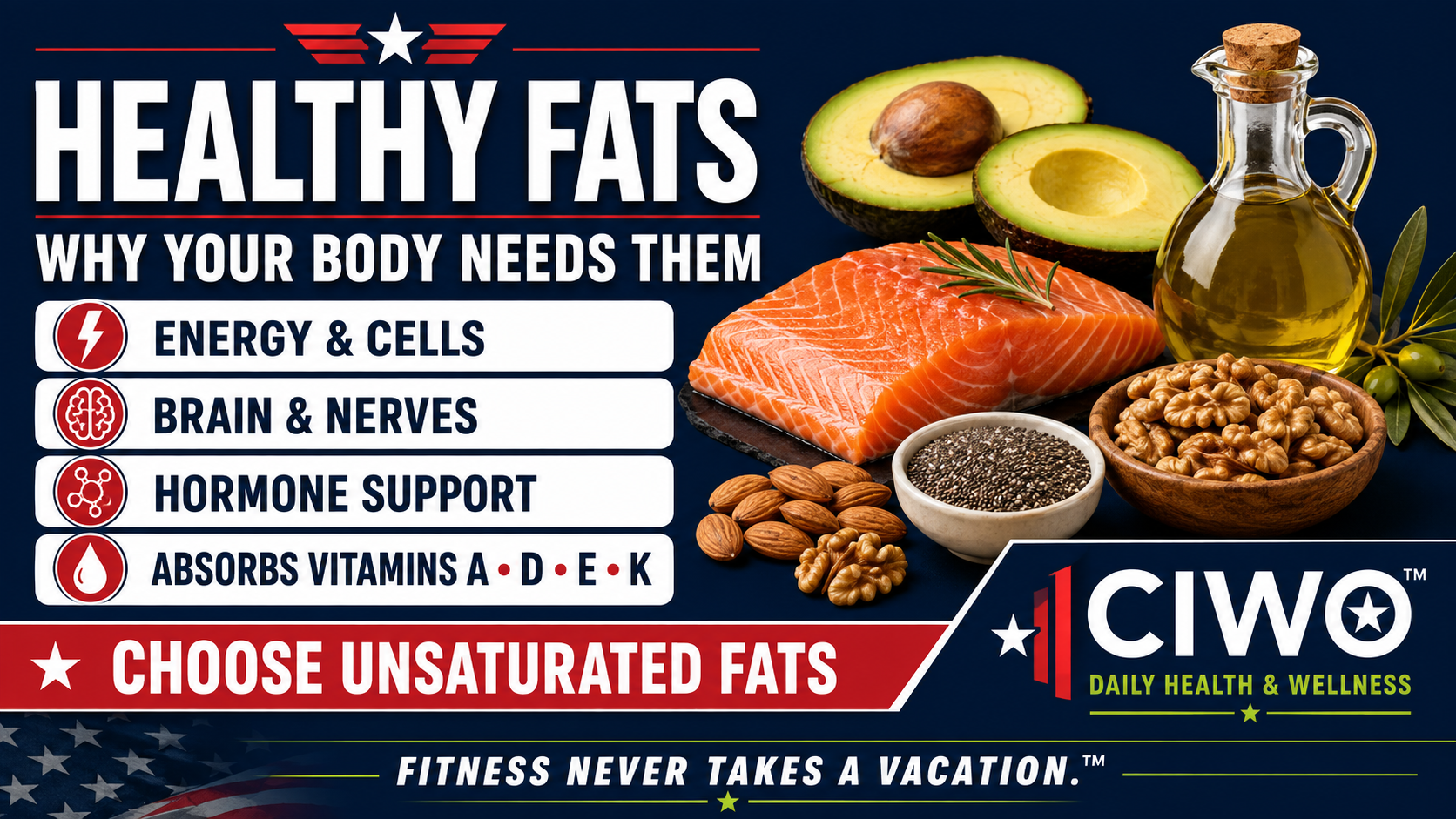

Dietary fat is not the enemy. Your body needs fat for energy, cell structure, brain and nerve function, essential fatty acids and the absorption of vitamins A, D, E and K. The goal is not to eliminate fat—it is to choose mostly unsaturated sources, keep portions appropriate and replace less-supportive fats instead of simply adding more calories.
Foods such as salmon, avocado, olives, nuts and seeds can fit into a heart-conscious eating pattern. Butter, high-fat meats, full-fat dairy, coconut oil and many highly processed foods tend to provide more saturated fat, while foods containing partially hydrogenated oils can contain industrial trans fat.
What Is Dietary Fat?
Fat is one of the three macronutrients, along with carbohydrate and protein. It supplies approximately 9 calories per gram, making it more energy-dense than carbohydrate or protein, which each supply about 4 calories per gram. That energy density makes portion awareness useful, but it does not make fat unhealthy.
Why Your Body Needs Fat
Energy and stored fuel
Fat provides concentrated energy and helps store energy for later use. It can also slow digestion and help meals feel satisfying when paired with protein, fiber-rich carbohydrates and produce.
Cell membranes and signaling
Fatty acids are structural components of the membranes surrounding cells. They also participate in signaling processes that help cells communicate and respond to the body’s needs.
Brain and nerve support
Fats are important components of brain tissue and the protective coverings around nerves. Omega-3 fatty acids, including DHA, are especially concentrated in cell membranes in the brain and retina.
Hormone-related processes
Dietary fats and cholesterol participate in the production and regulation of several hormones and signaling molecules. Chronically inadequate energy or fat intake can affect normal body function, although eating extra fat does not automatically increase hormones.
Absorption of vitamins A, D, E and K
Vitamins A, D, E and K are fat-soluble. Including some dietary fat with meals helps the digestive system absorb these vitamins and certain beneficial plant compounds.
Protection and temperature regulation
Stored body fat cushions organs, helps insulate the body and supports normal temperature regulation. Body-fat level and dietary-fat intake are related but are not the same thing.
Essential Fatty Acids
The body cannot make the essential fatty acids linoleic acid, an omega-6 fat, and alpha-linolenic acid or ALA, an omega-3 fat. They must come from food. ALA is found in flaxseed, chia seeds, walnuts and canola or soybean oil. Fatty fish supplies the long-chain omega-3 fats EPA and DHA.
Omega-6 fats are also essential and are found in nuts, seeds and many plant oils. Most people do not need to avoid omega-6 foods; the more useful goal is a varied eating pattern that includes omega-3 sources and limits highly processed foods.
The Main Types of Dietary Fat
Monounsaturated fats
Monounsaturated fats are found in olive and canola oils, avocados, peanuts and many nuts. They can be useful replacements for butter, shortening and other foods higher in saturated fat.
Polyunsaturated fats
Polyunsaturated fats include omega-3 and omega-6 fatty acids. Sources include fish, walnuts, flaxseed, chia seeds, sunflower seeds and soybean, corn and canola oils.
Saturated fats
Saturated fat is common in butter, fatty cuts of meat, sausage, bacon, full-fat dairy, coconut oil, palm oil and many baked or fried foods. Current federal guidance recommends limiting saturated fat to 10% or less of daily calories. On a 2,000-calorie pattern, 10% equals about 200 calories or roughly 22 grams.
Trans fats
Industrial trans fats raise cardiovascular risk and should be kept as low as possible. Check ingredient lists for partially hydrogenated oil; a label can list zero grams of trans fat when a serving contains a small amount, so serving size matters.
Replacement Matters
The strongest practical message is to replace foods high in saturated fat with unsaturated fats or minimally processed, fiber-rich foods. Simply adding nuts, oil or avocado on top of an unchanged diet can increase calories without reducing the fats you intended to replace.
- Use olive or canola oil instead of butter for many cooking tasks.
- Choose salmon or another fish in place of a high-fat processed meat.
- Swap mayonnaise-heavy toppings for avocado or a yogurt-based sauce.
- Choose nuts or seeds instead of pastries or chips for some snacks.
- Select leaner meat and lower-fat dairy more often when saturated fat is high.
How Much Fat Do You Need?
Many adult eating patterns place total fat within approximately 20% to 35% of daily calories, while individual needs vary with age, health, training, preferences and total energy intake. The quality and source of fat matter more than chasing a perfect number.
For a 2,000-calorie diet, 20% to 35% is about 44 to 78 grams of total fat per day. This is an example—not a personalized prescription. An athlete with high energy needs and someone managing a digestive condition may require very different plans.
Practical Portions of Healthy-Fat Foods
- Extra-virgin olive oil: 1 tablespoon provides about 14 grams of fat.
- Almonds: 1 ounce, or a small handful, provides about 14 grams.
- Peanut butter: 2 tablespoons provides about 16 grams.
- Avocado: one-half medium avocado commonly provides about 10 to 15 grams.
- Chia seeds: 1 tablespoon provides about 4 grams.
- Cooked salmon: a 3-ounce portion often provides about 10 grams, depending on species.
Values are approximate and vary by product, variety and portion size. Measure oils, nut butters and dressings when portions tend to grow unnoticed.
A Simple Day of Healthy Fats
- Breakfast: oats or Greek yogurt with berries and chia seeds.
- Lunch: a chicken-and-vegetable bowl with avocado or an olive-oil vinaigrette.
- Snack: fruit with a measured serving of nuts or peanut butter.
- Dinner: salmon with rice or potatoes and roasted vegetables.
This approach distributes fat across meals, combines it with protein and fiber, and uses whole foods instead of relying on one “superfood.”
Healthy Fats and Weight Management
Fat can make meals satisfying, but it is calorie-dense. Weight loss still depends on maintaining an appropriate energy deficit over time. Healthy-fat foods can support a weight-management plan when portions fit the calorie target; they do not directly “burn fat.”
- Build meals around lean protein, vegetables or fruit and a high-fiber carbohydrate.
- Add a deliberate portion of fat rather than pouring oil or dressing freely.
- Choose one or two concentrated fat sources per meal instead of stacking cheese, avocado, nuts, oil and sauce together.
- Track portions temporarily if progress has stalled and calorie-dense extras are difficult to estimate.
Common Myths
“Eating fat makes you gain body fat.”
No single macronutrient automatically causes fat gain. Consistently consuming more energy than the body uses promotes weight gain, regardless of whether the excess comes from fat, carbohydrate, protein or alcohol.
“Low-fat automatically means healthy.”
Low-fat foods may still be high in added sugar, sodium or refined starch. Read the complete Nutrition Facts label and ingredient list.
“Coconut oil is a heart-health miracle.”
Coconut oil is high in saturated fat. It can be used for flavor in modest amounts, but olive, canola and other unsaturated oils are generally better everyday replacements for saturated fats.
“Everyone needs fish-oil supplements.”
Supplements are not automatically necessary and do not replace a balanced diet. High doses may interact with medications or increase bleeding concerns in some people. Discuss supplements with a clinician, especially if you use anticoagulants or have surgery planned.
Who Should Seek Individual Guidance?
Consult a physician or registered dietitian if you have gallbladder or pancreatic disease, fat-malabsorption problems, liver disease, very high triglycerides or cholesterol, a history of disordered eating, major dietary restrictions or medications that may interact with supplements. Persistent greasy stools, unexplained weight loss or abdominal pain also deserve medical evaluation.
Frequently Asked Questions
What are the best healthy fats?
Useful choices include olive and canola oils, avocado, nuts, seeds, natural nut butter and fatty fish. Variety is more valuable than relying on one food.
Can I eat healthy fats every day?
Yes. They can fit daily when portions match your energy needs and they replace, rather than merely accompany, foods higher in saturated or trans fat.
Is cheese a healthy fat?
Cheese provides protein, calcium and other nutrients, but many varieties also contain substantial saturated fat and sodium. Portion size and the rest of your eating pattern determine how it fits.
Do I need fat with every meal?
No exact amount is required at every meal. Including modest amounts across the day is a practical way to support nutrient absorption, satisfaction and adequate intake.
The Bottom Line
Your body needs dietary fat. Choose mostly unsaturated fats from fish, nuts, seeds, avocado and plant oils; keep portions aligned with your energy needs; limit saturated fat; and minimize industrial trans fat. The most important move is replacement: trade less-supportive fats for better options within an overall balanced diet.
Sources
- U.S. Office of Disease Prevention and Health Promotion: Eat Healthy
- Healthy People 2030: Reduce Saturated Fat Consumption
- NIH Office of Dietary Supplements: Omega-3 Fatty Acids
- American Heart Association: Fats in Foods
- American Heart Association: Saturated Fats
Shop CIWO Fitness Picks
Looking for meal-prep tools, kitchen essentials, fitness equipment and wellness accessories? Visit the Checked In. Worked Out. Shop and explore products selected to support an active lifestyle.
Affiliate disclosure: Some shop links may be affiliate links. CIWO may earn a commission from qualifying purchases at no additional cost to you.
Medical Disclaimer
This article provides general education and is not medical advice, diagnosis or treatment. Nutrition needs vary with health conditions, medications, age, pregnancy, activity and goals. Consult a physician or registered dietitian for individualized guidance.
Fitness Never Takes a Vacation.™