

Pull-Up: Step-by-Step Exercise Guide
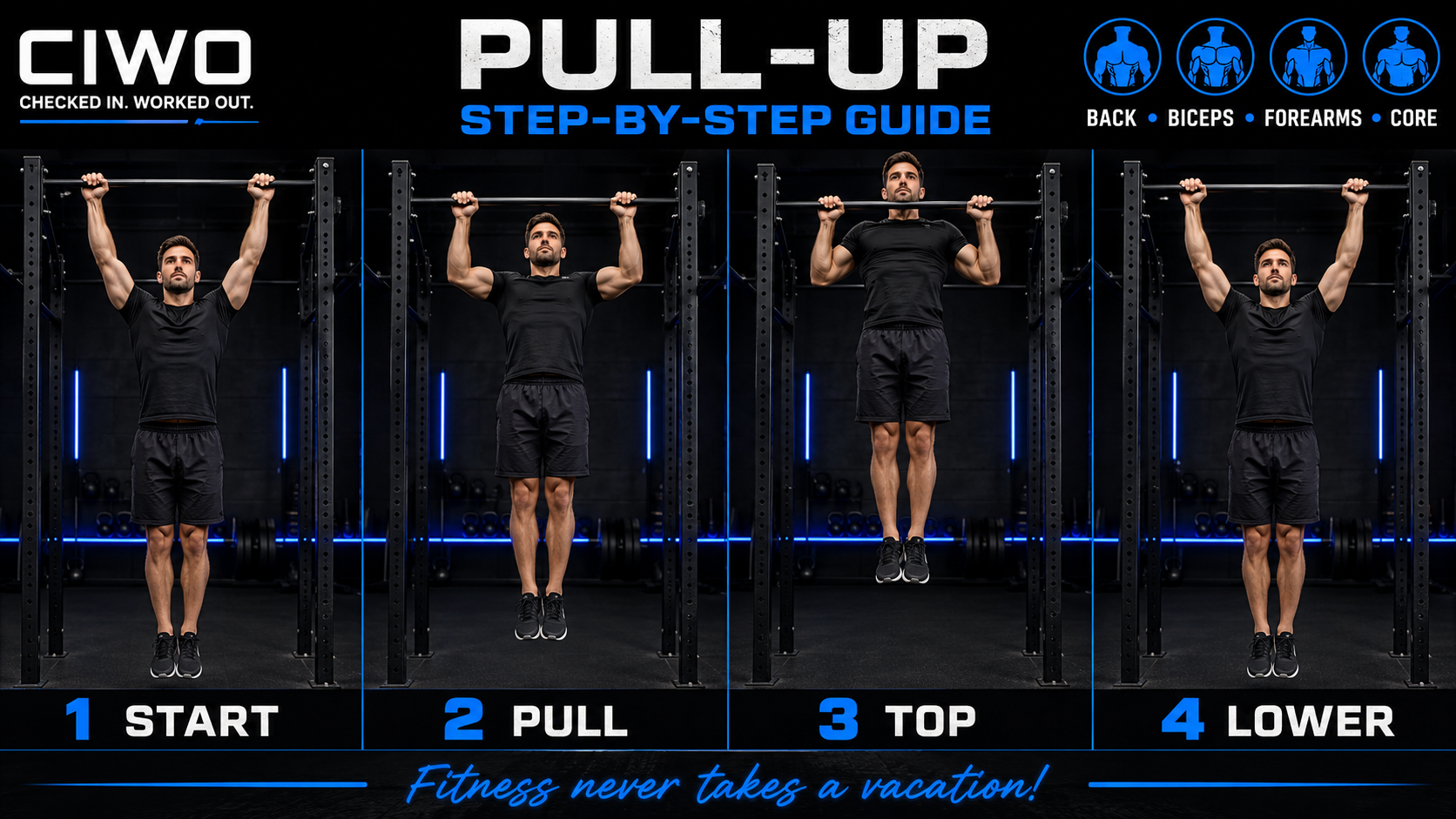
The pull-up is a foundational bodyweight exercise that develops the lats, upper back, biceps, forearms and grip strength. Because you must lift your body through a controlled range of motion, strict pull-ups also demand core stability and coordinated shoulder movement.
Muscles Worked
- Primary: Latissimus dorsi (lats)
- Secondary: Biceps, rhomboids, trapezius, rear deltoids and forearms
- Stabilizers: Core, rotator cuff and shoulder-blade stabilizers
Step-by-Step Instructions
- Grip the bar: Take an overhand grip slightly wider than shoulder width. Wrap your thumbs around the bar and establish a secure grip.
- Set the starting position: Begin from a controlled hang with your arms comfortably extended. Brace your core, keep your legs still and draw your shoulders slightly away from your ears.
- Initiate the pull: Pull your shoulder blades down and back, then drive your elbows toward your sides. Think about bringing your upper chest toward the bar rather than reaching with your chin.
- Reach the top: Continue pulling until your chin reaches approximately bar height or your strongest comfortable range. Keep your ribs controlled and avoid excessively arching your lower back.
- Lower with control: Reverse the movement slowly, allowing your elbows to straighten as you return to the starting position. Do not drop suddenly from the top.
- Reset: Regain a stable hang without swinging, then begin the next repetition.
Recommended Sets & Reps
Perform 3–4 sets of 3–8 controlled repetitions, resting approximately 90–180 seconds between sets. Stop the set when you can no longer complete a full controlled repetition without swinging, kicking or straining your neck.
Form Tips
- Keep your core braced and your body quiet throughout the repetition.
- Drive your elbows down rather than thinking only about pulling with your hands.
- Keep your shoulders away from your ears as you initiate the movement.
- Use a strong overhand grip with your thumbs wrapped securely around the bar.
- Control the lowering phase instead of dropping from the top.
- Use only the range of motion you can perform without shoulder pain.
Common Mistakes
- Swinging, kicking or using momentum to reach the bar.
- Shrugging the shoulders toward the ears.
- Leading aggressively with the chin or craning the neck.
- Allowing the elbows and shoulders to lose control during the descent.
- Using an excessively wide grip that shortens the range of motion.
- Continuing repetitions after strict form has broken down.
Pull-Up Progressions
If you cannot yet perform a strict pull-up, build strength with assisted pull-ups, band-assisted pull-ups, controlled negative repetitions, flexed-arm holds and lat pulldowns. Gradually reduce assistance as your technique improves. If standard pull-ups become easy, add repetitions, slow the lowering phase or use external weight only after mastering consistent strict form.
Safety Considerations
Use a stable pull-up bar that is properly secured and rated to support your body weight. Avoid forcing painful shoulder positions. Stop if you experience sharp pain, numbness or unusual joint discomfort, and seek qualified guidance when necessary.
RIPP Says: Control every rep. Strength is built on the way up and the way down.
Checked In. Worked Out.
Checked In. Worked Out.
Fitness on the go or wherever life takes you. Fitness never takes a vacation!!
Programming Pull-Up
Use Pull-Up as part of a complete program rather than judging it in isolation. Start with a resistance that allows repeatable technique and stop a set when range of motion or body position begins to deteriorate.
Sets, repetitions and progression
For general muscle development, two to four working sets in a moderate repetition range are a practical starting point. When you can reach the top of your planned range across your sets with controlled form, increase resistance by a small amount. Progress can also come from better control, more quality repetitions or an improved usable range of motion.
Tempo and breathing
Control the lowering phase instead of letting gravity or momentum take over. Brace before the demanding portion of the repetition, exhale through the working phase without losing torso position and reset your breath as needed between repetitions.
When to modify the movement
Muscular fatigue is expected, but sharp joint pain is not the objective. Reduce resistance, adjust the range or choose a comparable variation if the exercise cannot be performed comfortably. Persistent pain or a return from injury warrants individualized guidance from an appropriate professional.
Track what actually improves
Record load, repetitions and technique notes. Small, repeatable improvements are more useful than adding weight while shortening the range or relying on momentum.
See more CIWO exercise guides and use the Workout Calendar to organize training.
Quality Repetitions Before More Weight
A useful progression standard is whether the final repetitions still resemble the first. If added load changes the intended joint path, shortens the range dramatically or requires momentum, the resistance has probably increased faster than technique. Keep a simple training log and progress in small steps.
Exercise selection should also account for the rest of the session. If the same muscles have already accumulated substantial fatigue, use a conservative load or move this exercise earlier in the workout when it is a priority.